 NCU News
 Natural sciences
A Winning Path to Exoplanets


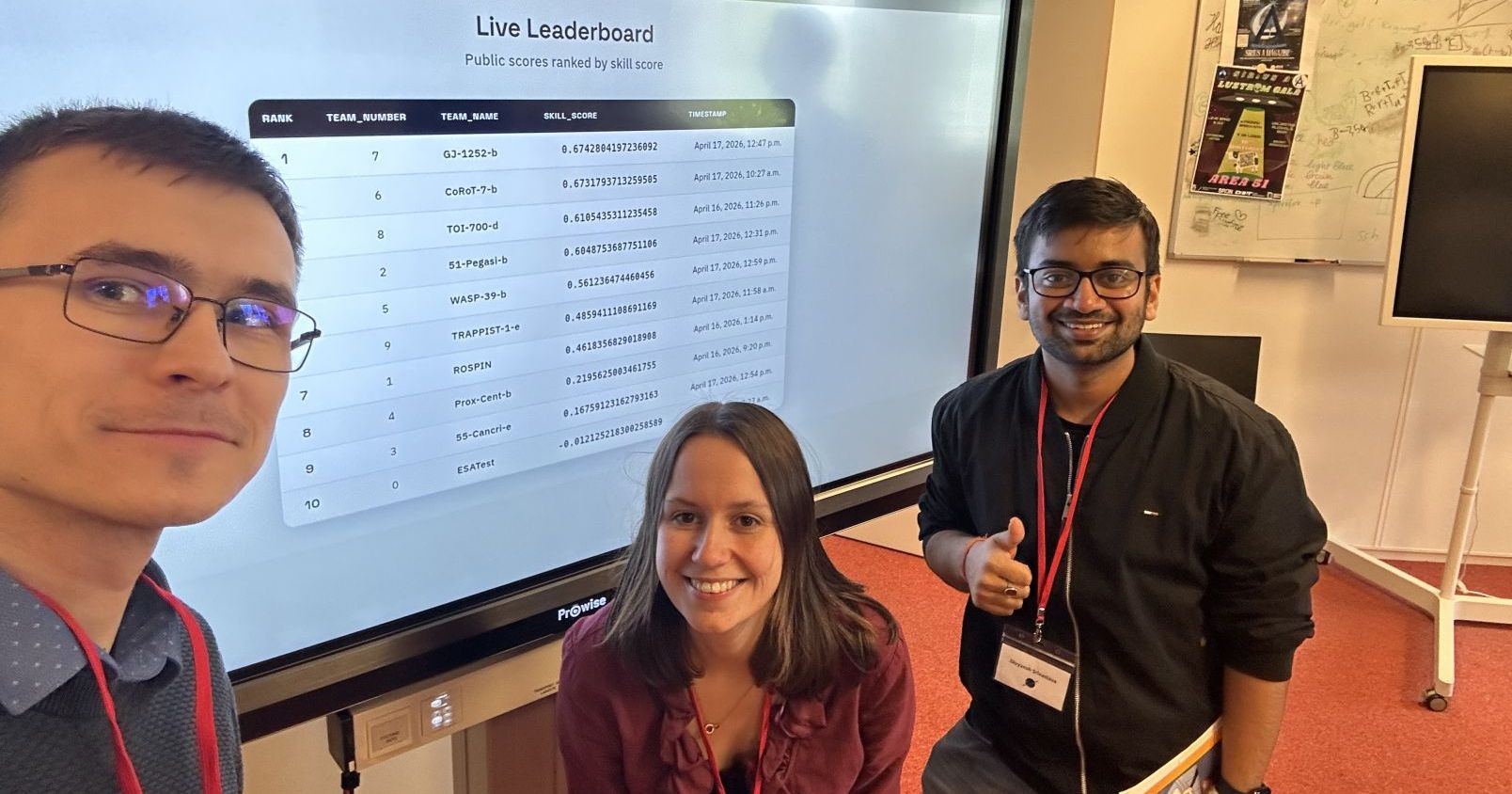
Divyansh Srivastava, a doctoral student at Academia Scientiarum Thoruniensis NCU, has won ExoHack IV, a machine learning competition organised in preparation for the European Space Agency's upcoming Ariel space telescope mission.
ExoHack IV took place at the Kapteyn Astronomical Institute and SRON Netherlands Institute for Space Research in Groningen. Over 36 hours, teams of young researchers from across Europe worked on a single challenging task: analysing the transit spectrum of an exoplanet to determine properties of its atmosphere, including temperature and the presence of water vapour, carbon dioxide, methane, carbon monoxide, and ammonia.
As Srivastava emphasised, the key difficulty was not just analysing the data, but properly handling uncertainty. Rather than predicting single values, teams had to estimate full probability ranges for each parameter. This required combining astrophysics with modern machine learning techniques.
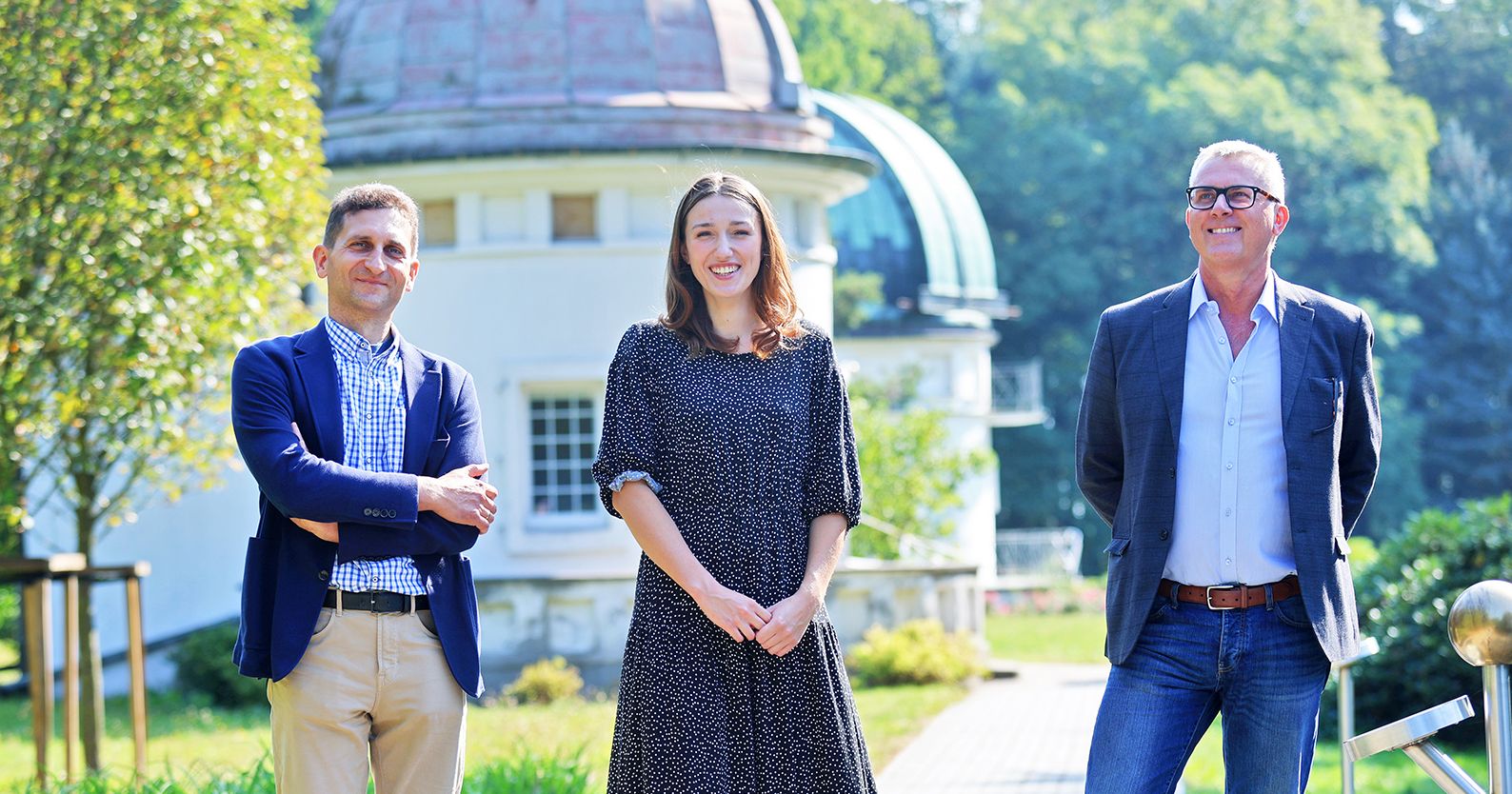
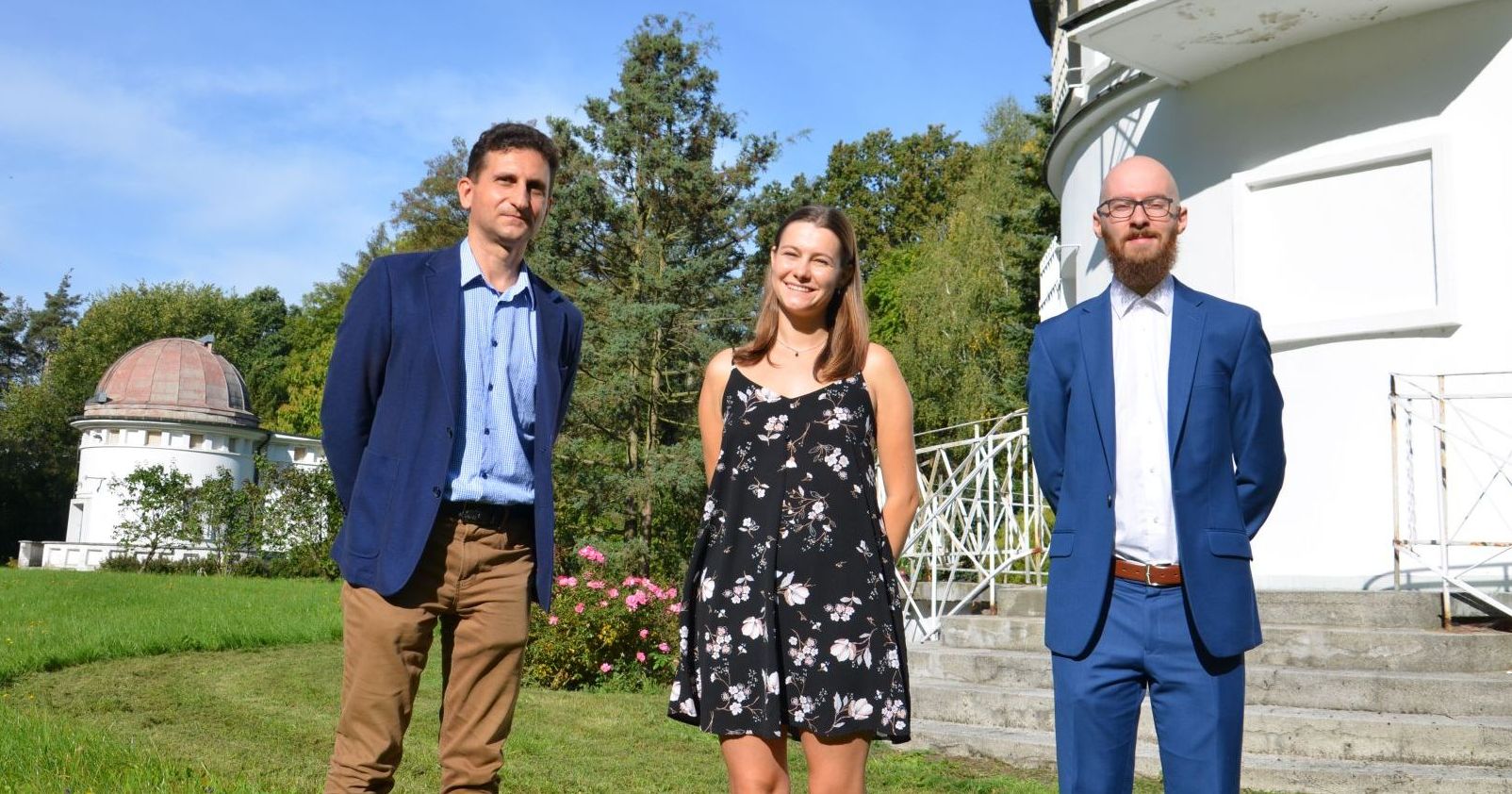
Srivastava is a doctoral student at Academia Scientiarum Thoruniensis NCU under the supervision of Prof. Andrzej Niedzielski from the Institute of Astronomy NCU. His winning team also included Astrid Stulemeijer from the Netherlands and Alexandru Caliman from Belgium.
A Timely Challenge
The topic of the competition reflects one of the most important areas of modern astronomy. Thousands of exoplanets, planets orbiting stars other than the Sun, have been discovered in recent decades, raising the question of whether any might resemble Earth and support life.
The answer lies largely in planetary atmospheres, which determine surface conditions and the potential for liquid water. However, studying such atmospheres across vast distances is extremely difficult. Scientists analyse starlight passing through a planet's atmosphere during transit, but the signal is faint and often ambiguous.
The Ariel mission, planned for launch in 2031, will be the first dedicated effort to study exoplanet atmospheres on a large scale, targeting over a thousand planets. Because of the enormous volume of data expected, new fast and reliable analysis methods are essential.
The Winning Approach
The winning team developed a machine learning solution combining two complementary models. One model generated a detailed description of possible atmospheric properties based on physical simulations, while the other learned a more compact representation of the data. By integrating both approaches, the system could capture both agreement and disagreement between predictions.
This method not only identifies the most likely atmospheric properties but also provides realistic uncertainty estimates. When models disagree, the system reflects this by widening the range of possible solutions rather than overstating confidence.
Looking Ahead
The team's approach has significance beyond the competition. Similar methods could be used to analyse real data from the Ariel mission. In the coming decade, as scientists begin studying the chemistry of thousands of distant worlds, fast and reliable analytical tools will be crucial.
Ultimately, such tools may help answer one of the most profound questions in science: whether any exoplanet atmospheres show signs of conditions suitable for life.