 NCU News
 Campus life
An 800-year-old oak tree grows on the grounds of NCU


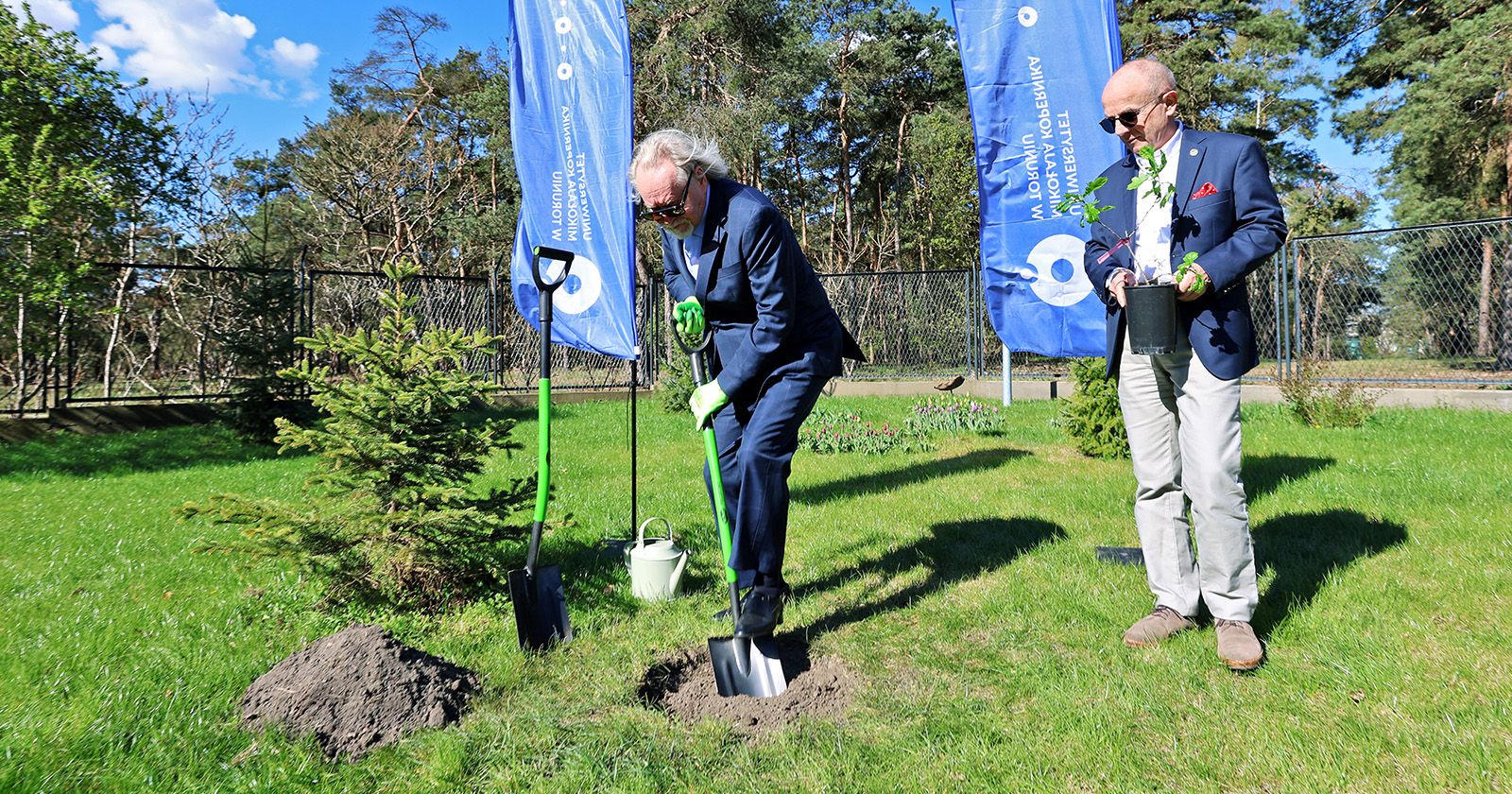
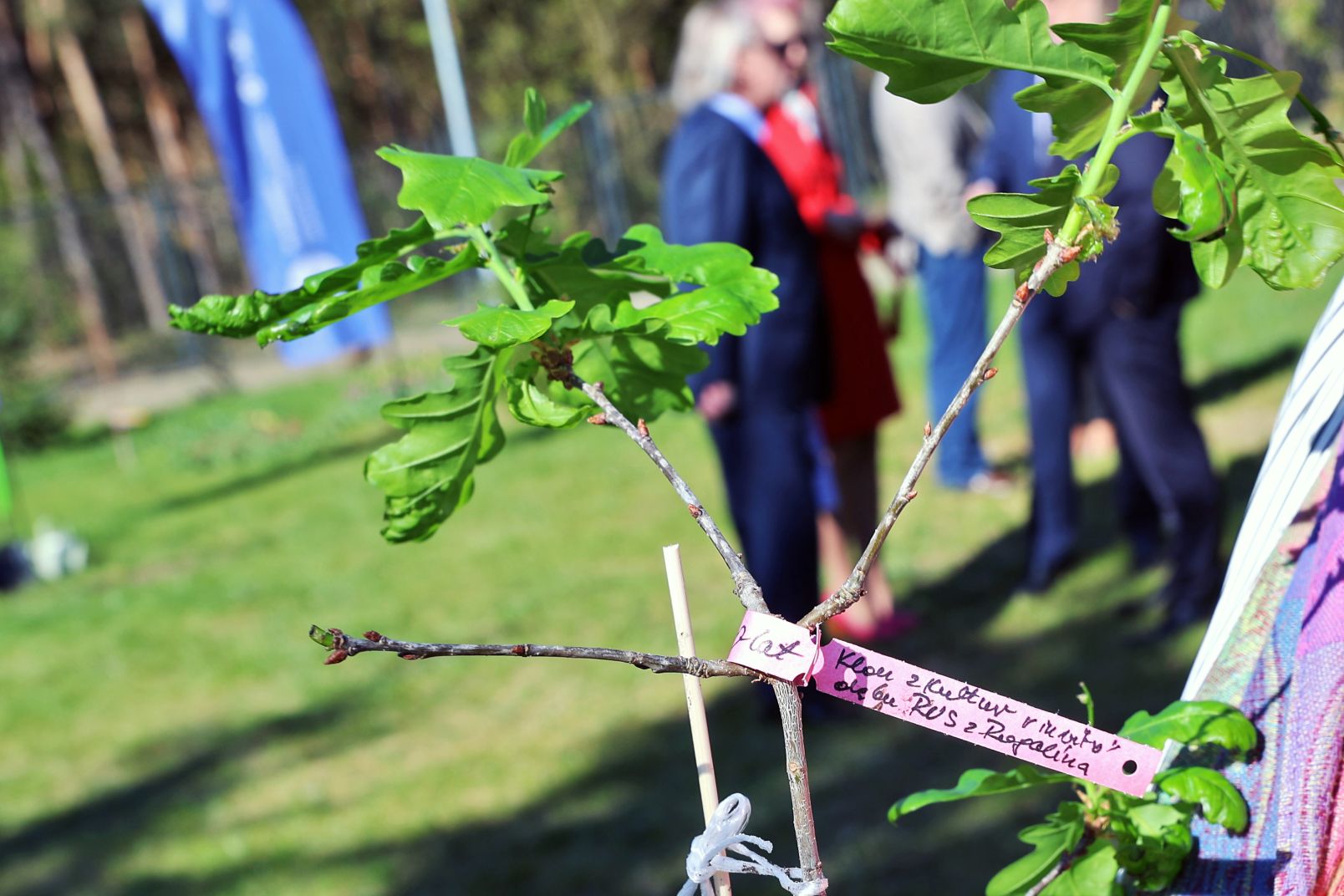
Although it looks inconspicuous – it is currently less than 50 cm tall – its genetic age is estimated to be over 800 years. This is because it is a clone of the oldest oak tree in Poland – Rus of Rogalin.
The pedunculate oak sapling was ceremoniously planted in the garden of the Copernican Integration Centre by the Rector of Nicolaus Copernicus University, prof. dr habil. Andrzej Tretyn, and prof. dr habil. Jacek Kubica, Head of the Department of Cardiology and Internal Medicine at the Collegium Medicum, who secured it for our university. Although the plant does not yet look particularly impressive, its genetic age is remarkable. As a clone of 'Rus' from Rogalin, considered to be the oldest pedunculate oak growing in Poland, it is the same age as the parent tree, which is estimated to be 800–850 years old.
Andrzej Romański
The Legacy of trees
Pedunculate oaks (Quercus robur), are among the most impressive trees found naturally in our country. Their trunk circumference (measured at a standard height of 120 cm) can reach up to 10 metres. They are often considered living monuments, possessing not only natural value but also historical and cultural significance. Examples include the oaks known as Bartek, Chrobry, Mieszko I and the aforementioned Rus, which belongs to the esteemed group of Rogalin oaks.
Unfortunately, despite their long lifespan, their end is slowly approaching, and traditional vegetative propagation (which essentially involves rooting selected shoots) is very difficult in the case of oaks, and virtually impossible with the oldest trees. Generative propagation (by sowing acorns), on the other hand, does not allow for the cloning of the oldest specimens.
Tree cloning
Researchers from the Institute of Dendrology of the Polish Academy of Sciences in Kórnik have found a way to do this.
It involves cloning the plant in vitro, i.e. in a laboratory setting, using a method of micropropagation of suckers. In short: woody branches were collected from selected old and valuable specimens, then cut into smaller pieces, cleaned and cultivated to produce so-called epicormic shoots – or adventitious shoots – explains Prof. Andrzej Tretyn, NCU Rector.
This is known as the phytotron cultivation period, during which the woody shoots were placed in containers filled with moist perlite. The cultivation was carried out under specific conditions of light, temperature and humidity.
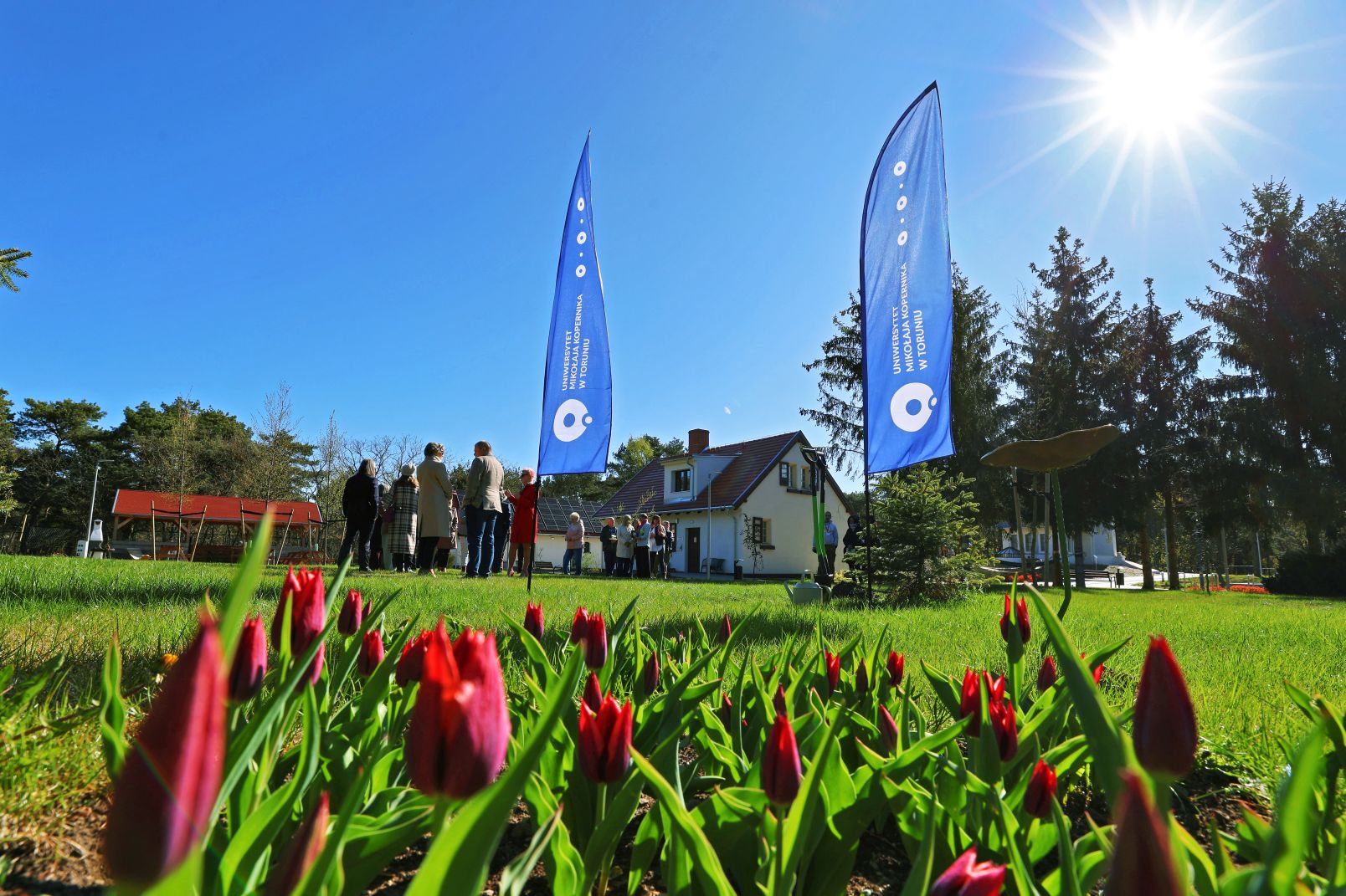
This is how the sapling obtained for the Nicolaus Copernicus University from the facility in Kórnik came to be. The young/old tree was issued with a certificate of authenticity and planted in the grounds of the Copernican Integration Centre. It is worth noting that, to date, there are only a few such oaks growing in Poland. Over time, there are set to be more, and scientists from the Institute of Dendrology of the Polish Academy of Sciences plan to create a catalogue of the locations where they have been planted and to monitor the cloned plants.