 NCU News
 Exact sciences
Physicists in the European network


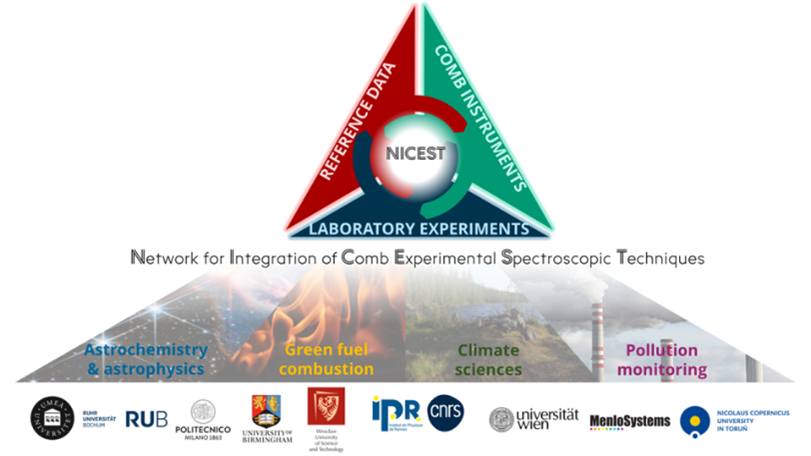
The Institute of Physics at NCU will participate in the NICEST project (Network for Innovative Comb-based Spectroscopy Training), which has been selected for funding under the prestigious Marie Skłodowska-Curie Doctoral Networks (MSCA-DN) programme. Remarkably, the project proposal received a perfect score of 100 out of 100 points.
This maximum evaluation by the European Commission's experts underscores the world-class scientific quality and strategic importance of the initiative. The project was prepared under the leadership of the project coordinator, Prof. Lucile Rutkowski from the Institute of Physics of Rennes, and brings together a consortium of Europe's leading research centers and industrial partners.
The NICEST project addresses fundamental challenges in physical chemistry and astrophysics by developing spectroscopic tools that are simultaneously broadband, highly sensitive, and capable of extreme resolution. The core of this research involves optical frequency combs - the "optical rulers" that are also a cornerstone of the Polish Optical Atomic Clock operated here in Toruń.
The Toruń contribution
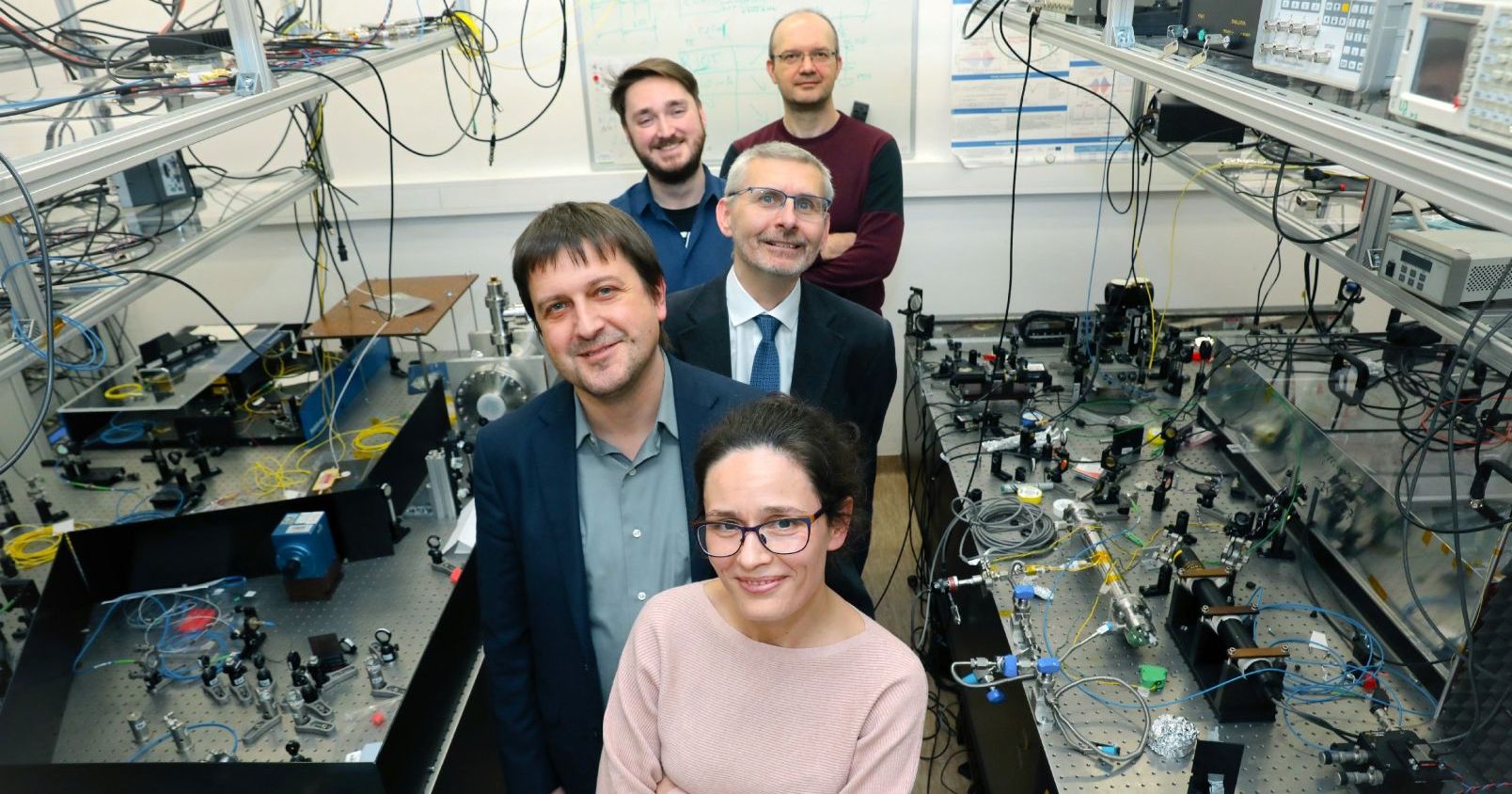
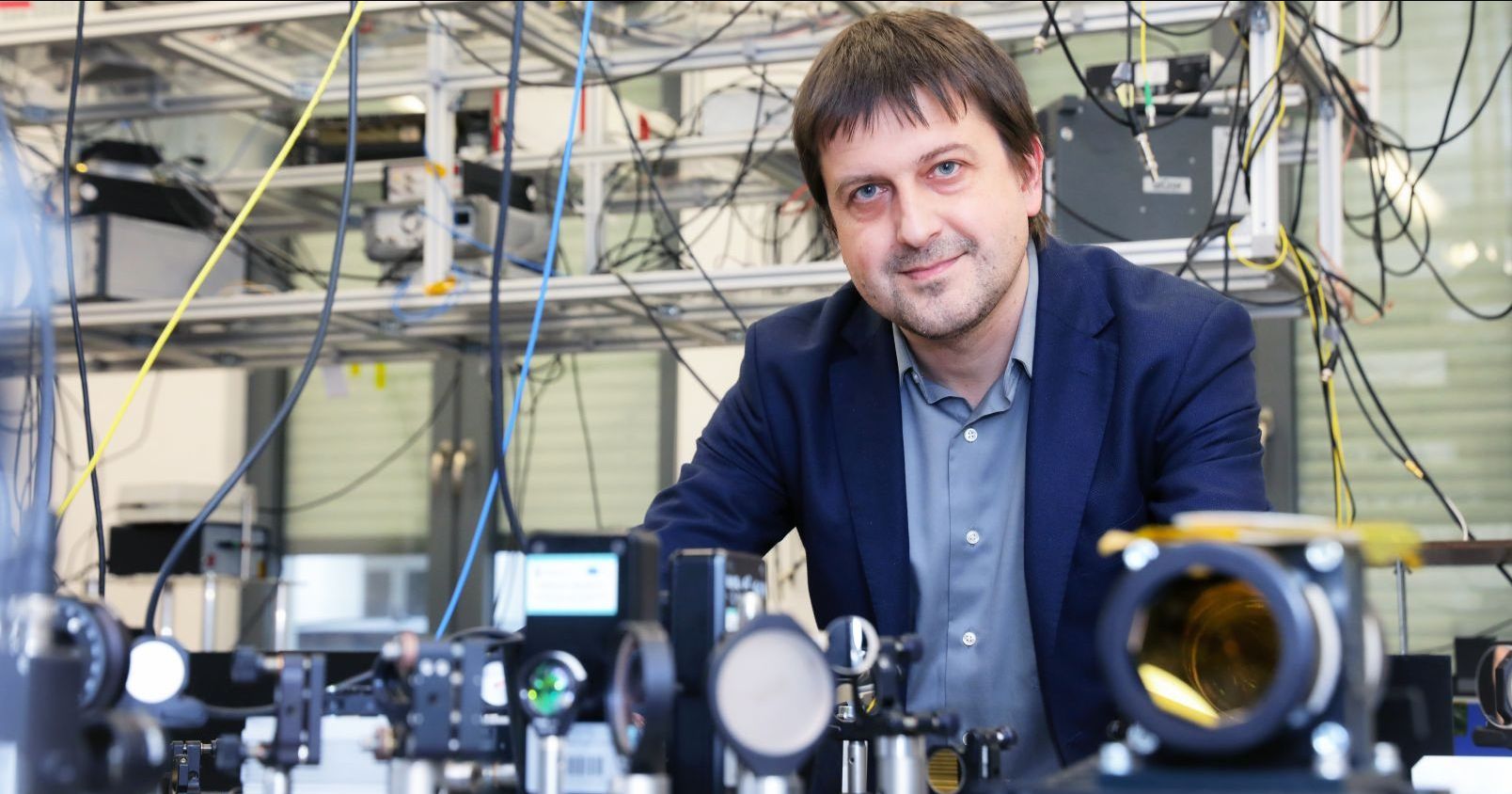
At the Institute of Physics NCU, the project will be spearheaded by the research group of dr hab. Piotr Masłowski, prof. NCU. The Toruń team is internationally recognized for its expertise in cavity-enhanced frequency comb spectroscopy. Within the NICEST framework, our researchers will contribute to:
- developing advanced photonic instrumentation for the detection of trace gases and transient molecular species,
- providing benchmark data for atmospheric monitoring and astrophysical modeling,
- hosting and training Doctoral Candidates in an international, interdisciplinary environment.
Training the future of photonics
The network will train a total of 11 Doctoral Candidates across Europe. These young researchers will work at the intersection of laser science, molecular physics, and data science. Through mobility between partner institutions, including the Institute of Physics of Rennes (the project coordinator), NCU Toruń, and various industrial partners the candidates will gain the skills necessary to lead the next generation of European innovation in clean energy, climate diagnostics, and space exploration.
NICEST is not only about fundamental physics; it is a strategic step toward European leadership in green technologies. By improving our ability to monitor chemical reactions in real-time, the project supports:
- decarbonization: improving the efficiency of low-carbon industrial processes,
- climate Science: providing more accurate tools for atmospheric monitoring,
- astrochemistry: helping to decode the chemical history of the universe through more precise analysis of astronomical spectra.