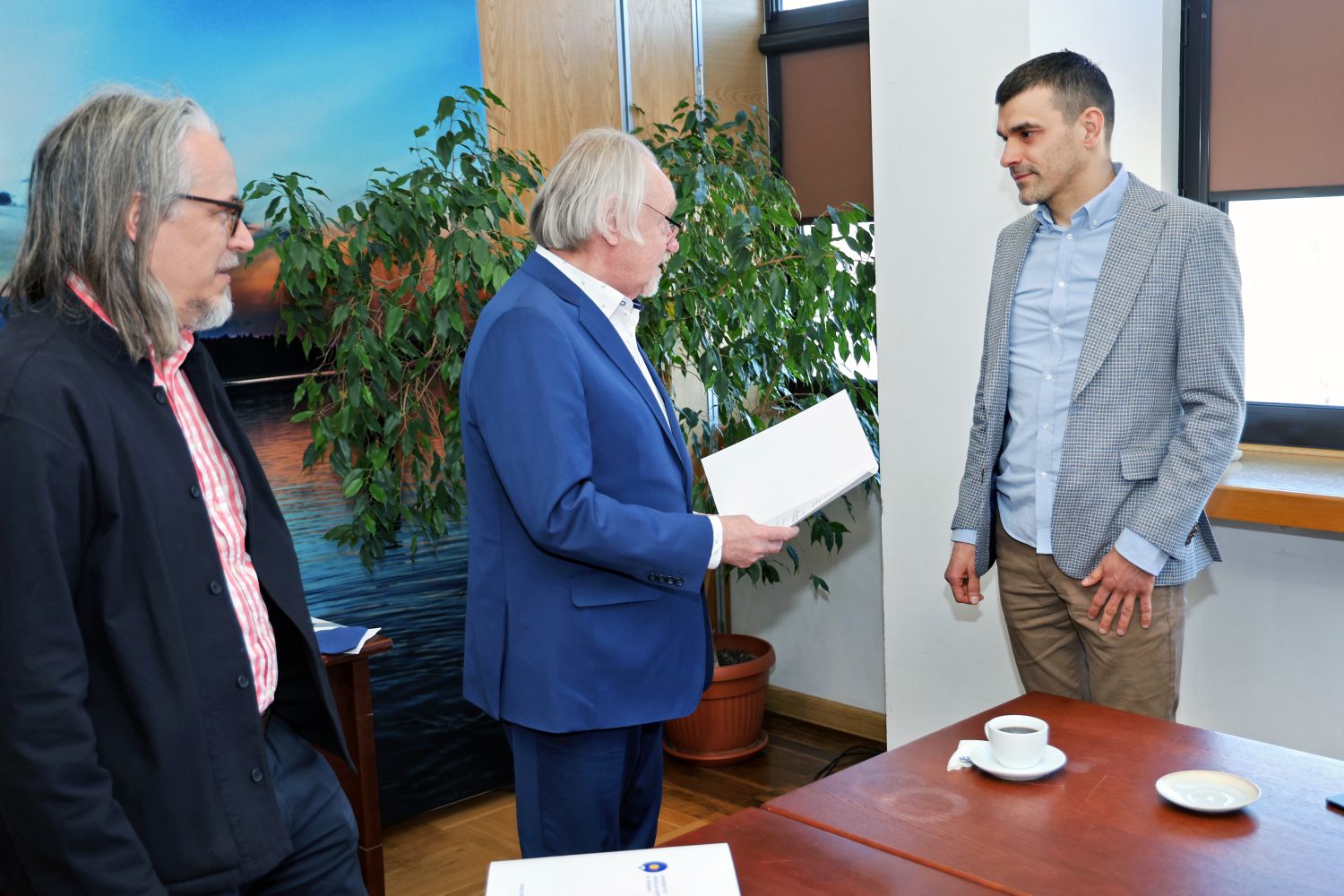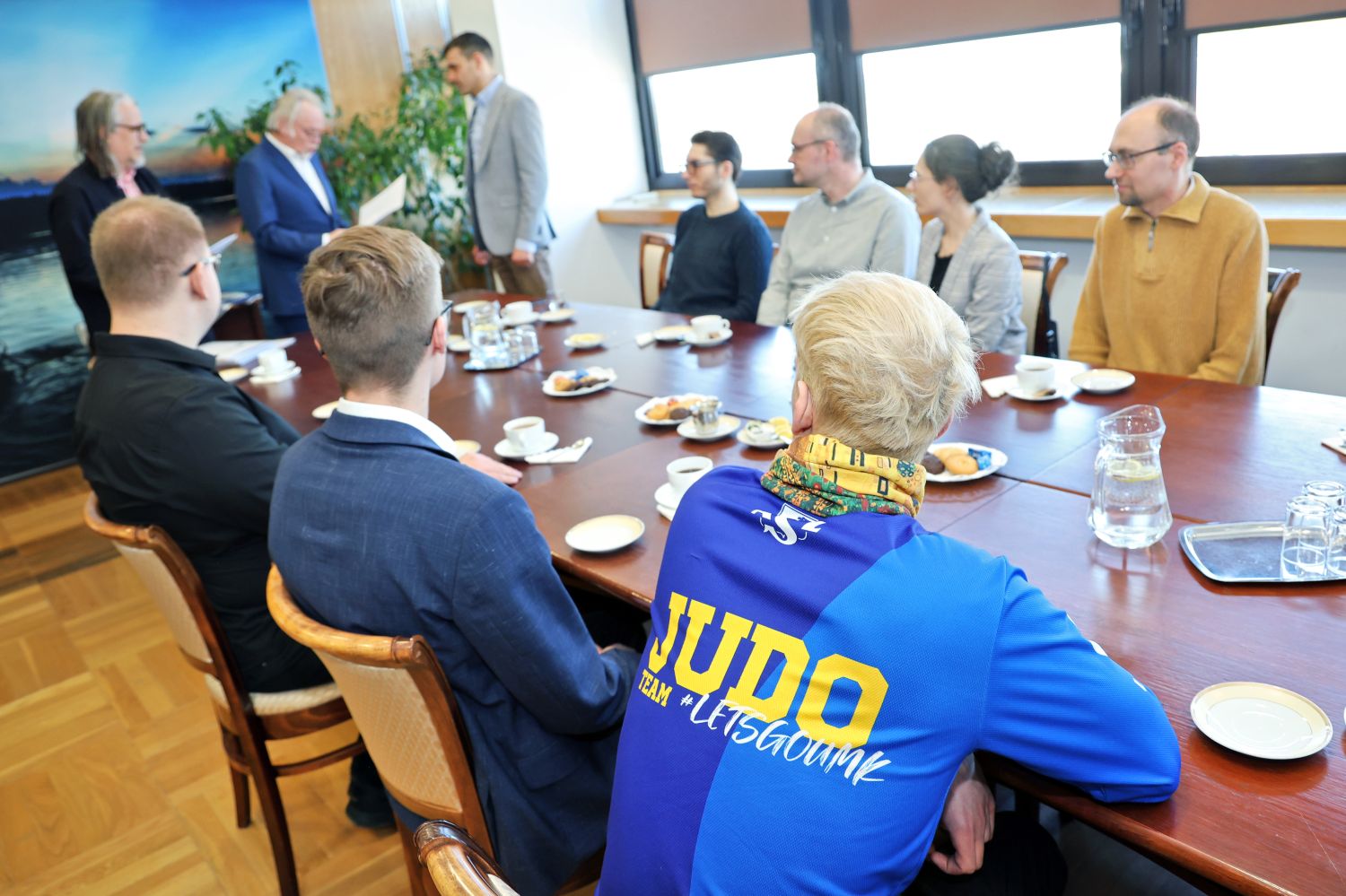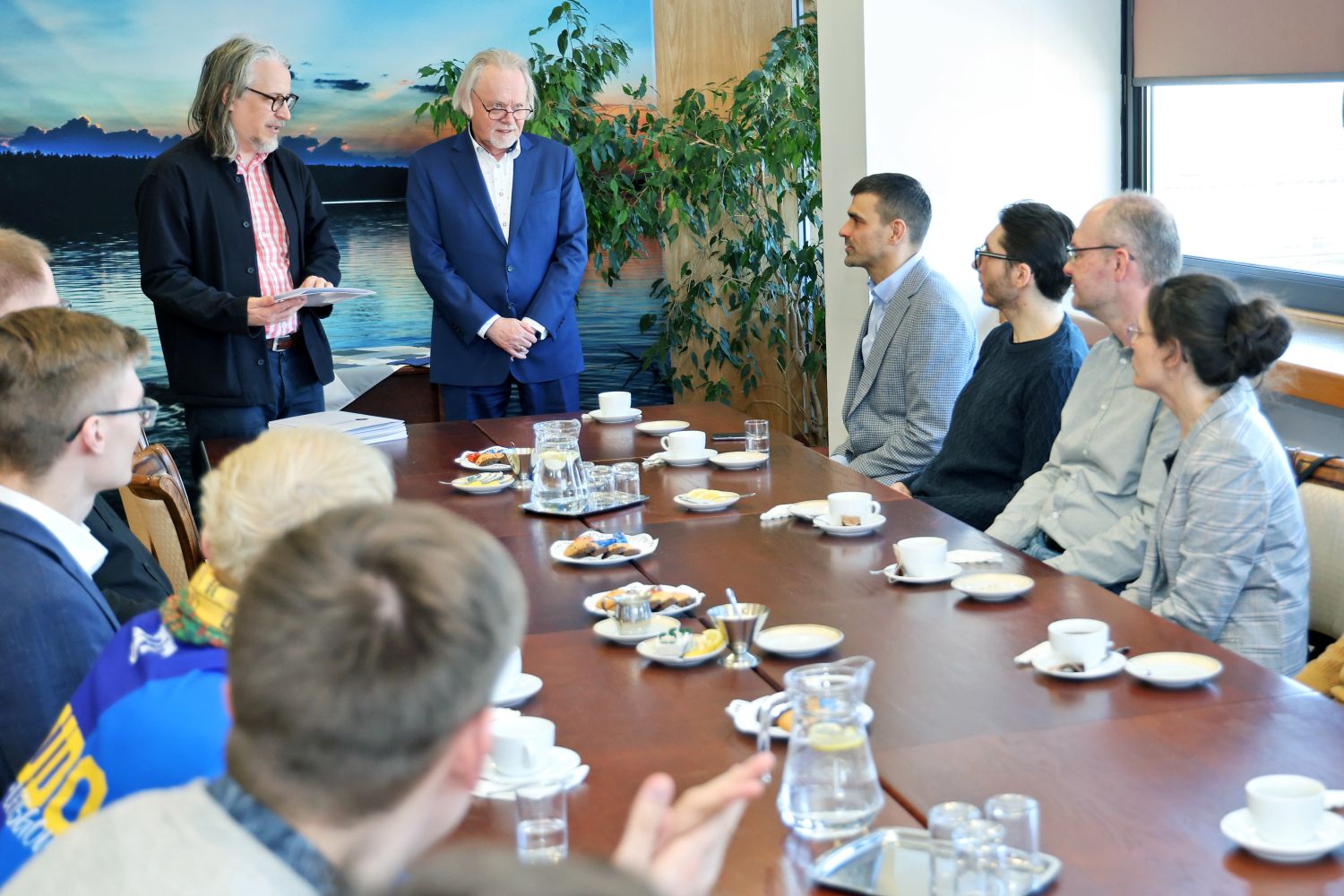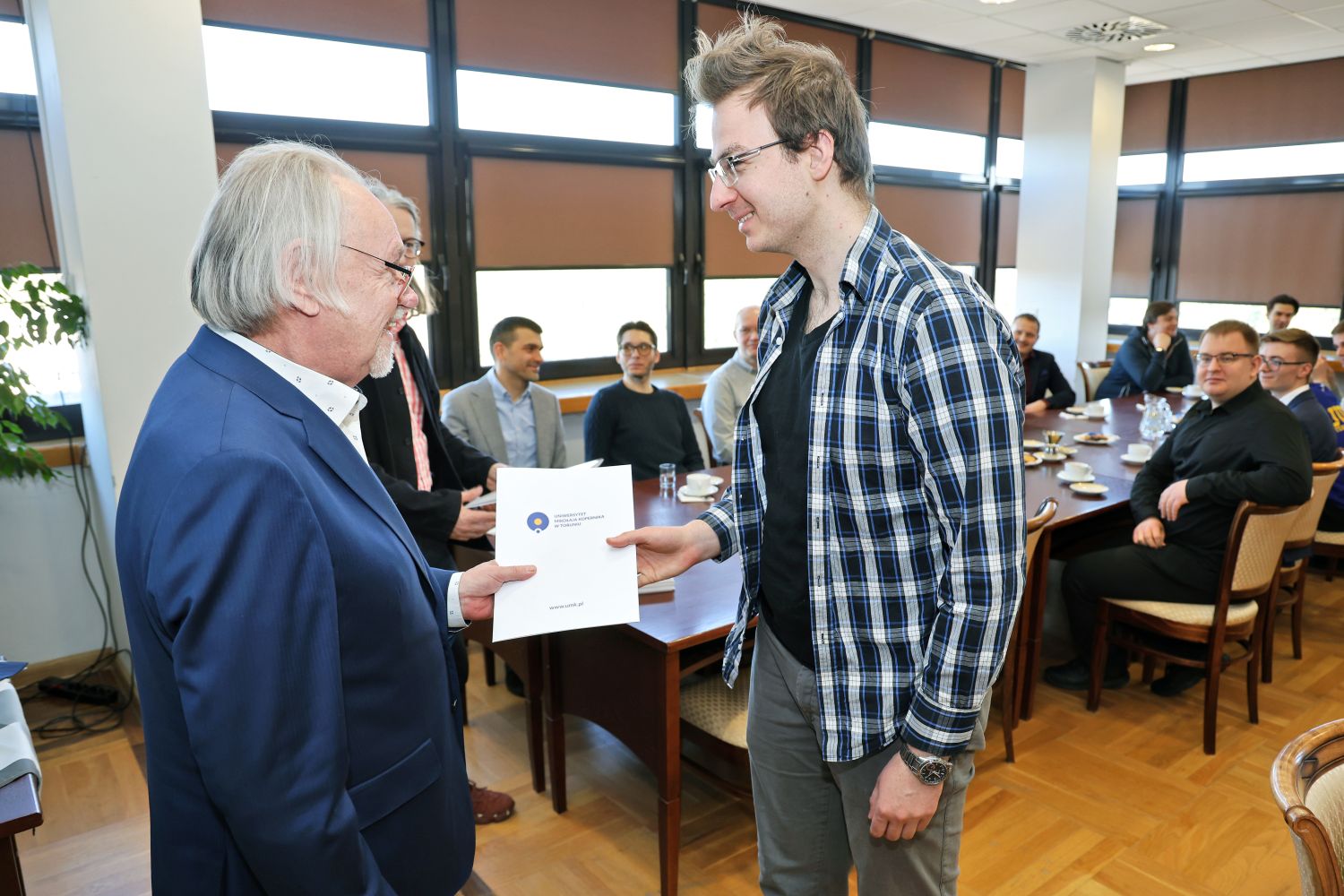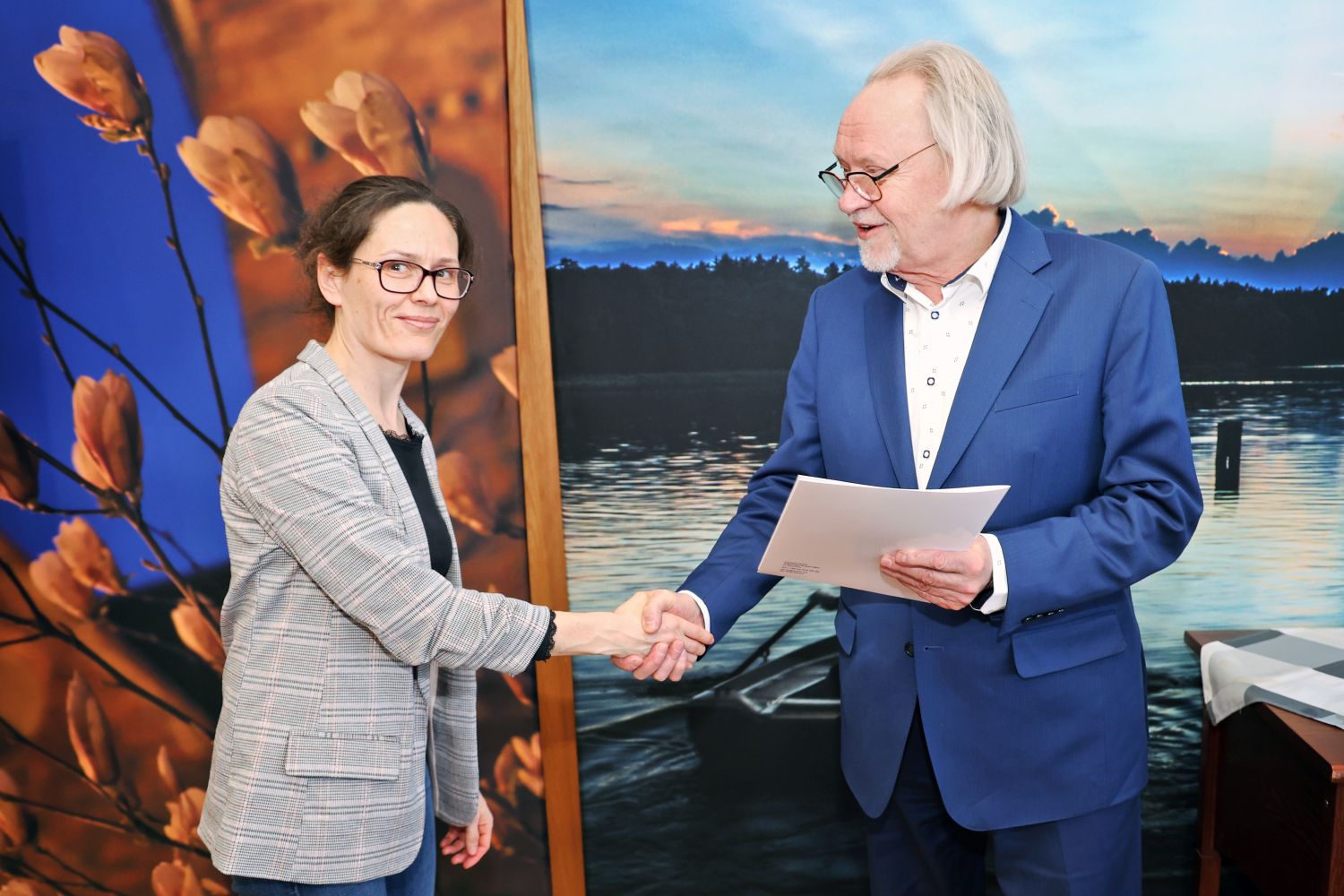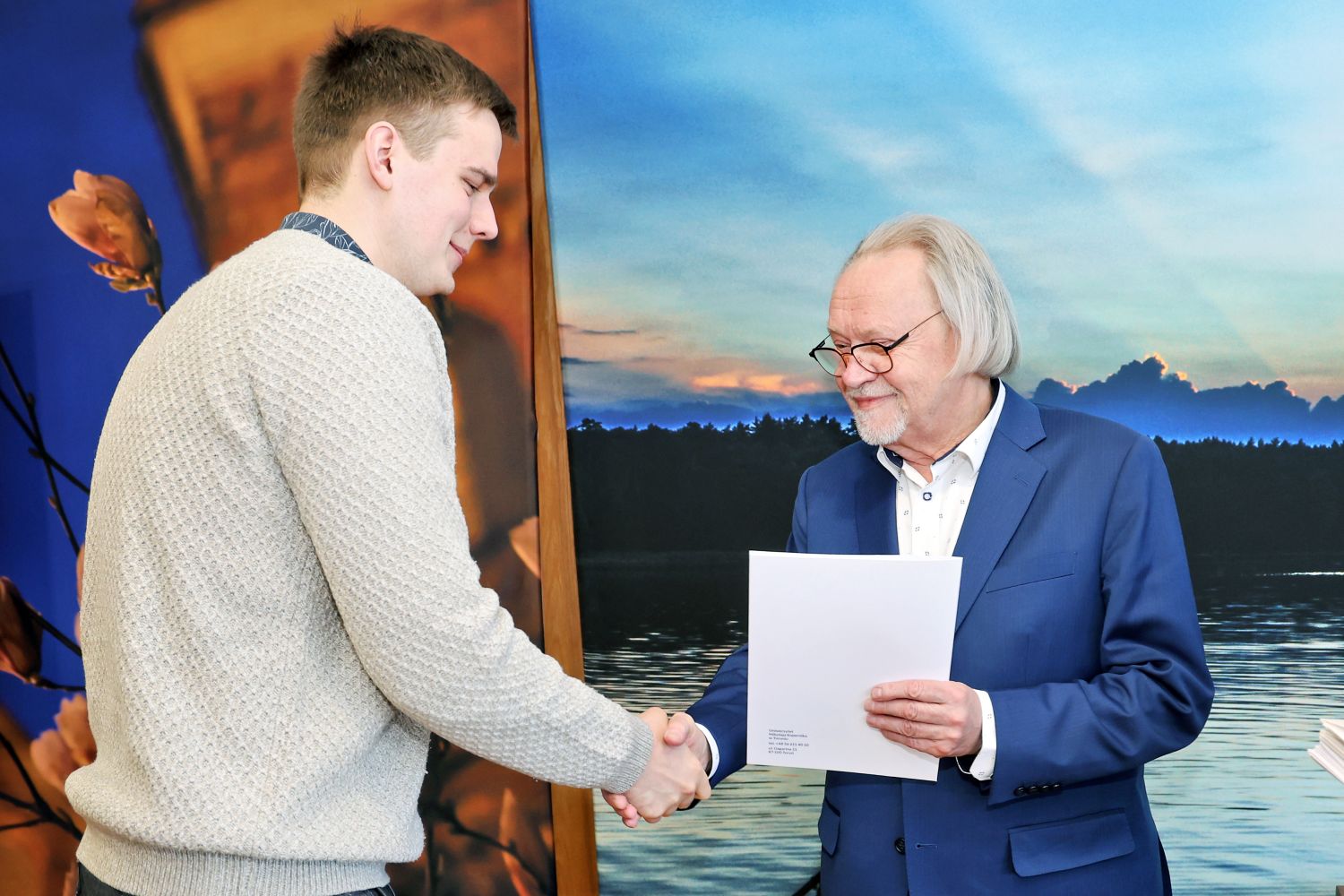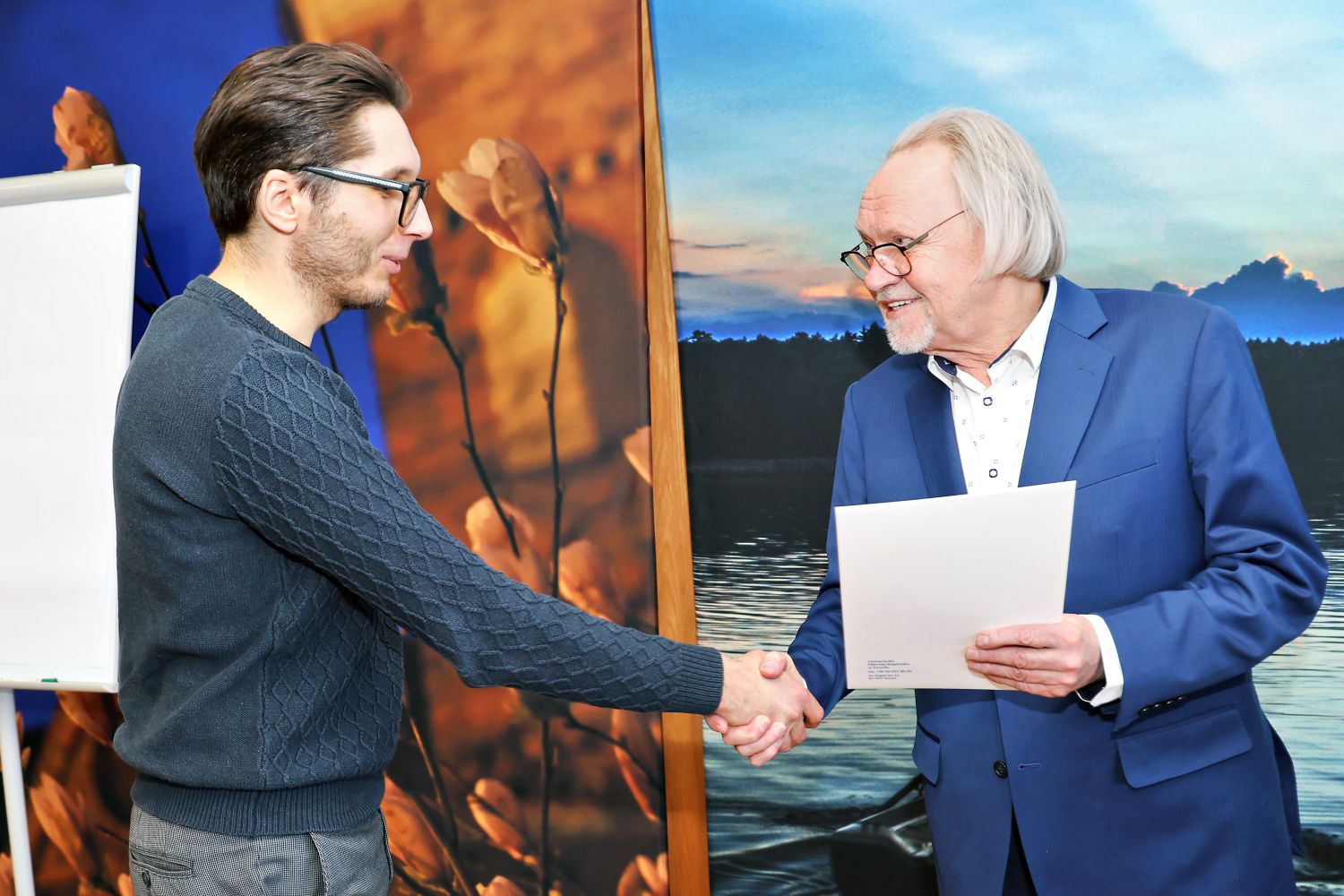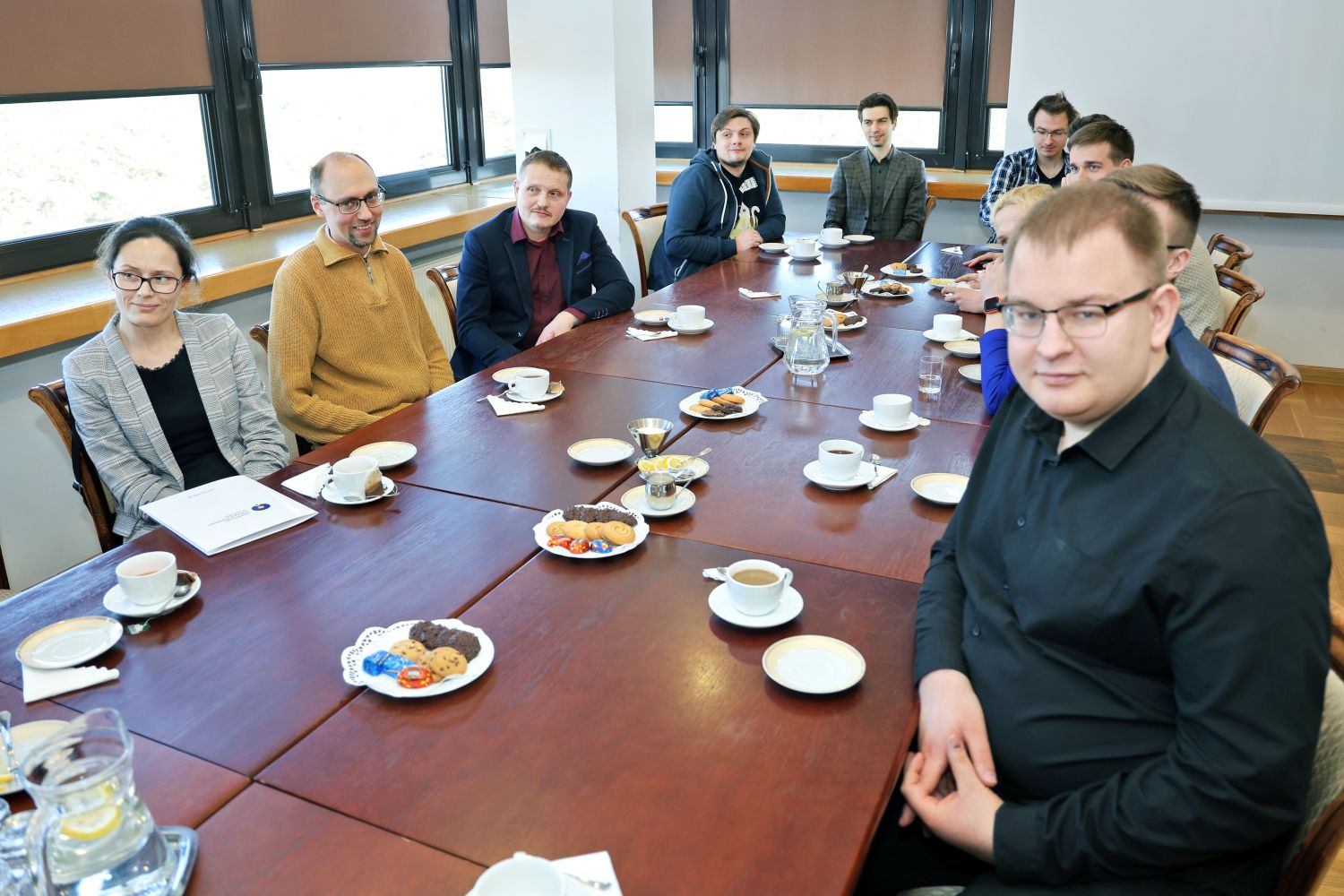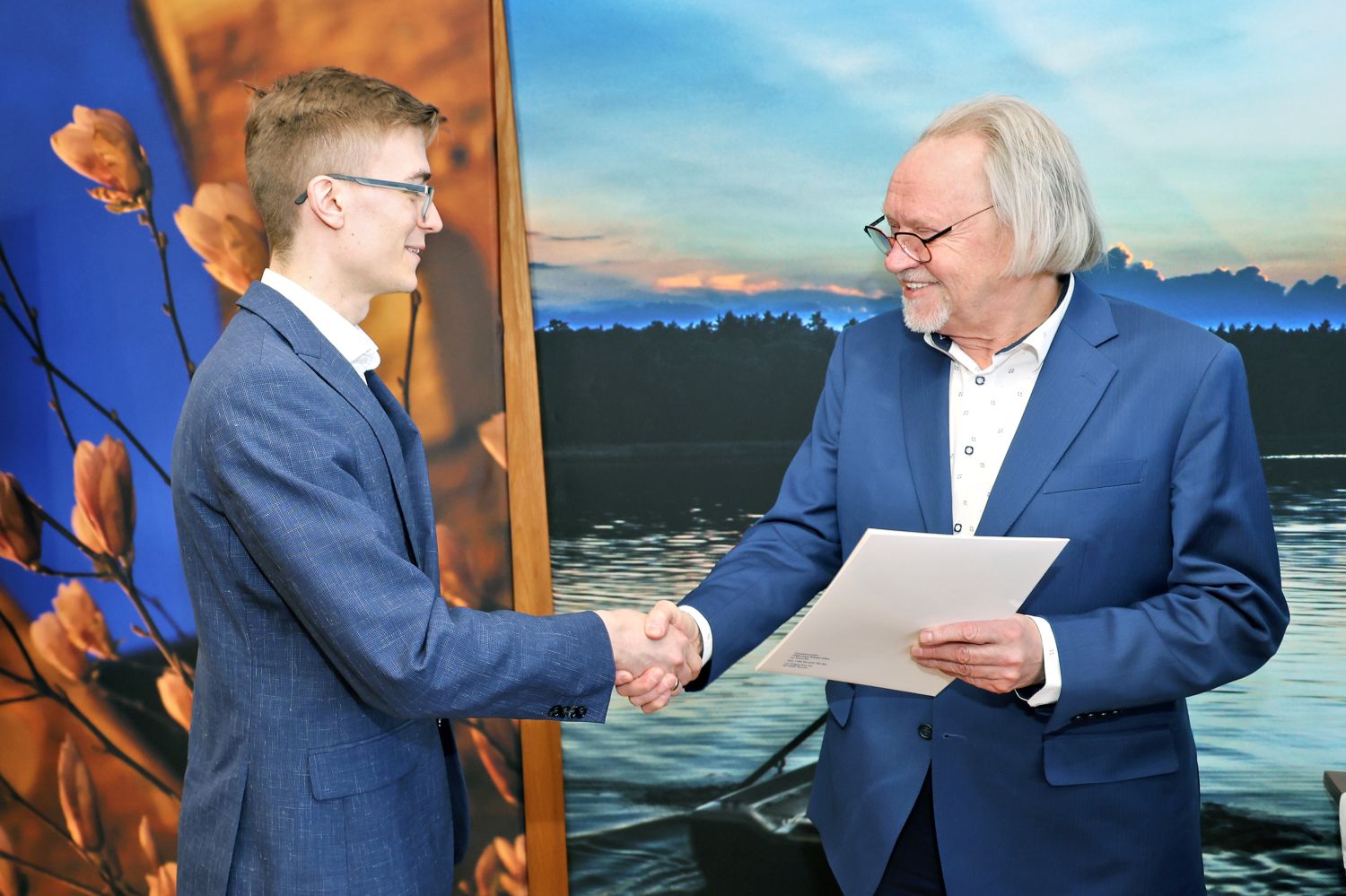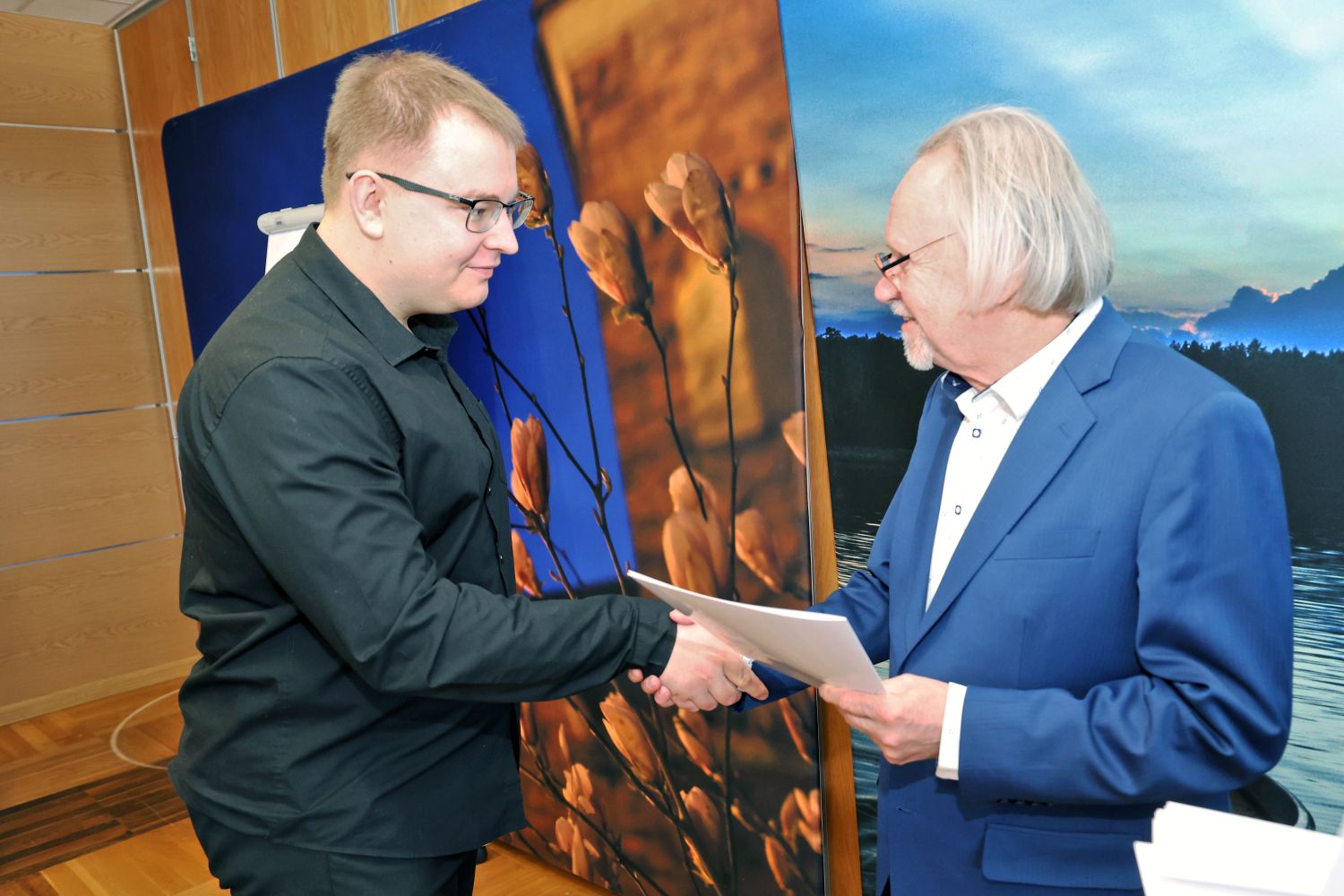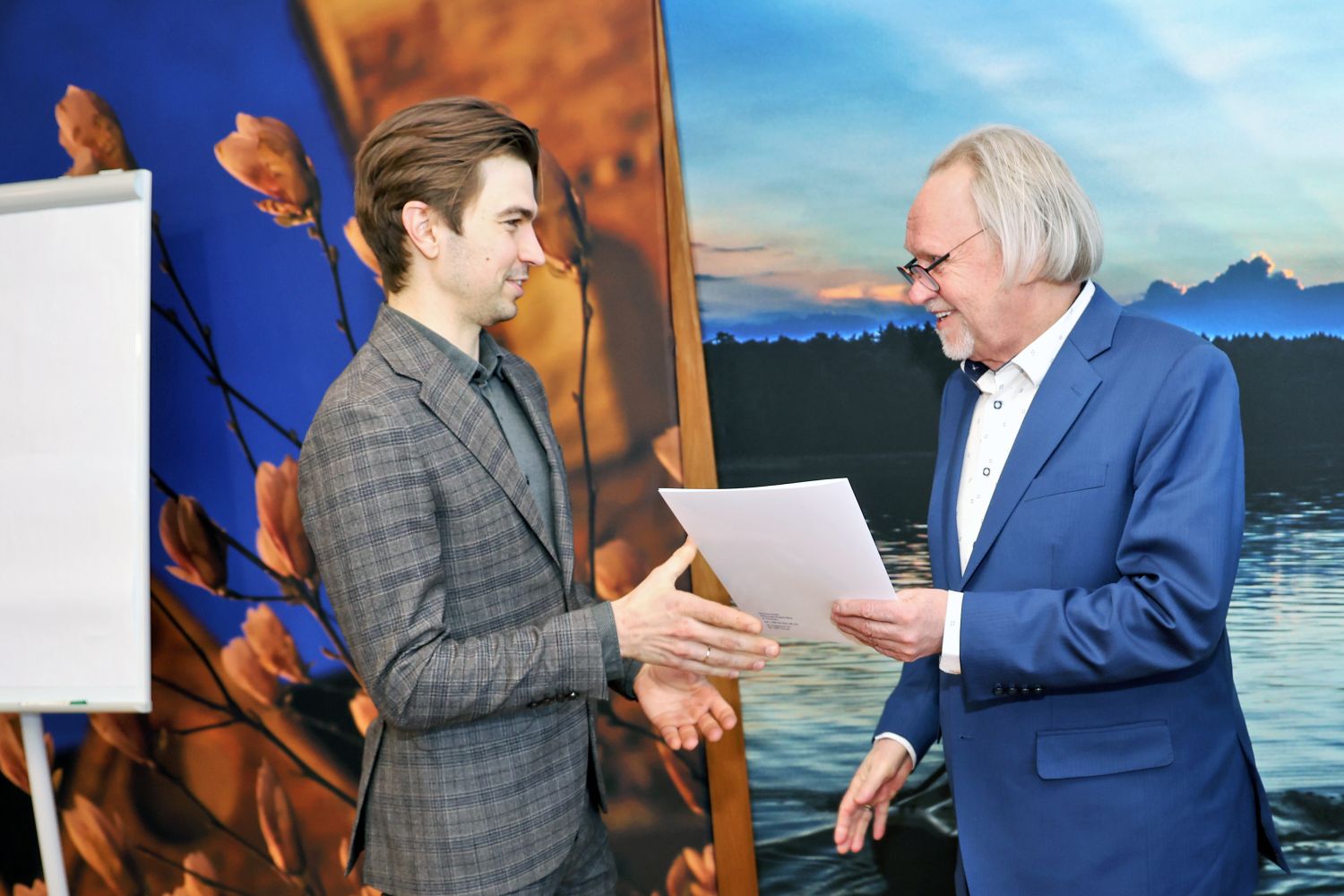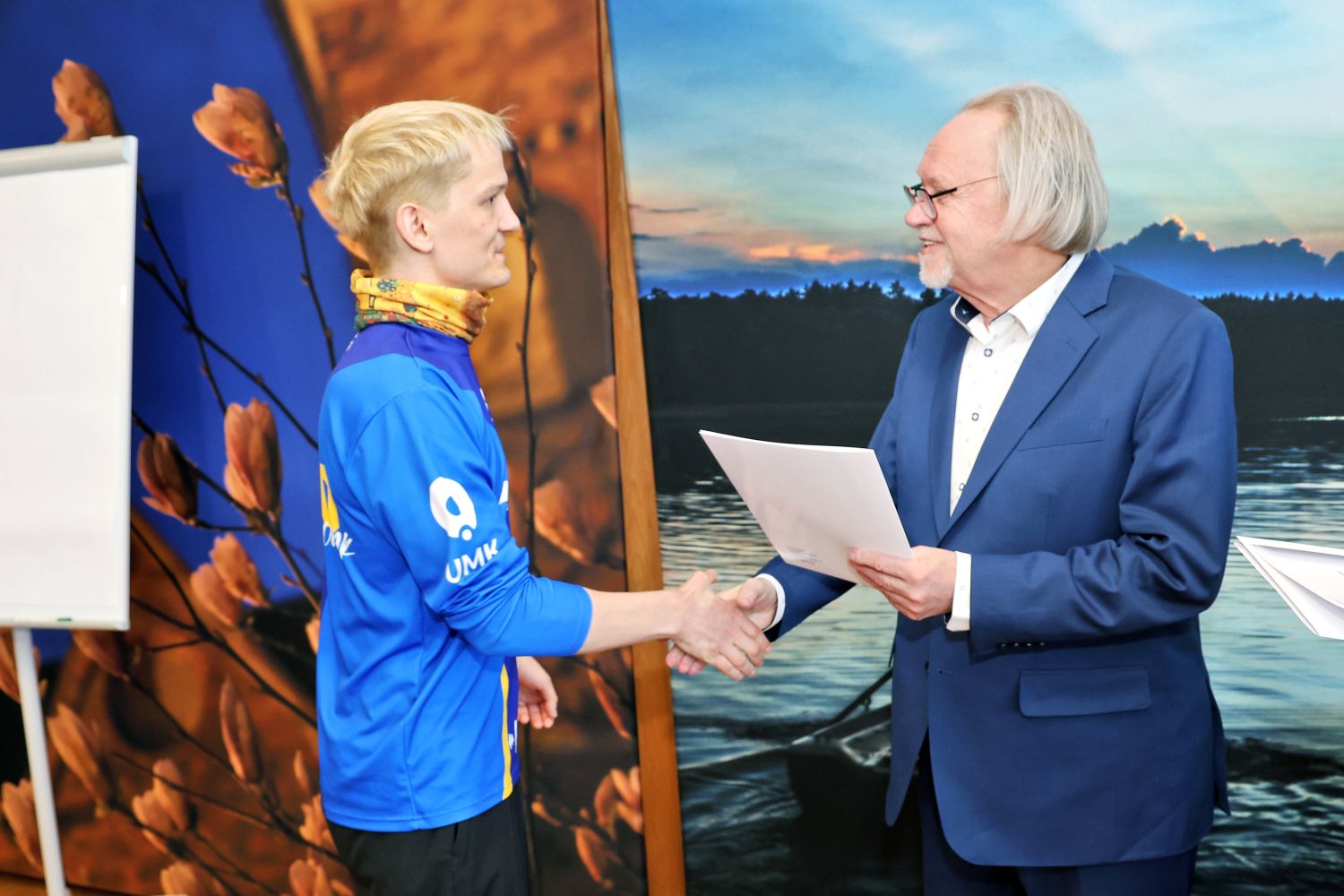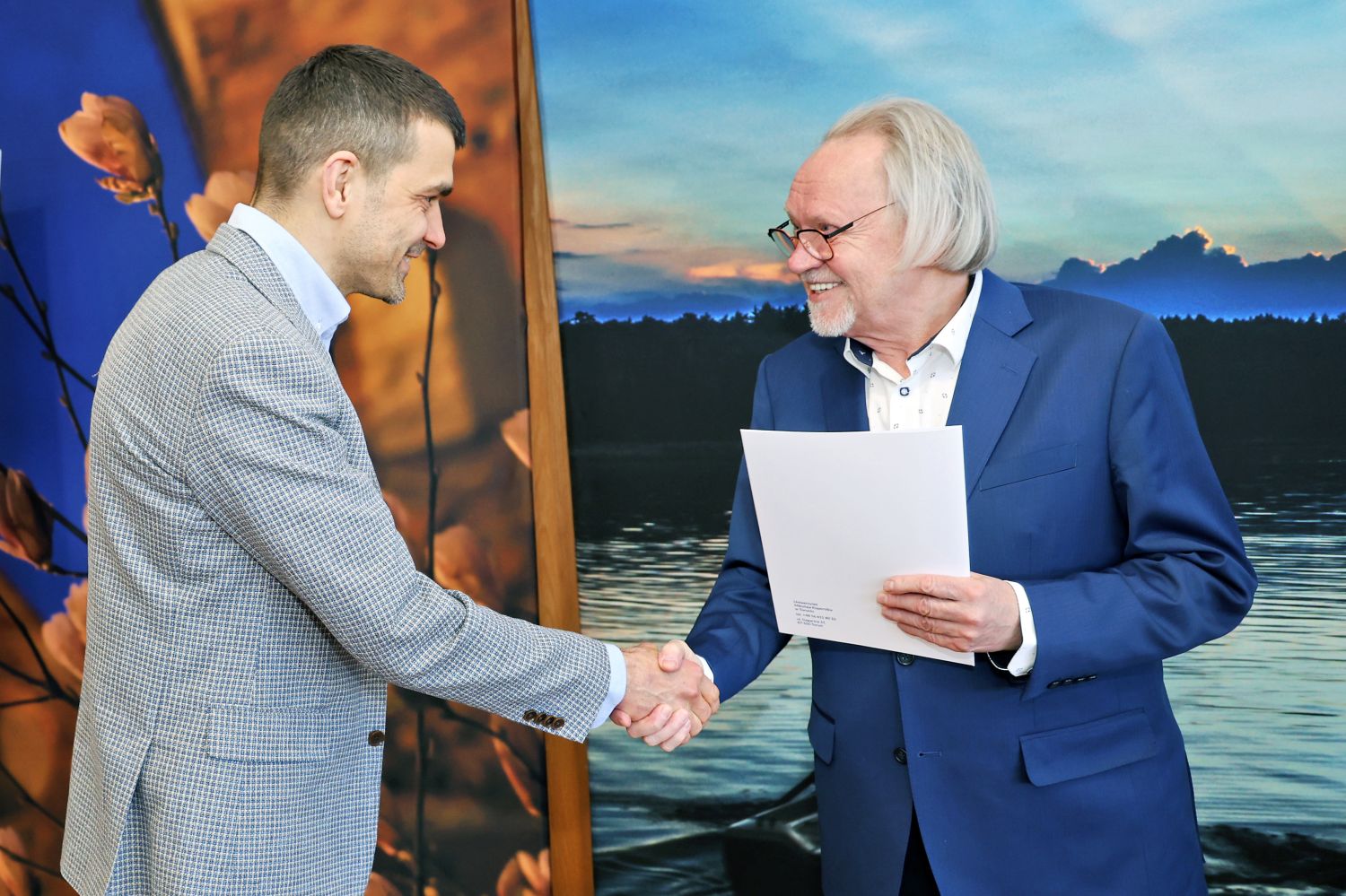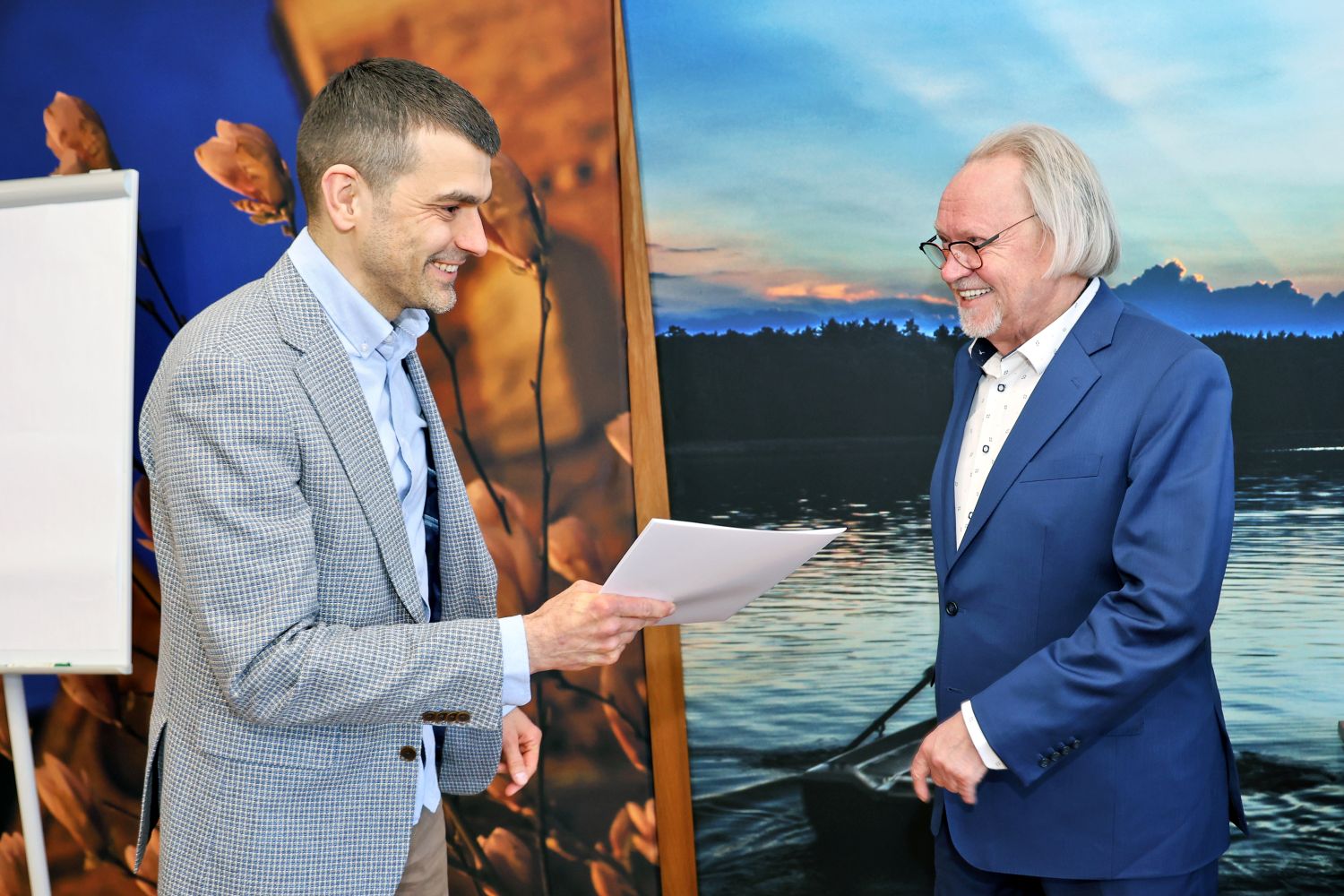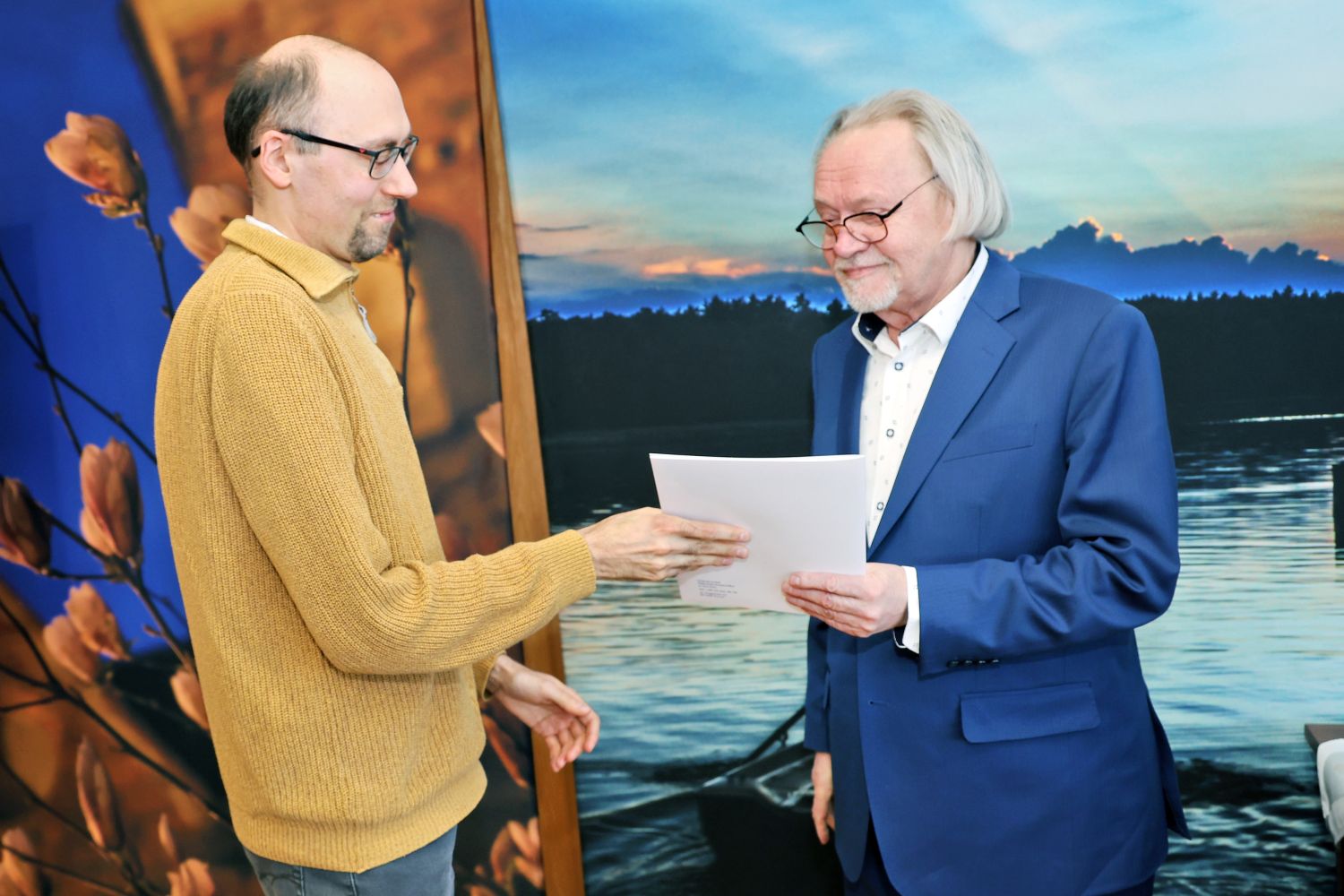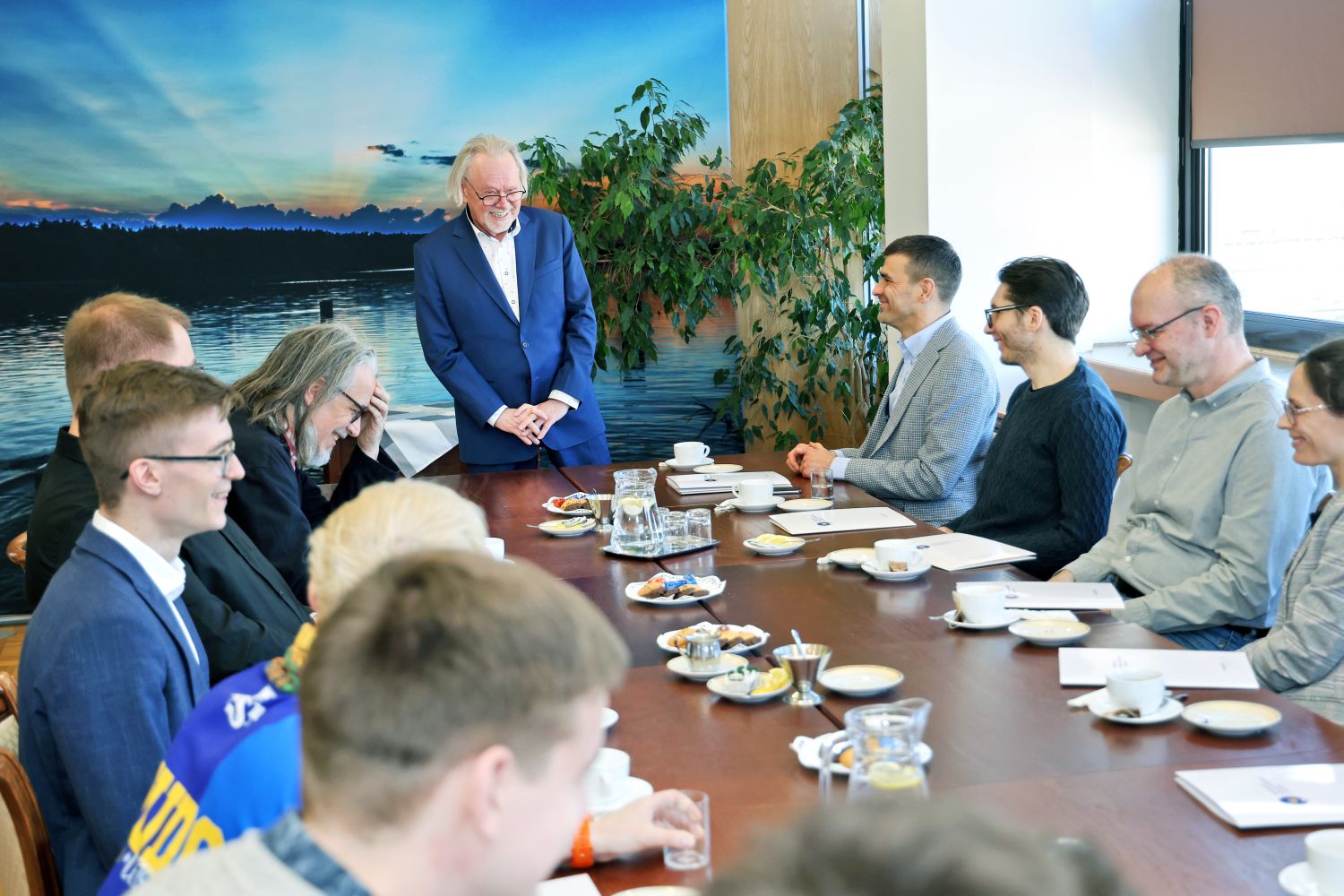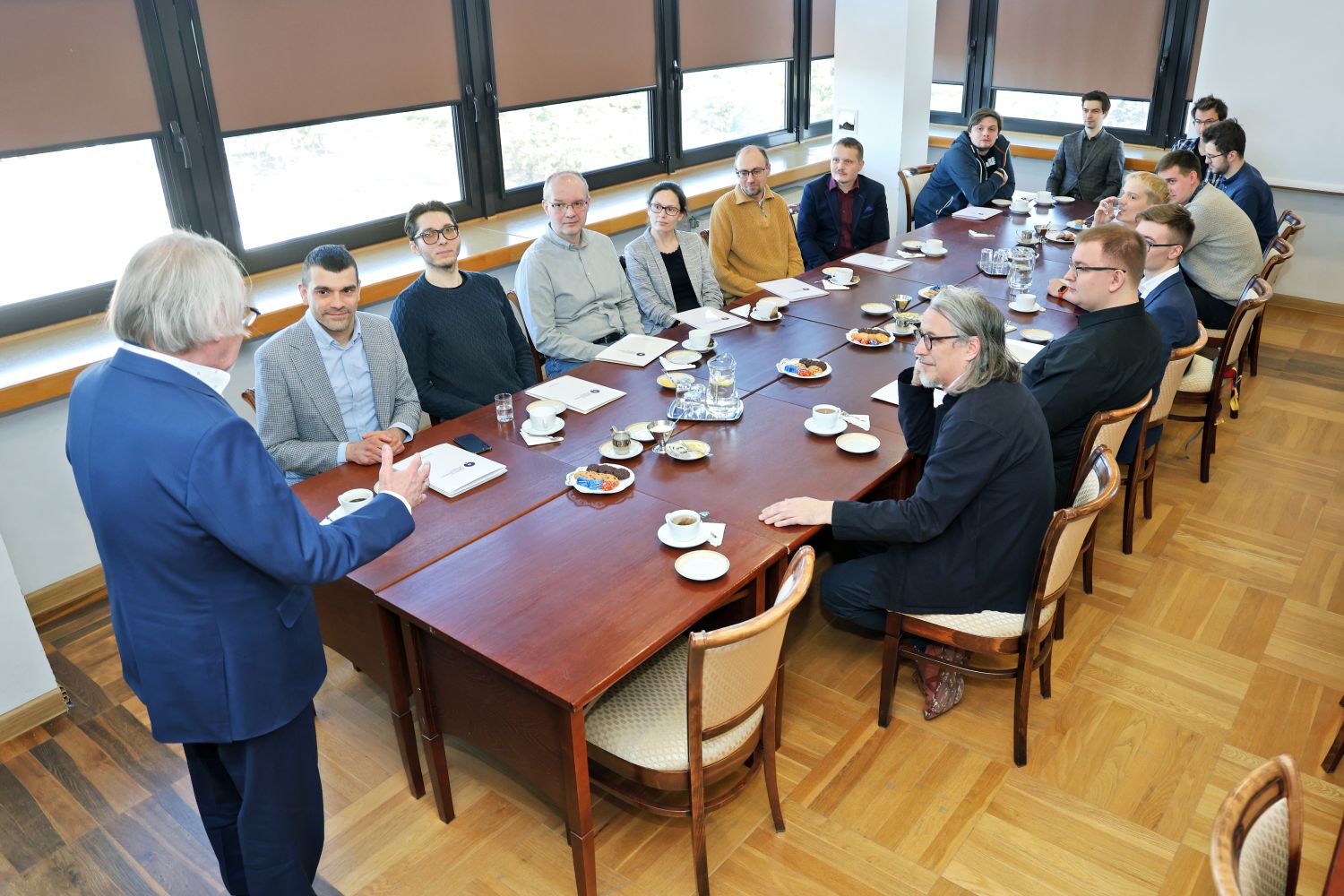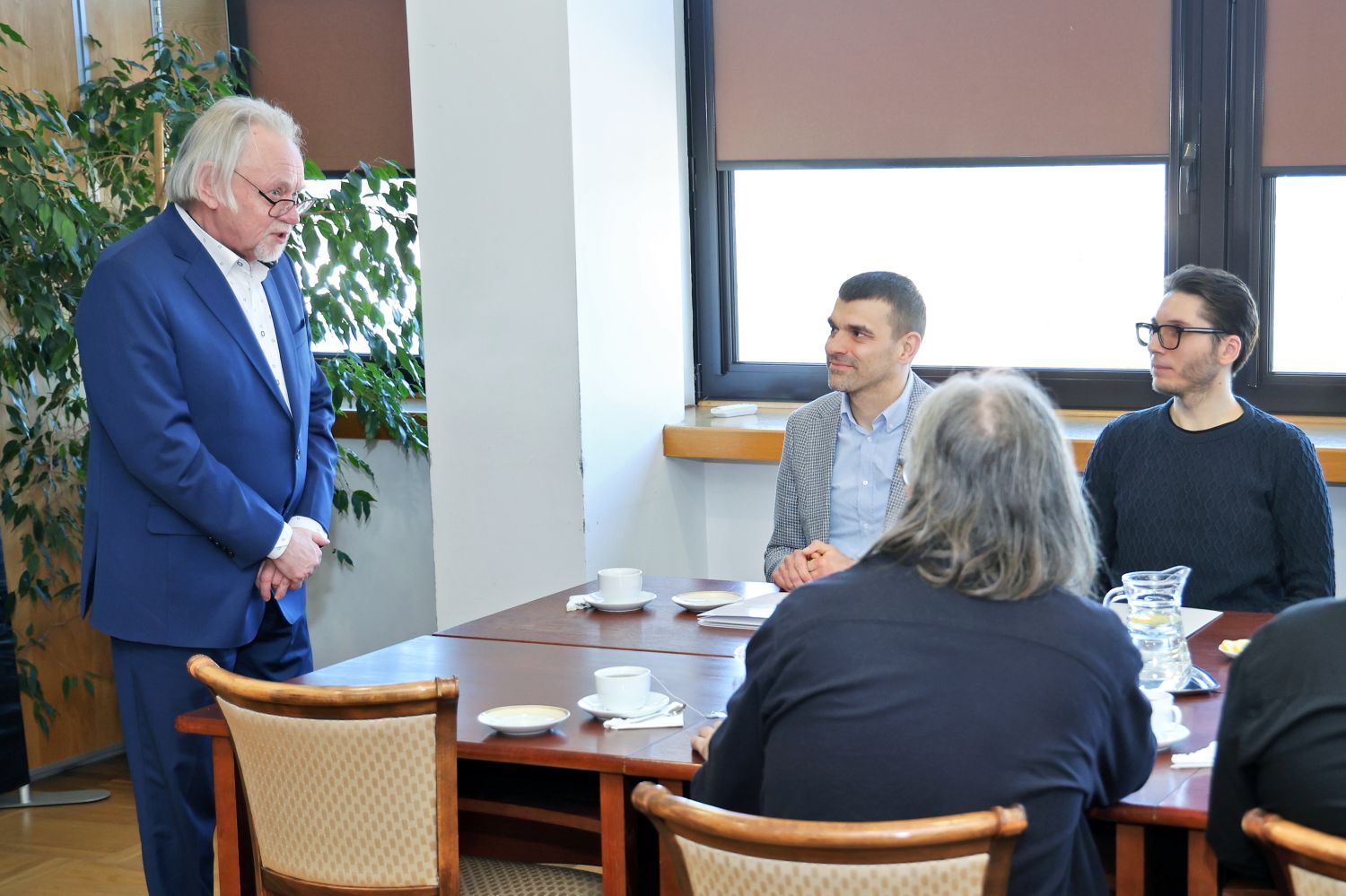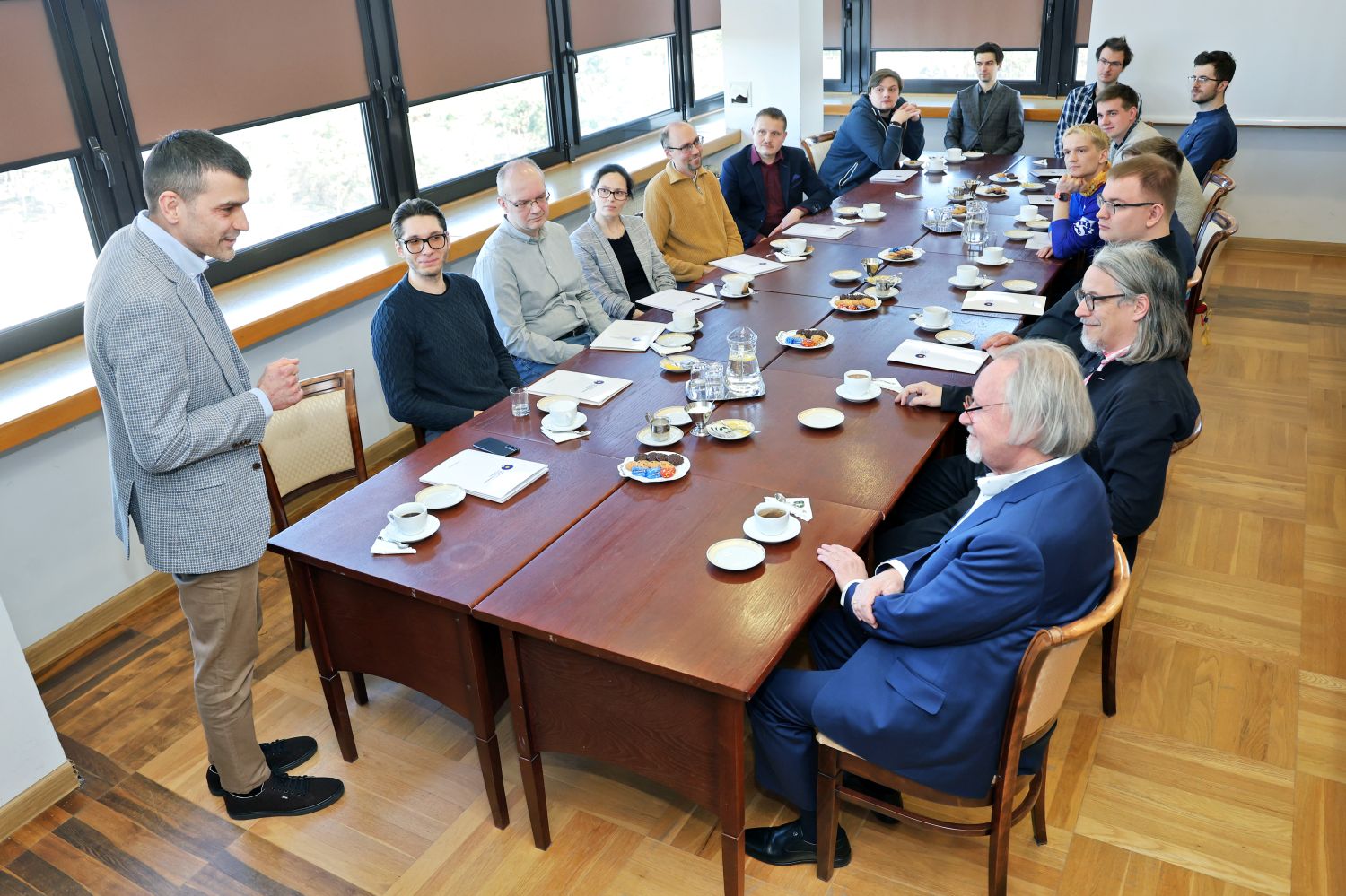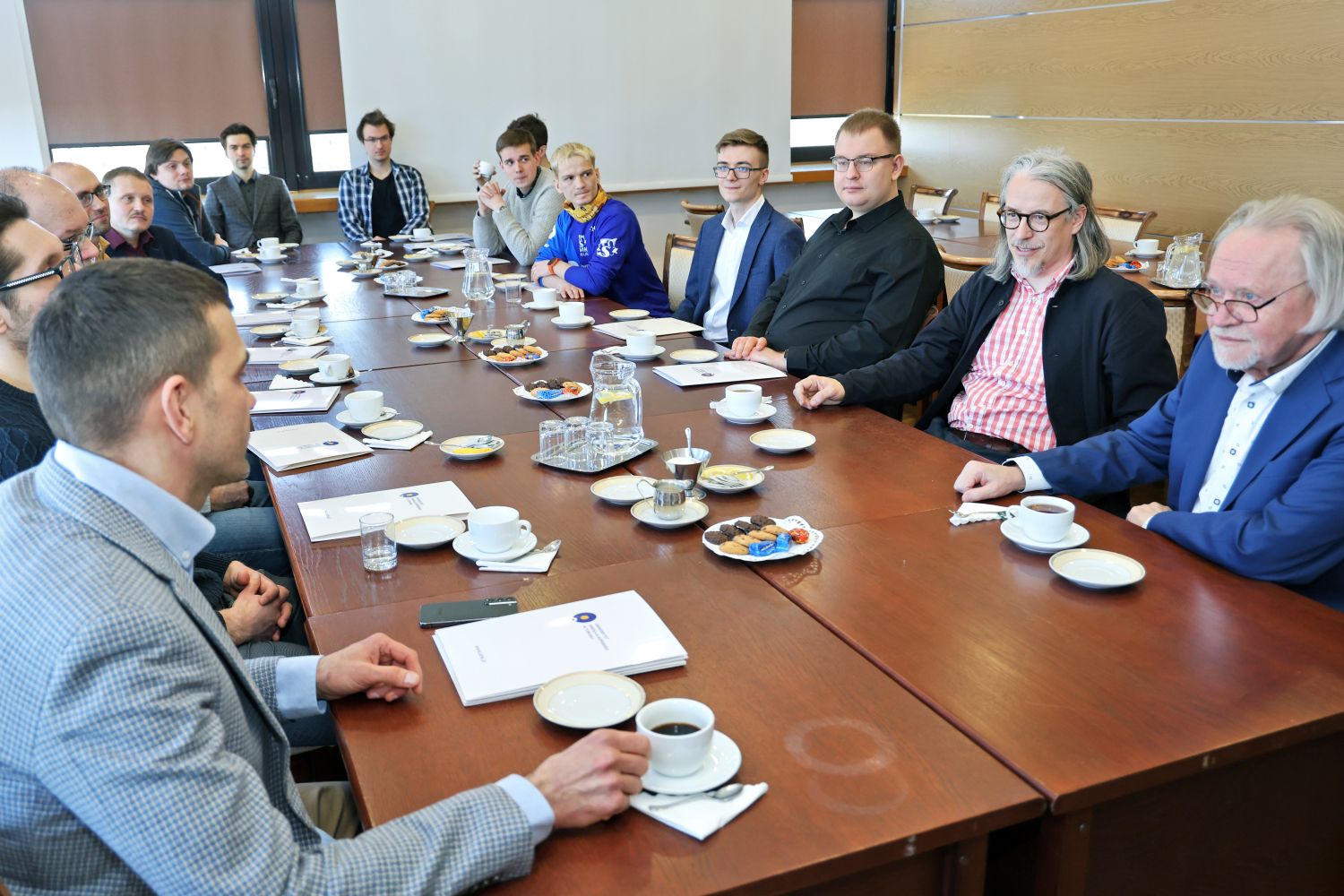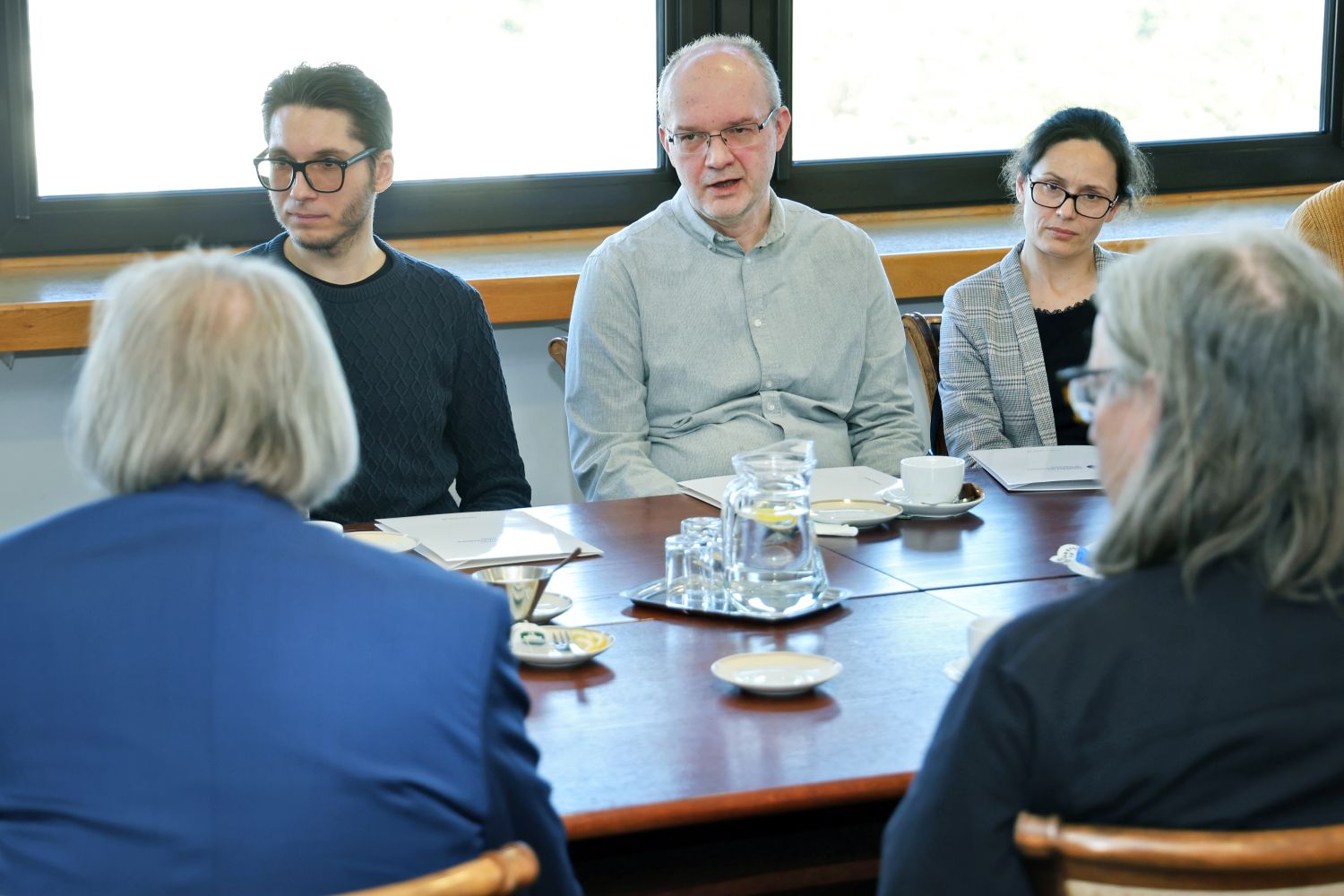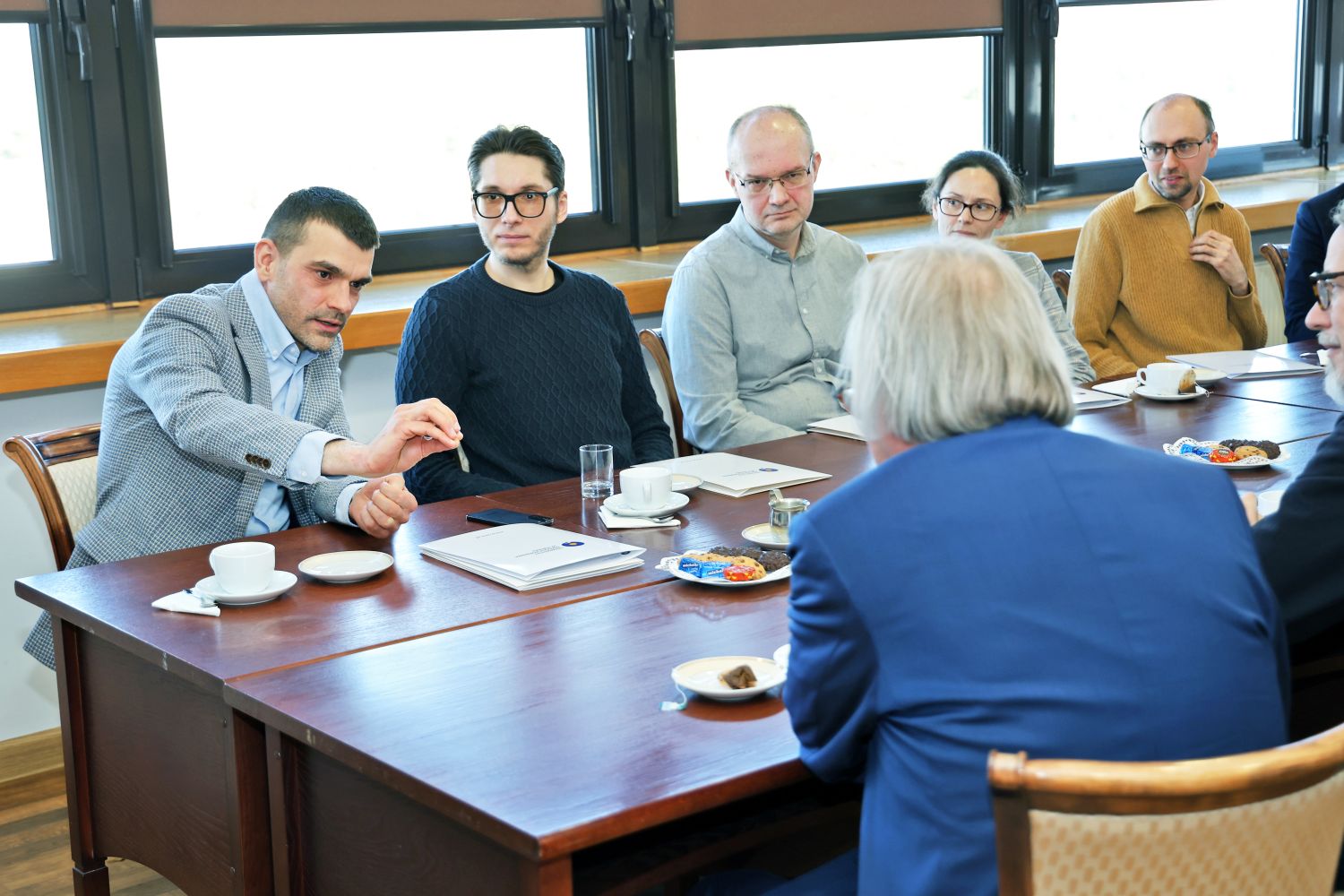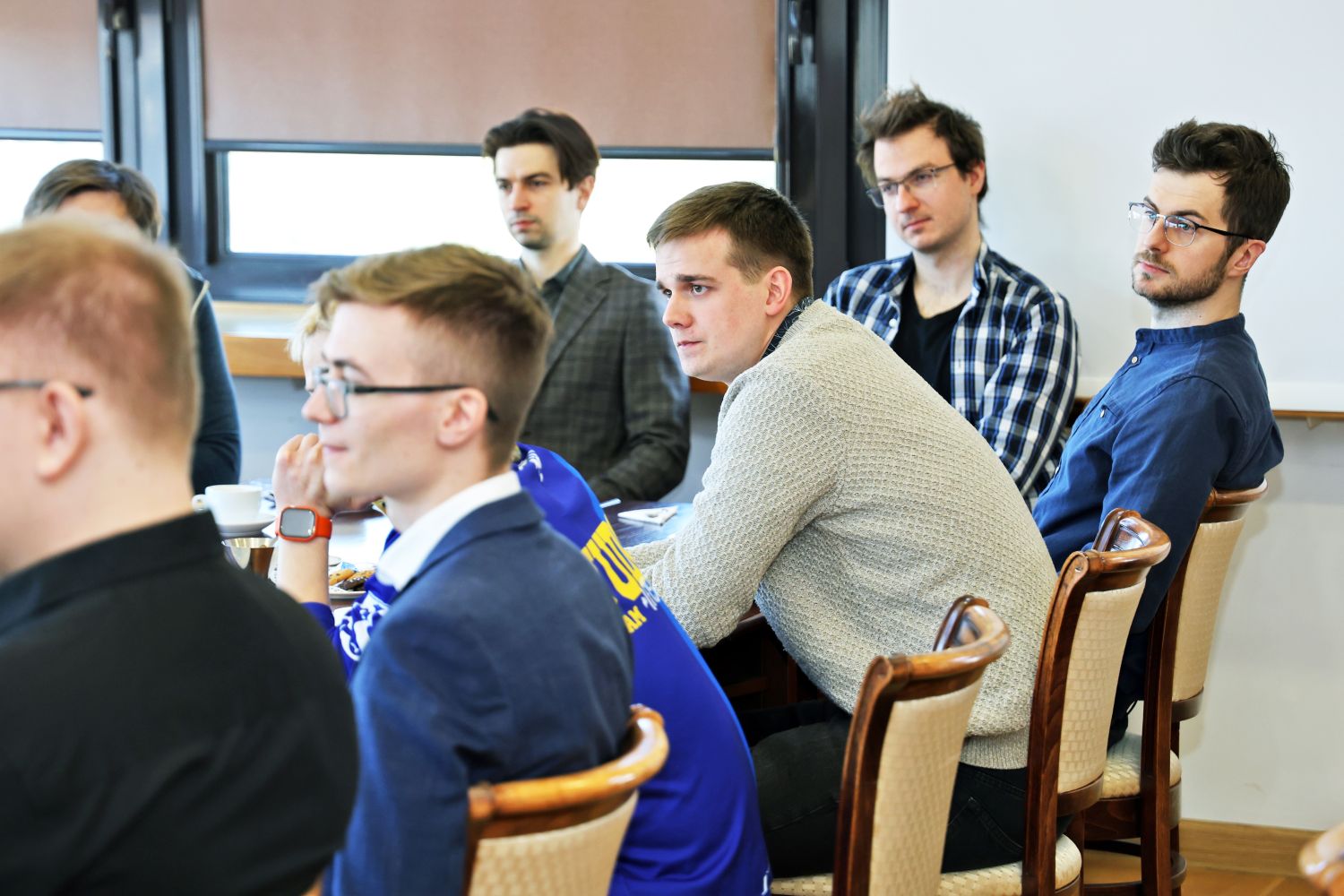
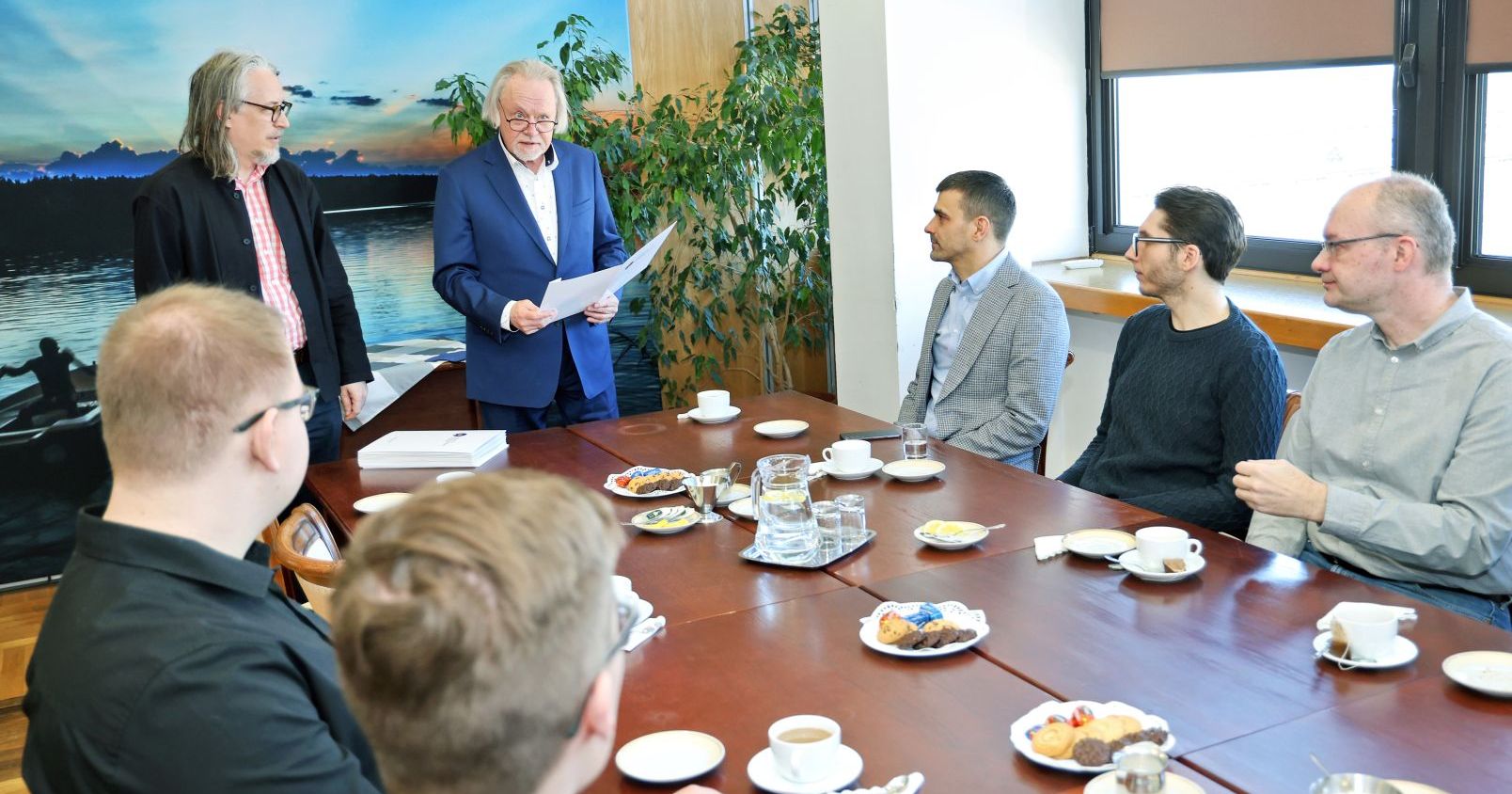
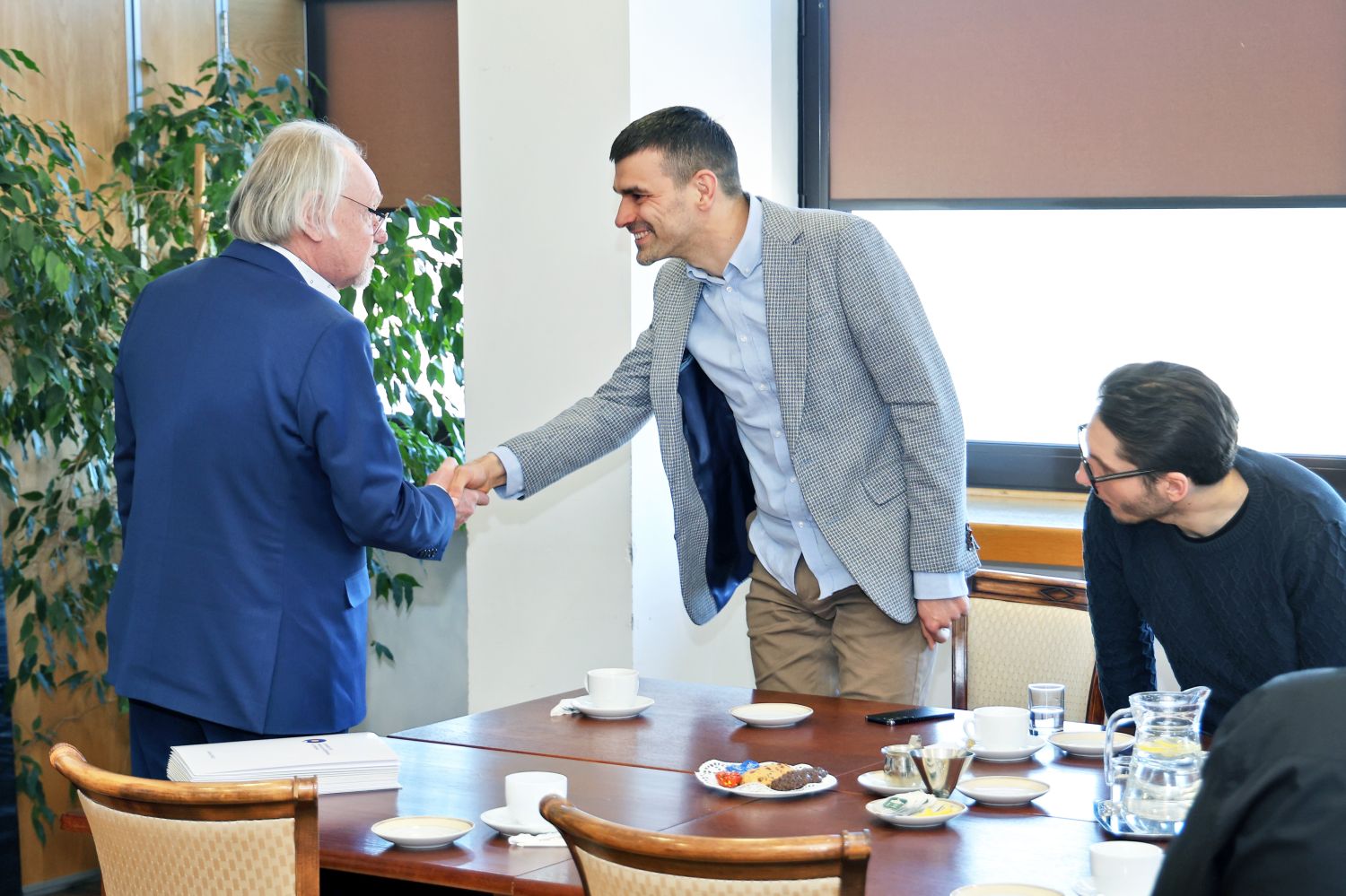
Prof. dr habil. Andrzej Tretyn, NCU Rector and dr habil. Adam Kola, NCU Prof., Vice-Rector for Science met with researchers from the NCU Institute of Physics Five men are sitting at the table. Two people are also standing by it: the university rector and the vice-rector Exact sciences

Rector rewarded groundbreaking research in quantum physics

— Editors
share on twitter share on facebook share on linkedin send by email print

Prof. dr habil. Andrzej Tretyn, Rector of the Nicolaus Copernicus University in Toruń, met with Prof. Piotr Wcisło's team and presented the researchers with a special award for their outstanding research and publication achievements.

The Rector particularly praised the innovative nature of the research conducted by scientists at the NCU Institute of Physics and its significance for the advancement of modern science, especially in the field of quantum technologies.

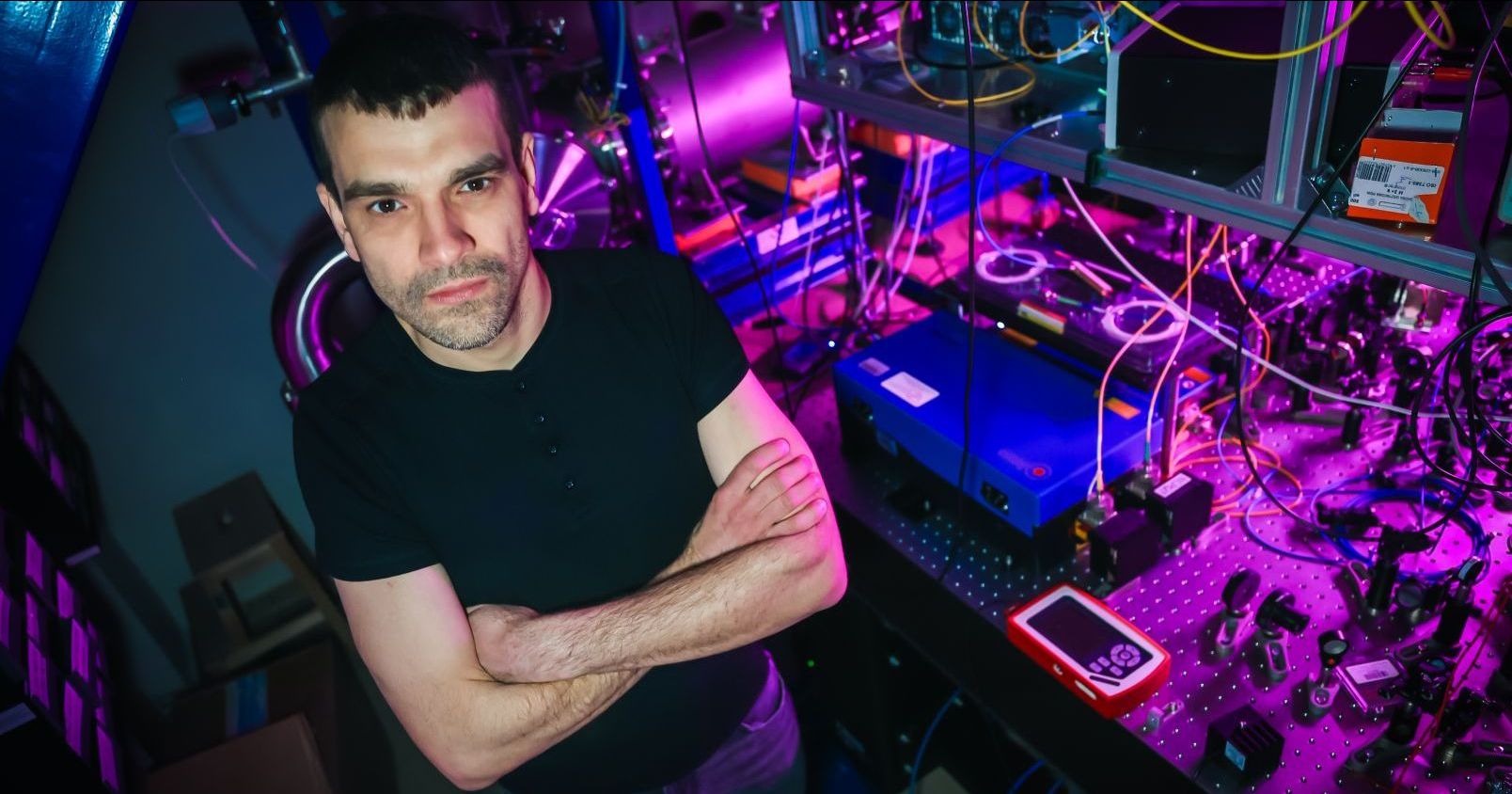
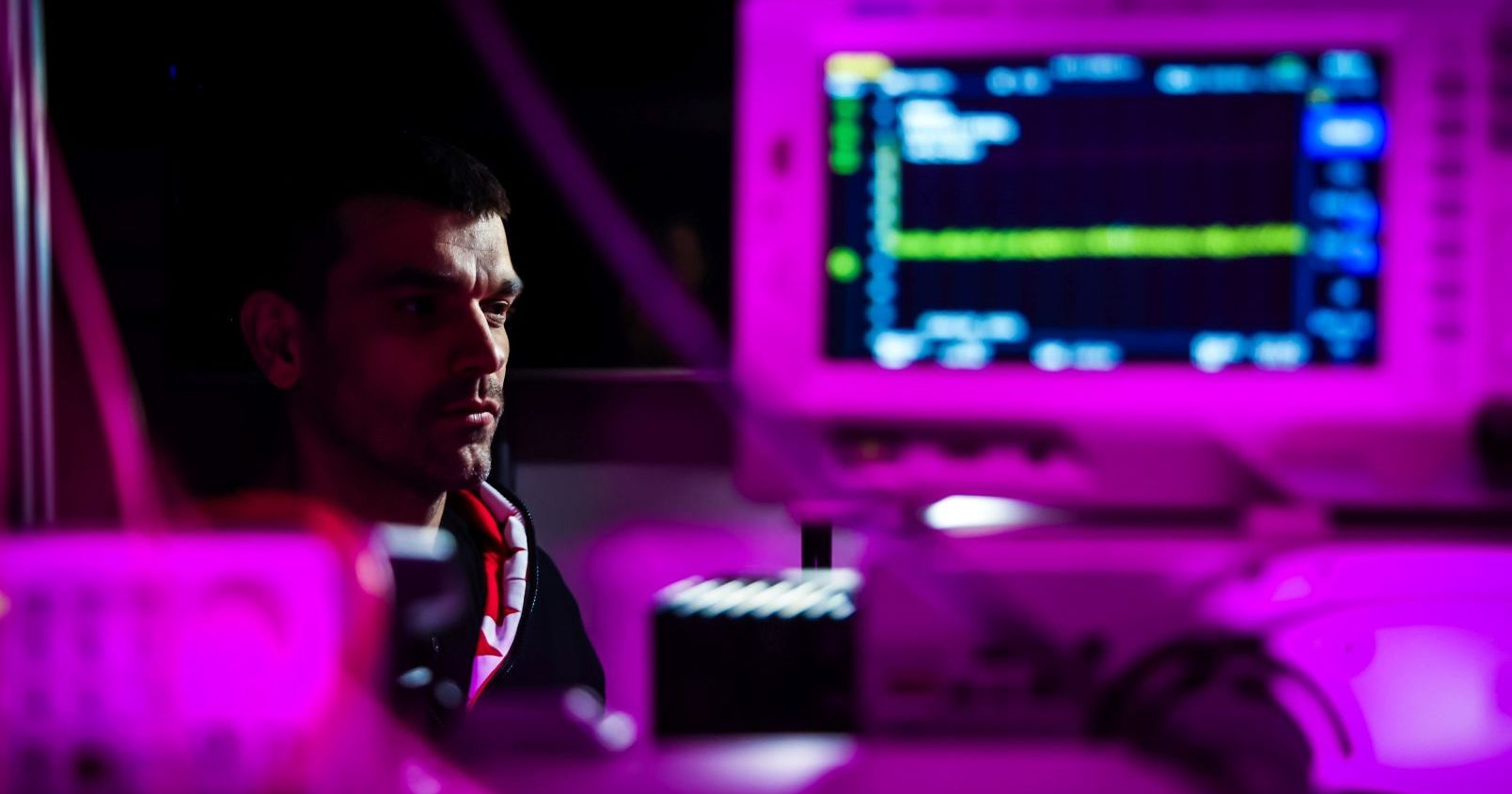
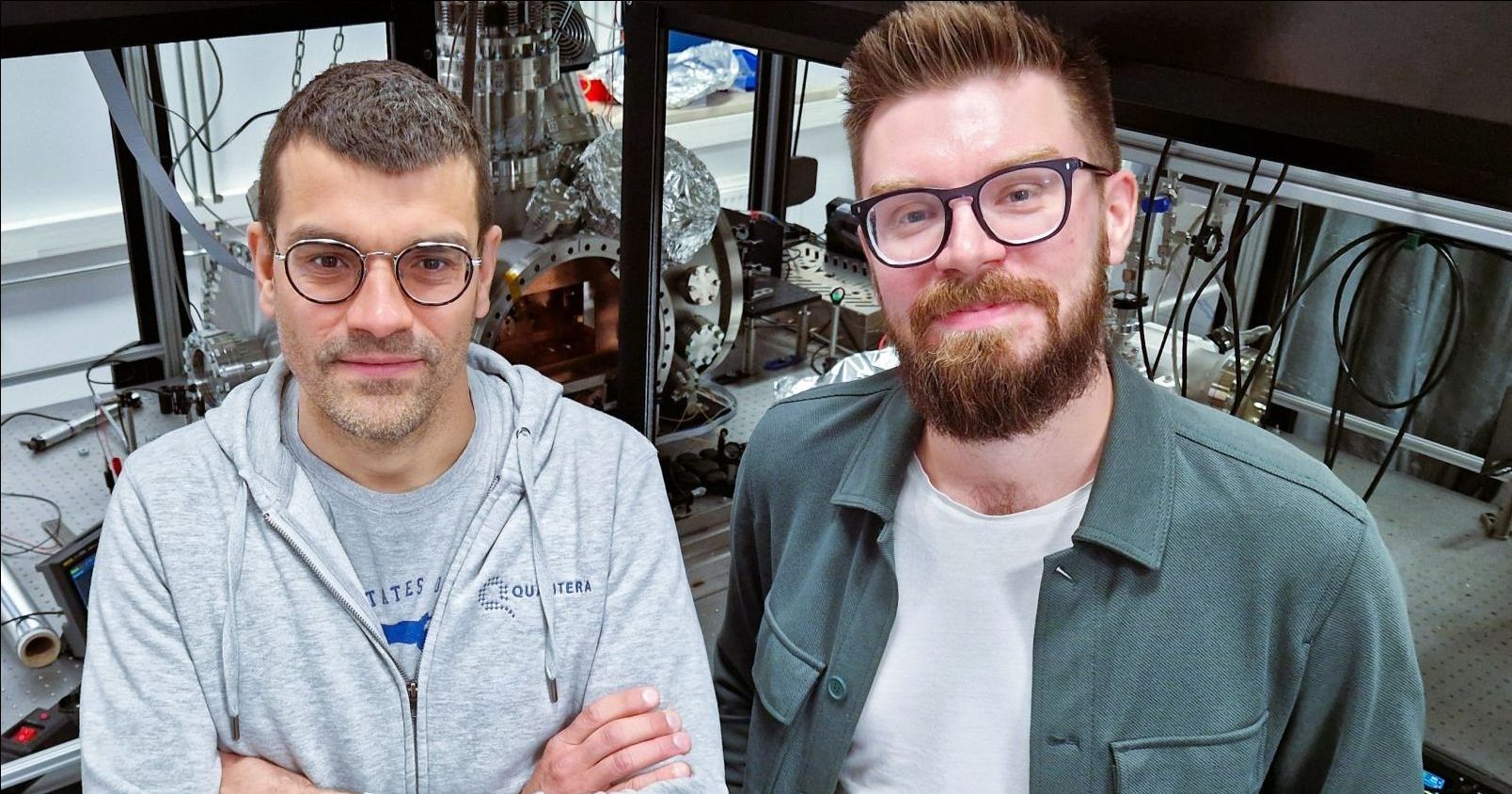
The award-winning research has been described in an article Cavity-enhanced spectroscopy in the deep cryogenic regime for quantum sensing and metrology, published in the prestigious journal "Nature Physics". The Group from the NCU Institute of Physics at the Faculty of Physics, Astronomy, and Informatics presented unique research equipment that enables experiments to be conducted at extremely low temperatures, which significantly increases measurement precision and paves the way for a range of entirely new research programs unavailable to any other group in the world.
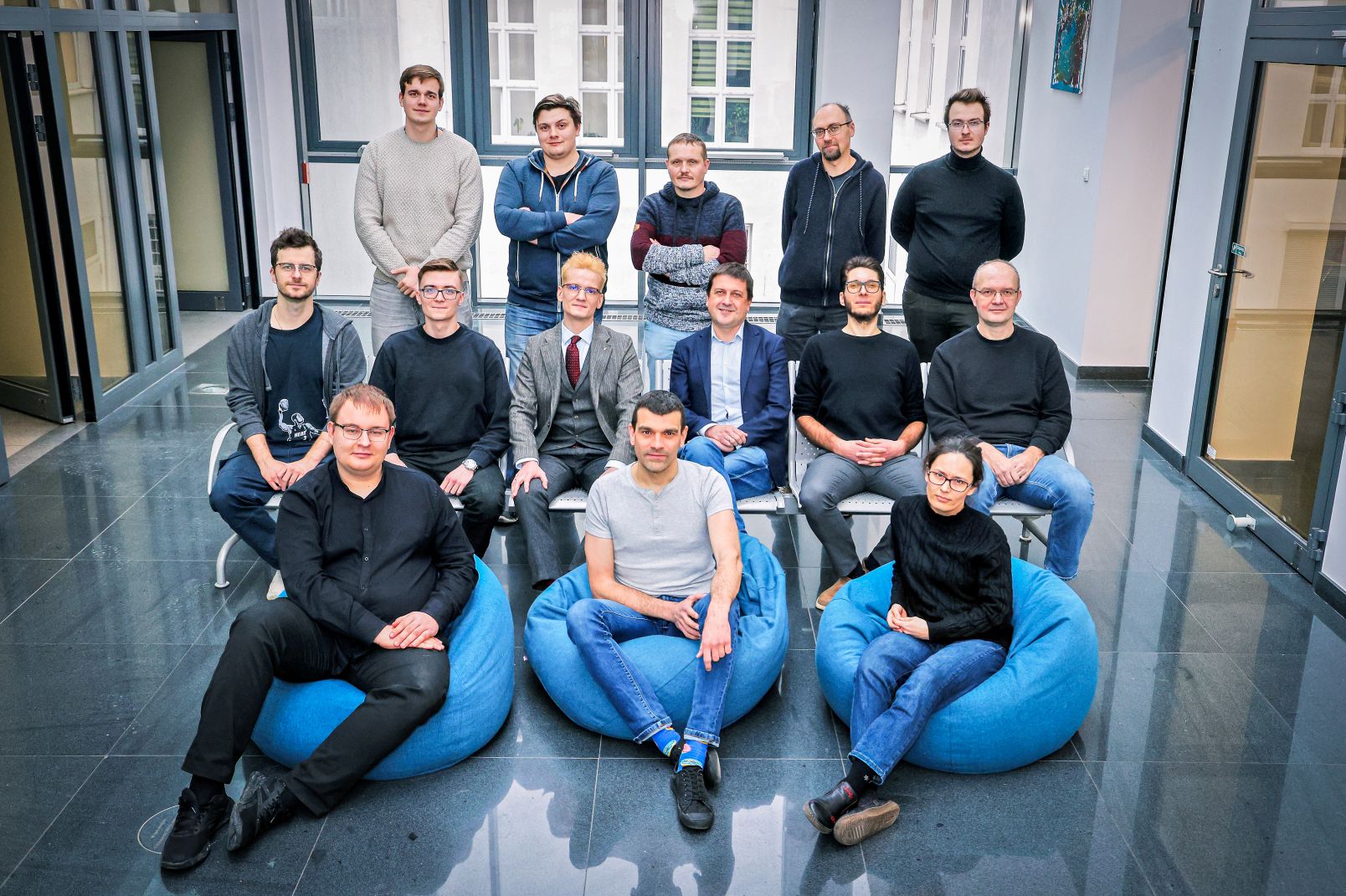
A group of researchers (https://piotrwcislogroup.umk.pl/) has developed quantum technologies that are unique on a global scale, as described in an article in “Nature Physics"Andrzej Romański

The research conducted at the FAMO National Laboratory exemplifies the dynamic development of Polish physics and its growing presence in the global scientific community. As emphasized during the meeting, the achievements of Prof. Piotr Wcisło's group not only strengthen the position of the Nicolaus Copernicus University but also contribute to the development of technologies that may find application in the future in, among other things, precision measurement systems and new information solutions.

Rules od sharing information

Gallery

  •  Click to enlarge image
  •  Click to enlarge image
  •  Click to enlarge image
  •  Click to enlarge image
  •  Click to enlarge image
  •  Click to enlarge image
  •  Click to enlarge image
  •  Click to enlarge image
  •  Click to enlarge image
  •  Click to enlarge image
  •  Click to enlarge image
  •  Click to enlarge image
  •  Click to enlarge image
  •  Click to enlarge image
  •  Click to enlarge image
  •  Click to enlarge image
  •  Click to enlarge image
  •  Click to enlarge image
  •  Click to enlarge image
  •  Click to enlarge image
  •  Click to enlarge image
  •  Click to enlarge image
  •  Click to enlarge image
  •  Click to enlarge image
  •  Click to enlarge image
  •  Click to enlarge image
  •  Click to enlarge image
share on twitter share on facebook share on linkedin send by email print

Related articles

Pioneering research with support from the NCN

Unique quantum technologies developed at NCU

Article contains photo gallery Article contains a clip

Molecules trapped in a one-dimensional crystal of light

On Nicolaus Copernicus University web pages „cookies” are used. On use of cookies read in Privacy policy.
Cookies settings
On Nicolaus Copernicus Pages "cookies" are used in accord with our Privacy policy. We use "cookies" to improve functionality of our web page. Collected data are anonymized and are used to statistic and analytic purposes, for better adjusting content to user preferences and increase of quality. To approach this goal we use Google Analytics, CUX i Facebook Pixel to. Below we give you the ability of turning on/off this tools.
  on/off
Google Analitics

We use analytic tool Google Analytics, which give us information about user visits on our service (visited pages, navigation path, time of visit)

CUX

We use analytic tool CUX to regisiter visits on NCU News.

Facebook Pixel

We use marketing tool Facebook Pixel, to collect information about user visits and viewed pages.