 NCU News
 Campus life
Retro style in the renovated interiors of NCU


The interior design of the rectorate building, referring to the original design from the 1960s, a new layout and reconstruction of rooms, thermal modernisation of buildings and replacement of installations – designers presented the principles of the reconstruction of the university authorities' headquarters and the Nicolaus Copernicus University Main Library.
TBi ARCHiTEKCi are responsible for the modernisation project of the rector's office, while Archimedia Architekci & Inżynierowie are preparing changes to the library. In accordance with the provisions of the agreements signed on 15 July this year at the Academic Relaxation Zone, both firms presented the first results of their work: TBi ARCHiTEKCi presented a conceptual design, and Archimedia Architekci & Inżynierowie presented a construction and architectural design.
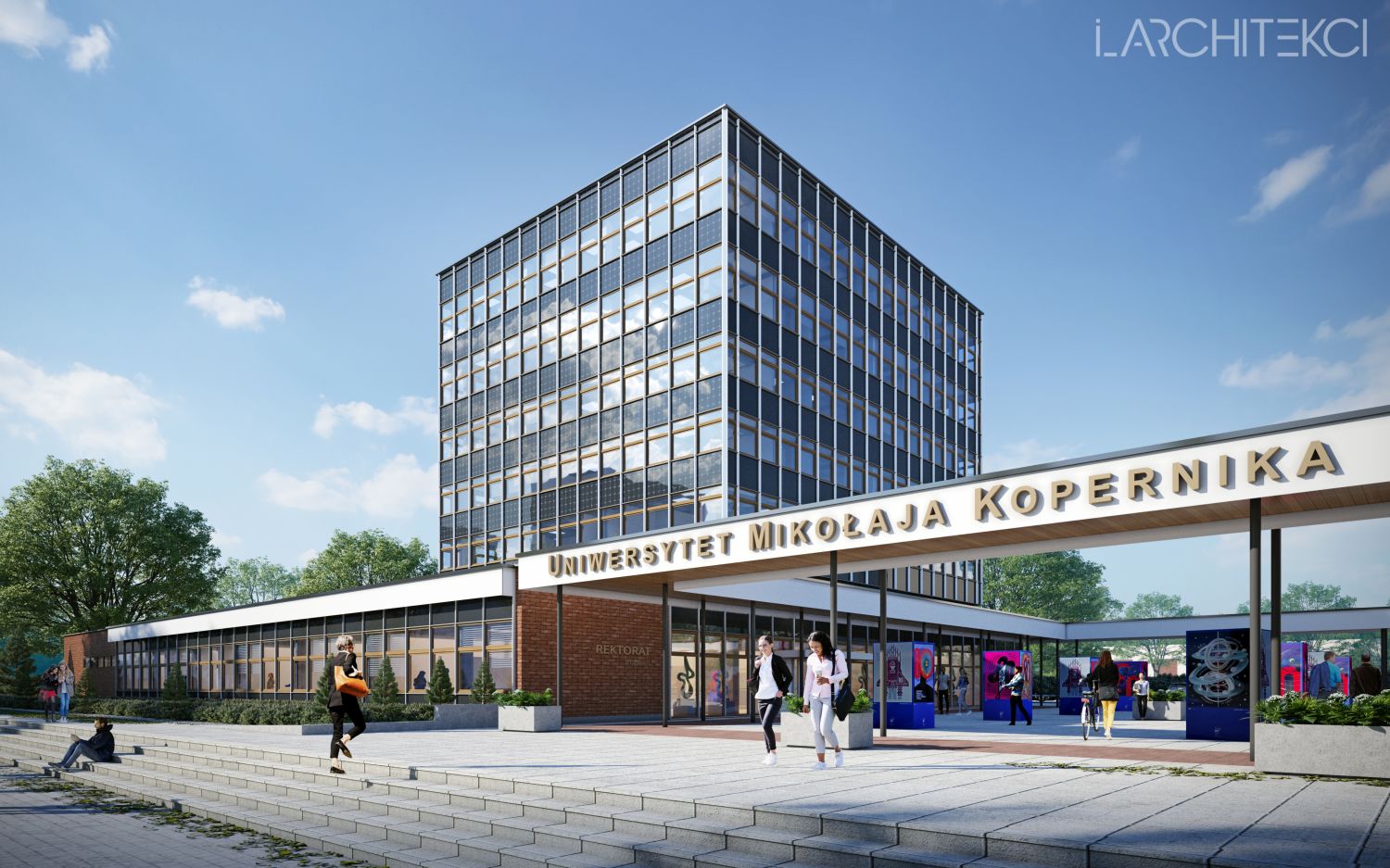
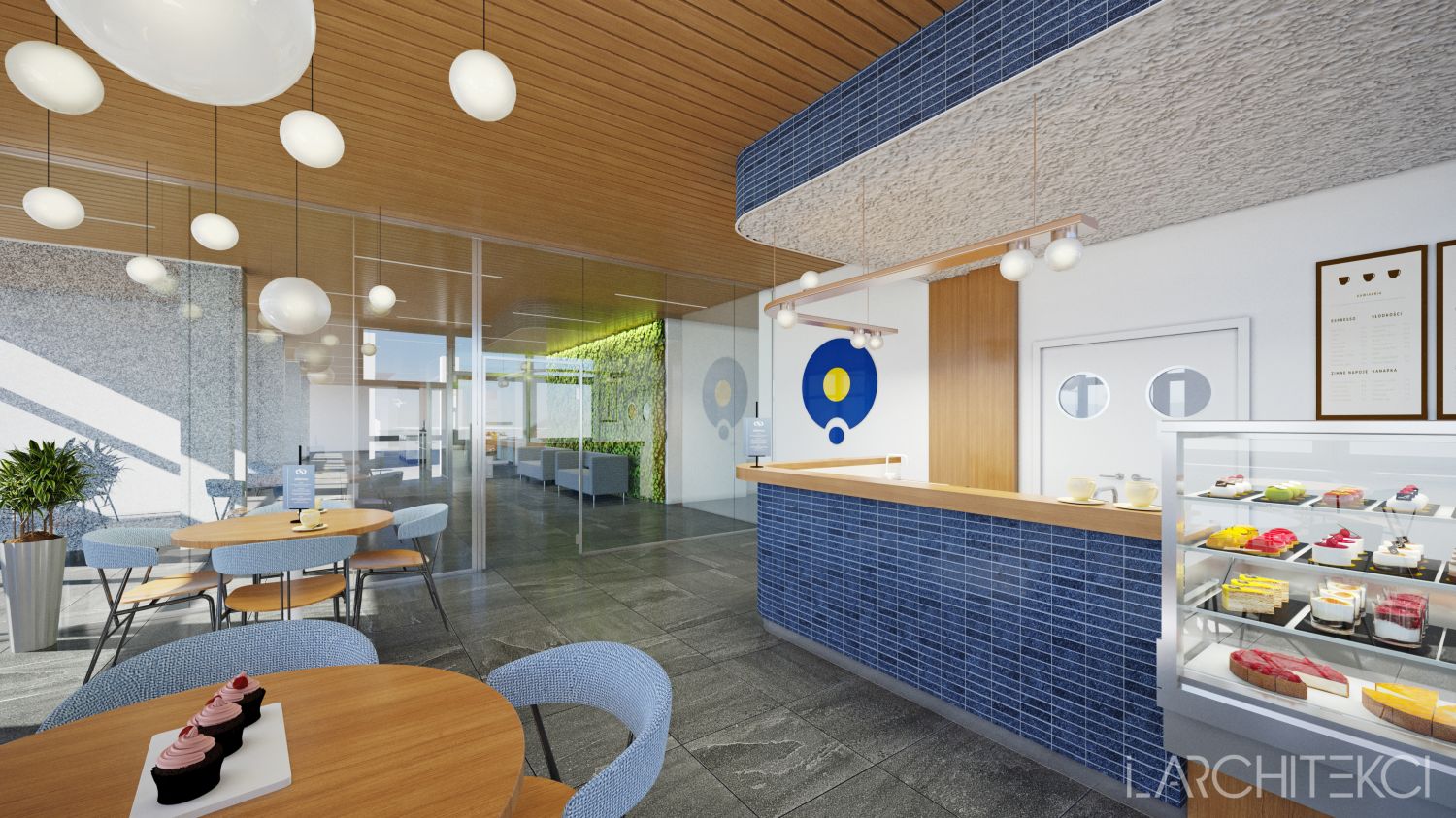
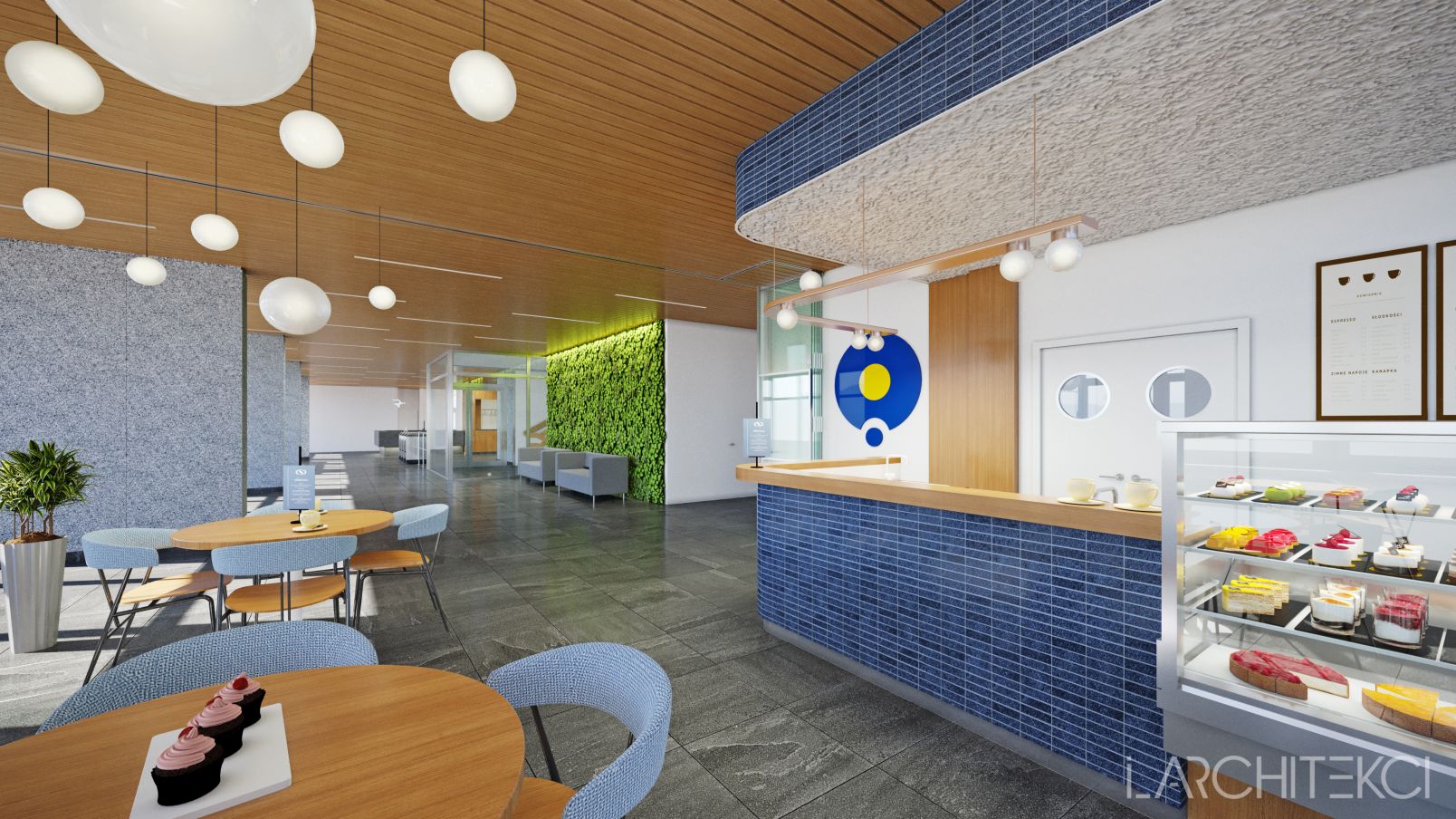
The specialists proposed, among other things, a new layout and reconstruction of the rooms in the rectorate building, reconstruction of the lift shaft and a new shaft through all floors for mechanical ventilation ducts. They also designed new sanitary facilities in accordance with current regulations and adapted the existing toilets to the applicable standards. In addition, a small café is to be built on the ground floor, accessible from both the lobby and the outside.
credit: TBi ARCHiTEKCi
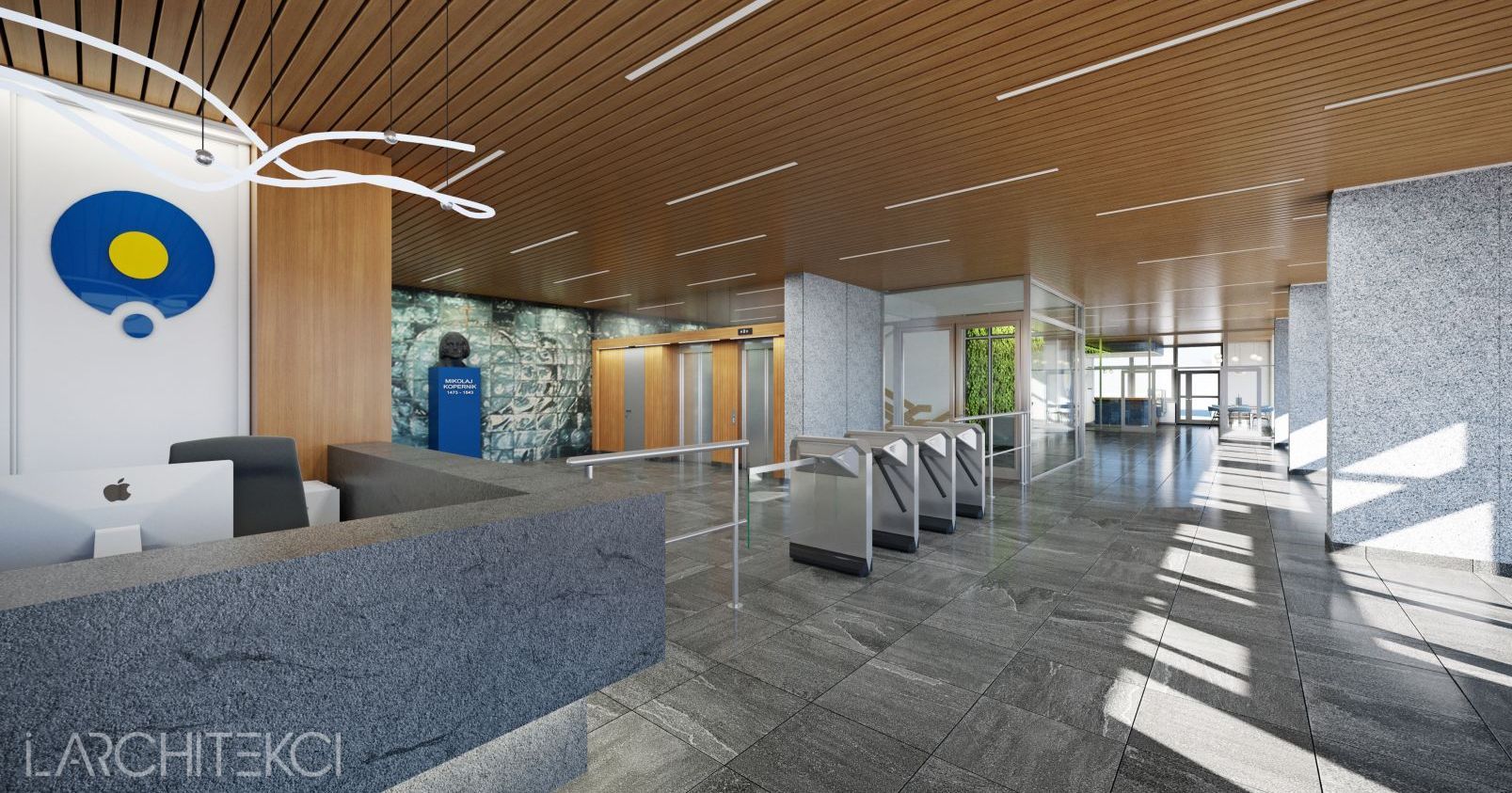
The planned interior design will be based on the original design. Elements of architectural and conservation value will be renovated. After completion of the work, visitors to the building will still be able to see the decorative mosaic with the bust of Nicolaus Copernicus on a pedestal and the commemorative plaque. In addition, the radiator covers and cloakroom rooms clad in wood panelling will remain on the ground floor. The internal open patio will retain its original layout and surfaces, and a wooden slatted suspended ceiling has been designed for the lobby and café, relating to the wooden ceilings originally found in the building.
In the lobby and staircases, workers will leave the cleaned and renovated marble stone flooring and original balustrades. Several original aluminium and wooden doors and original fragments of washed terrazzo cladding will also be renovated.
credit: TBi ARCHiTEKCi
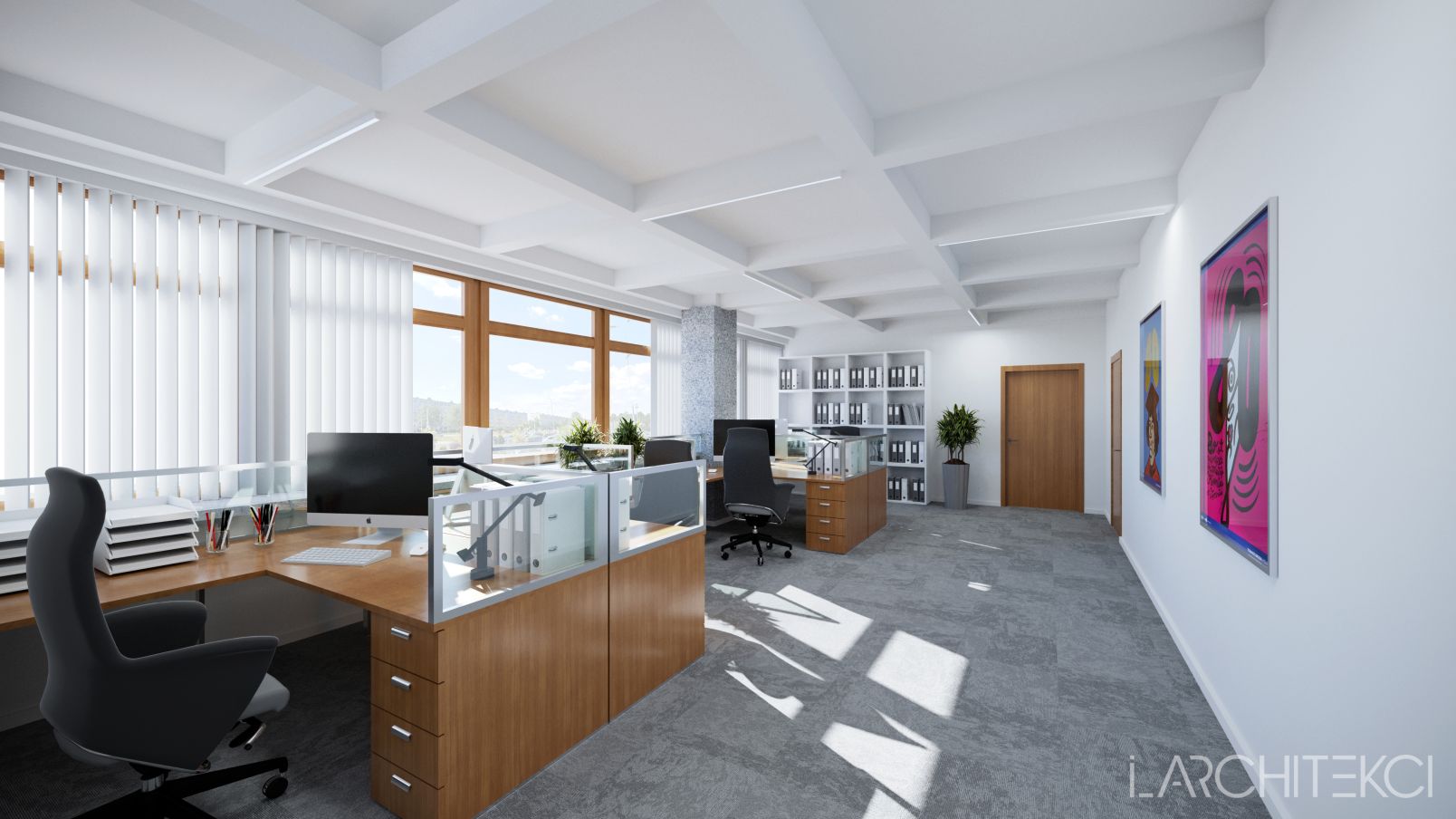
Wood and natural oak wall panelling reminiscent of the panelling that was used extensively in the original interior design will return to the entrance lobby. The glazing and glazed interior doors in natural aluminium colour will also refer to the historical design. The designers decided to leave a spacious lobby in the rectorate building and to create a green wall in the relaxation area to warm up the interior.
The office rooms are to have a simple aesthetic design without suspended ceilings, with visible ceiling panel divisions. Photovoltaic panels are to be installed on the roof of the building or on the southern façade. Their exact location will be determined at a later stage of the design work, following consultations with the conservation officer. It is known that the power of the photovoltaic installation will be 50 kWp.
The cost of the investment in the rectorate building is estimated at over PLN 22 million, of which PLN 13.5 million is financial support from the European Funds for Infrastructure, Climate and Environment 2021-2027, and the remaining funds have been secured in the university's financial plan.
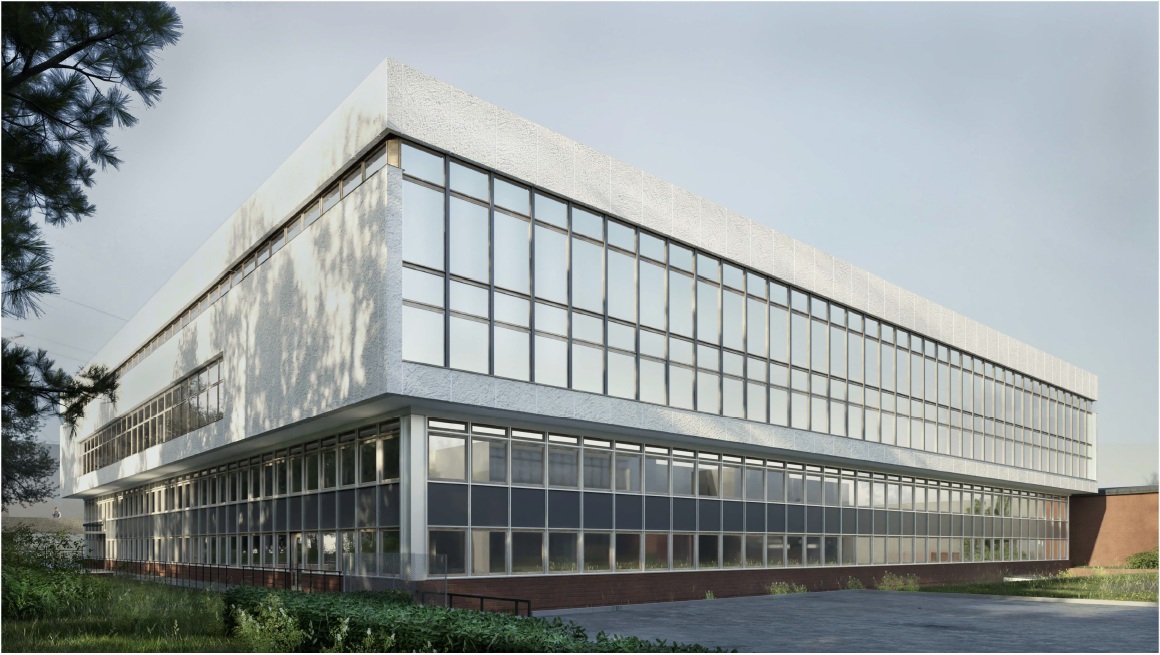
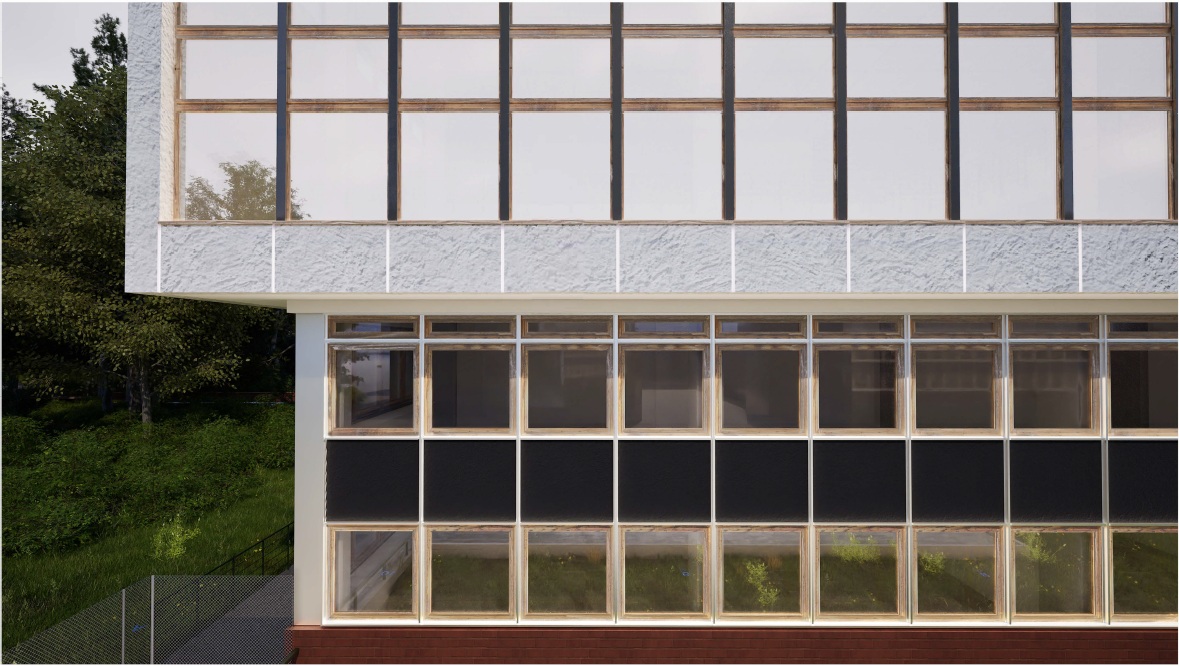
credit: Archimedia Architekci & Inżynierowie
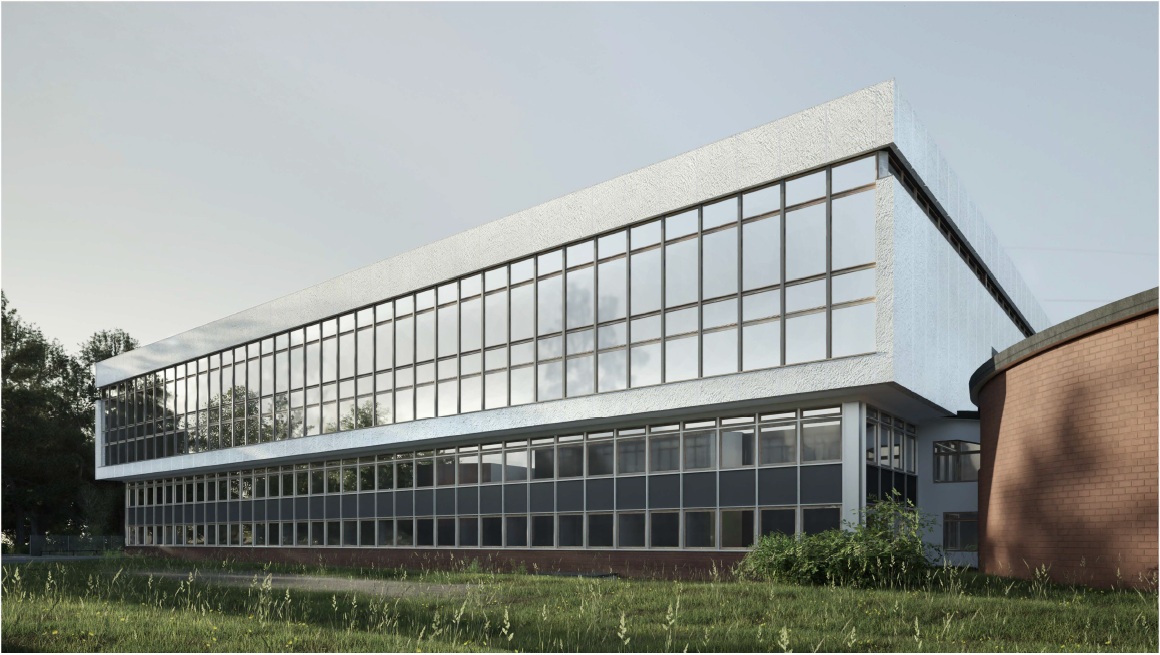
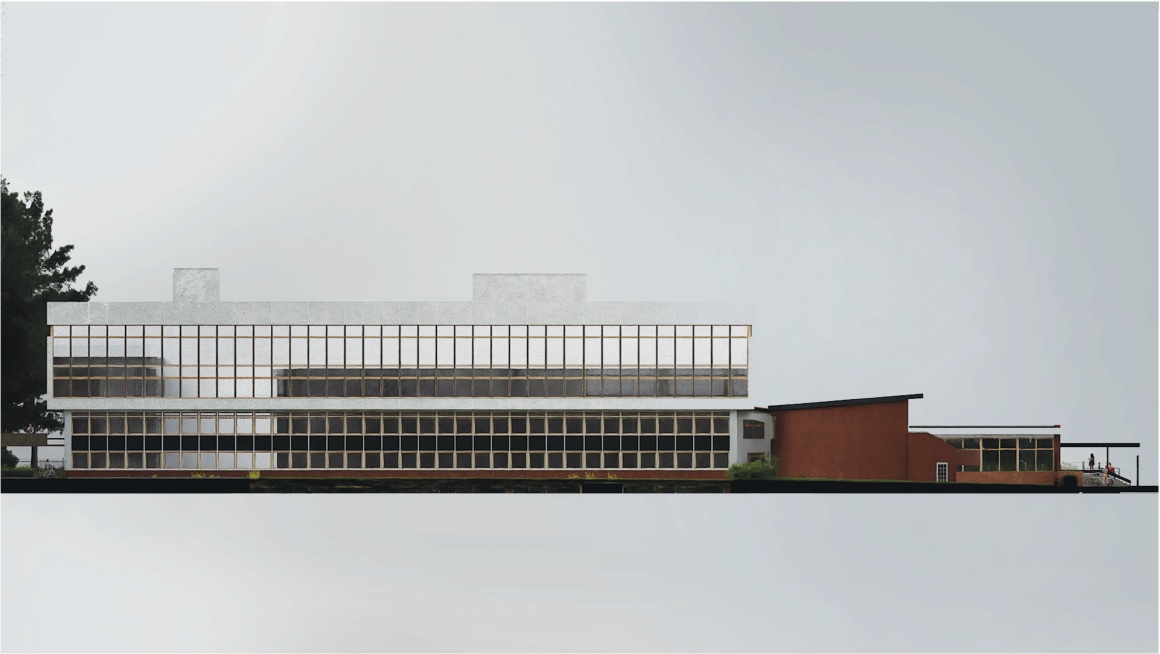
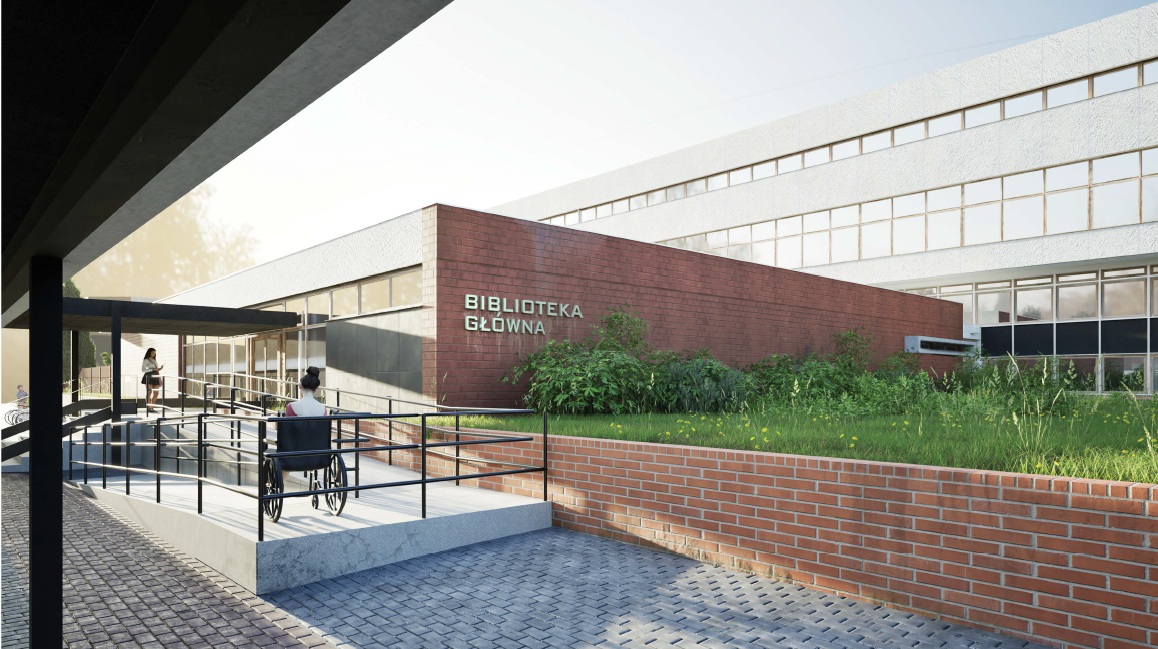
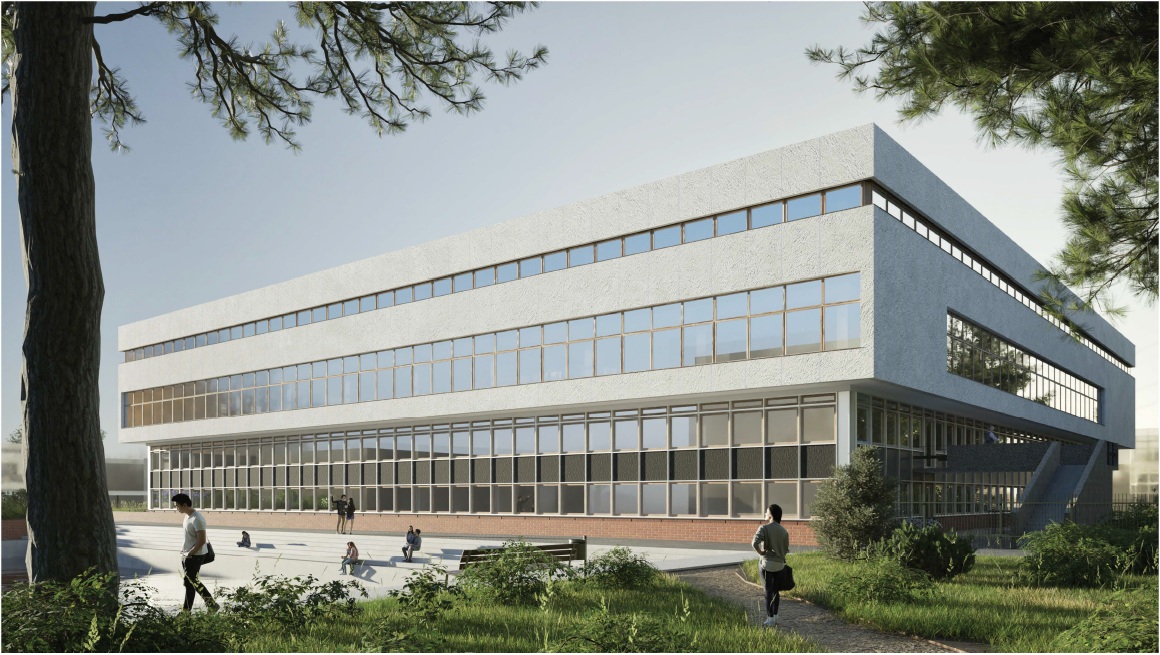
In the University Library building, most of the changes will take place on the ground floor and third floor. On the lowest floor, space must be allocated for: the University Centre for Foreign Languages, hygiene and sanitary facilities, and utility rooms. On the top floor, changes are planned to the layout of the office space, book storage rooms, workshops and open spaces. In addition, the entire building will undergo replacement of internal installations, changes to the layout of hygiene and sanitary facilities, and thermal modernisation. Photovoltaic panels with a total capacity of 50 kWp will be installed on the roof. Once the work is complete, the building will be more functional, meet all fire safety requirements, and be better adapted to the needs of people with disabilities. For this reason, the architects have planned, among other things, to build a new ramp in place of the existing one.
The total cost of the library's thermal modernisation is over PLN 34 million. Part of the costs (nearly PLN 17.5 million) is co-financed by EU funds under the European Funds for Infrastructure, Climate and Environment 2021-2027 programme, and an additional PLN 3 million has been obtained from the state budget. The remaining amount of the investment will be financed by the Nicolaus Copernicus University.
credit: Archimedia Architekci & Inżynierowie
The rectorate building and library are among the oldest buildings in the university campus in Toruń's Bielany district. Both were put into use in the early 1970s. Since then, they have been renovated several times, but never on such a scale as now. The modernisation of the rector's office, which houses almost the entire university administration and the University Centre for Foreign Languages, and the library, which is used not only by the academic community but also by many residents of Toruń, is a considerable logistical challenge. During the renovations, the needs of employees will be taken into account in order to improve their safety and comfort at work.
Improvement of energy efficiency in the historic building of the Nicolaus Copernicus University headquarters in Toruń, including the installation of renewable energy sources
Project implementation period: 1 January 2024 – 31 December 2027
Measure: FENX.01.01 Energy efficiency
Total project value: PLN 22,206,708.49, including co-financing from the Cohesion Fund: PLN 13,516,405.56
Improvement of energy efficiency in the historic building of the Nicolaus Copernicus University Library in Toruń, including the installation of renewable energy sources
Project implementation period: 1 January 2024 – 31 August 2027
Measure: FENX.01.01 Energy efficiencyTotal project value: PLN 34,083,760.60, including co-financing from the Cohesion Fund: PLN 17,412,699.73