 NCU News
 Campus life
YUFE Towards the Horizon


Applications are now open for the next edition of YUFE Research Relay—an initiative designed to support research collaboration and the joint preparation of competitive funding proposals under the Horizon Europe programme. Participants in the first edition unanimously agree that it is worth giving it a try.
The programme is addressed to academic staff of the partner universities of the Young Universities for the Future of Europe (YUFE) alliance. Participation begins with completing an application form. Applicants may select up to three out of nine proposed thematic areas and are required to justify their motivation for joining the programme. The application deadline is 26 January 2026 – prospective participants are encouraged to carefully review the programme details before applying.
Based on the applications received, the organisers will form international and interdisciplinary research teams. A total of 80 participants will be admitted to the programme and will take part in a series of online meetings and workshops. From this group, 30 participants will be invited to attend a summer school in Madrid.
The online phase will run from 10 February to 2 June 2026, with teams meeting every two weeks. The summer school will take place on 22–26 June 2026. The programme will conclude with the selection of one team that will receive a prize in the form of an expert review of a project proposal, valued at EUR 1,500.
Understanding the Logic of Project Language
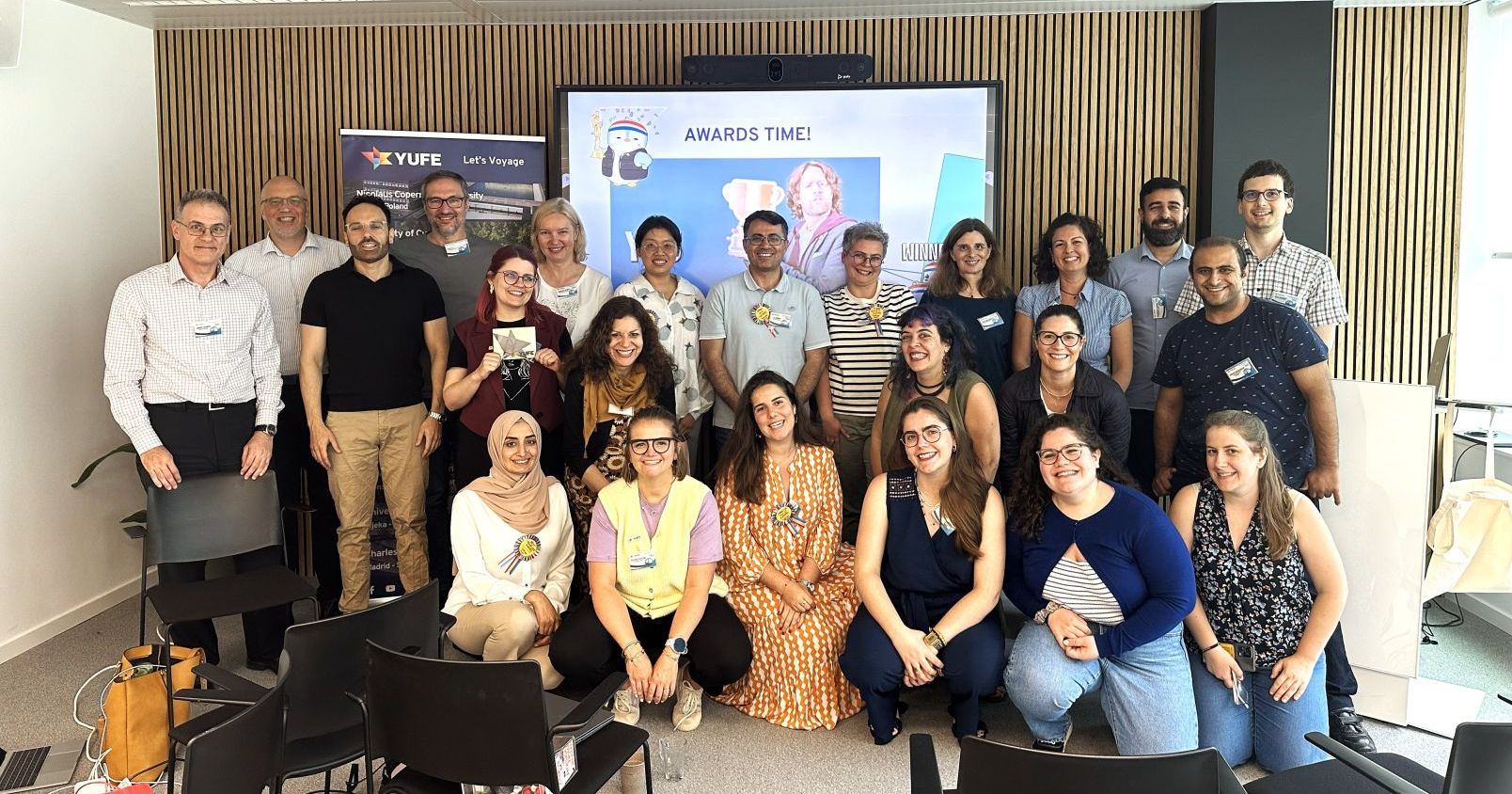
Two scholars from Toruń took part in the first edition of the programme: Dr Karolina Karpus from the Faculty of Law and Administration and Prof. Dariusz Brzostek from the Faculty of Humanities. Together with researchers from Maastricht University, the University of Essex, and the University of Eastern Finland, they worked on a project focused on migration and climate change.
I had previously taken part in meetings on proposal preparation, but it was only this combination of theory and practice that truly helped me understand the logic behind project language – admits Dr Karolina Karpus.
Participants prepared concept notes responding to specific call topics, which were then reviewed by experts. Teams that passed this stage met for two-day workshops in Brussels.
– Although the goal is a Horizon Europe call, in this case it is really the journey that matters most. The workshops taught me a great deal in this respect, and I now use the knowledge I gained in various forms of team-based and project collaboration – the researcher adds. – I am therefore pleased that in the second edition participants will have more time to familiarise themselves with the theory and translate it into practice throughout the entire training process.
A Test of International Cooperation
For Prof. Dariusz Brzostek, participation in Research Relay was also a test of the very idea behind the YUFE alliance.
I decided to take part to see whether declarations about international university cooperation are actually reflected in the practice of preparing joint projects – he says. – I also wanted to find out whether YUFE truly enables research cooperation between institutes at different universities.
As he emphasises, a major strength of the programme was the opportunity to go through all stages of preparing a grant proposal – from conceptual work, through problem definition and drafting individual components, to reviews and evaluation.
– The meeting in Brussels proved to be crucial. Direct group work and ongoing consultations with people experienced in Horizon projects were at this stage far more effective than working exclusively online – the professor notes. – Equally important was building a network of contacts with researchers from other institutions and disciplines. These relationships are already resulting in further joint activities, including within the ERASMUS and NAWA programmes.
Why Take Part?
The story of the team working on the proposal Strengthening regional governance frameworks for climate-induced migration through data-informed and participatory decision-making shows that Research Relay is not merely a grant-writing course, but a space for real-life testing of cooperation, learning from practitioners and building international partnerships.
The second edition of the programme offers an opportunity to go through this process step by step – with more time for reflection and practice, while maintaining the same strong focus on quality, cooperation, and practical preparation for Horizon Europe calls.
Those interested can join the YUFE Research Network on LinkedIn to stay connected with other YUFE researchers and follow upcoming calls and research initiatives.