 NCU News
 Humanities and arts
A New Perspective on Language


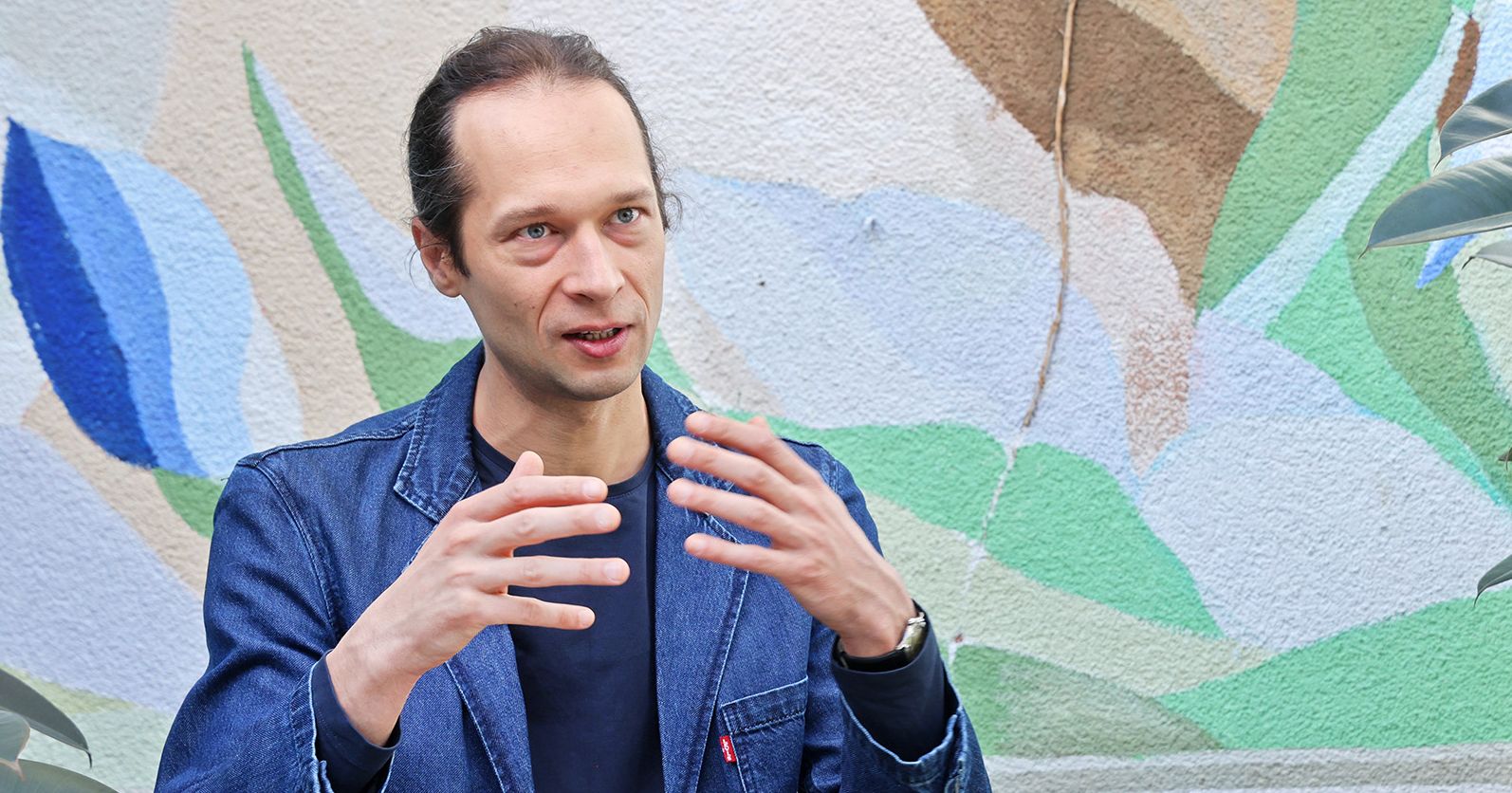
An international team of researchers led by Dr Michael Pleyer from the Centre for Research on the Evolution of Language at Nicolaus Copernicus University (NCU) demonstrates that language cannot be captured by a rigid list of criteria. The research findings were published in the prestigious journal Trends in Cognitive Sciences.
The list of design features developed by the American linguist Charles Hockett describes the characteristic properties of human language that make it possible to compare it with other communication systems. Initially, the scholar proposed 13 criteria, which he later expanded. Hockett did not claim that these features were unique; he even accepted that they could potentially be found in other animals. His argument was that only language possesses all 13 features simultaneously.
The key features include:
- discreteness (language consists of clearly delimited units, such as phonemes or words),
- productivity (the ability to create an unlimited number of new utterances),
- reflexivity (the ability to talk about language itself),
- the vocal–auditory channel (language is communicated through sound waves that can be heard by the receiver),
- specialization (language is designed and used specifically for the purpose of communication).
For more than sixty years, the list shaped scholars' views on how to compare human language with animal communication systems and on what makes language unique. In the article “The 'design features' of language revisited", published in the prestigious journal Trends in Cognitive Sciences, an international and interdisciplinary team of researchers—including the first author of the article, Dr Michael Pleyer from the Centre for Research on the Evolution of Language at Nicolaus Copernicus University (NCU)—argues that this concept no longer aligns with current scientific knowledge. The researchers undertake a thorough revision of Hockett's influential framework and show that language cannot be captured by a rigid list of criteria.
In the publication, the authors present the most up-to-date findings of contemporary research, which have fundamentally changed our understanding of language and call for a new way of thinking about it and about its comparison with the communication systems of other animals. They point out that language is inherently multimodal: it can be realized through different channels—not only as speech, but also as sign language or touch-based systems. Spoken language is also closely integrated with gesture and bodily movement. It is not merely an arbitrary code; it also makes use of iconicity, that is, a relationship between speech sounds and what they signify, as well as social processes.
Language also serves many functions: from the creation of meaning through pragmatic and social processes, through signalling membership in a social group, to supporting thinking, explains Dr Michael Pleyer. Moreover, language is not a static system, but a dynamic, adaptive, and evolving one. Many of the “design features" of language emerge only in the course of cultural processes such as interaction and intergenerational transmission.
The authors show that language can be realized in many ways, not only through speech, that it is characterized by remarkable dynamism, and that it shows far greater similarity to animal communication systems than was recognized in Hockett's time. “The article provides both educators and researchers with a modern theoretical framework for thinking about language, evolution, and cognition," concludes Dr Michael Pleyer.