 NCU News
 Social sciences
Dialogue with Artificial Intelligence


Nicolaus Copernicus University in Toruń has entered into cooperation with the IDEAS Research Institute. Together, they will seek innovative solutions in the field of artificial intelligence, focused on practical applications and subsequent commercialisation.
The IDEAS Research Institute is a scientific and research institution operating in the field of artificial intelligence. It conducts activities related to the development of scientific research, the integration and support of research groups, and scientific initiatives. One of the objectives of its activity is also to prevent the outflow of scientific and research potential from our country. A key element of its mission is the adaptation of research results to practical needs in the areas of business, the economy, and society. The institution is supervised by the Ministry of Digital Affairs and the Ministry of National Defence. Nicolaus Copernicus University has established cooperation with the Institute – a letter of intent in this matter was signed by the Vice-Rector for Research, Dr hab. Adam Kola, Prof. NCU.
The cooperation between NCU and the IDEAS Research Institute has the potential to become a model example of a research partnership combining academic excellence with the responsible development of modern technologies. At NCU – among other things, thanks to the Excellence Initiative – Research University programme – we consistently build interdisciplinary research teams integrating the humanities, social sciences, exact sciences, medical sciences, and engineering, and we invest in modern research infrastructure enabling research to be conducted at the highest level – says the Vice-Rector for Research, Dr hab. Adam Kola, Prof. NCU.

photo: Adam Fisz
– The partnership with IB IDEAS strengthens this potential, allowing us to more clearly direct part of our research towards practical applications and social, institutional, and market needs. Joint projects enable precise calibration of research methods so that the solutions being developed – especially in the field of artificial intelligence – have real implementation value, while maintaining high scientific and ethical standards – adds Prof. Kola.
For Polish science, qualitative, interdisciplinary, and inter-institutional work is of great importance – interdisciplinary research groups drive contemporary discoveries. We must change the way we think about science and begin to see it as a fundamental investment in society's resources. Only then can we clearly rise above the global average and, in many areas, catch up with the best, as evidenced, among other things, by the outstanding careers of scholars of Polish origin at leading research centres around the world – says Prof. dr hab. Marcin Moskalewicz, who coordinates the cooperation with NCU on behalf of IB IDEAS.
Stronger Together
The cooperation agreement was concluded for a period of three years. The research will primarily involve cognitive scientists and psychologists from Toruń from the Faculty of Philosophy and Social Sciences, researchers from the Faculty of Physics, Astronomy and Applied Informatics, as well as scientists from the Faculty of Medicine of the Collegium Medicum of Nicolaus Copernicus University.
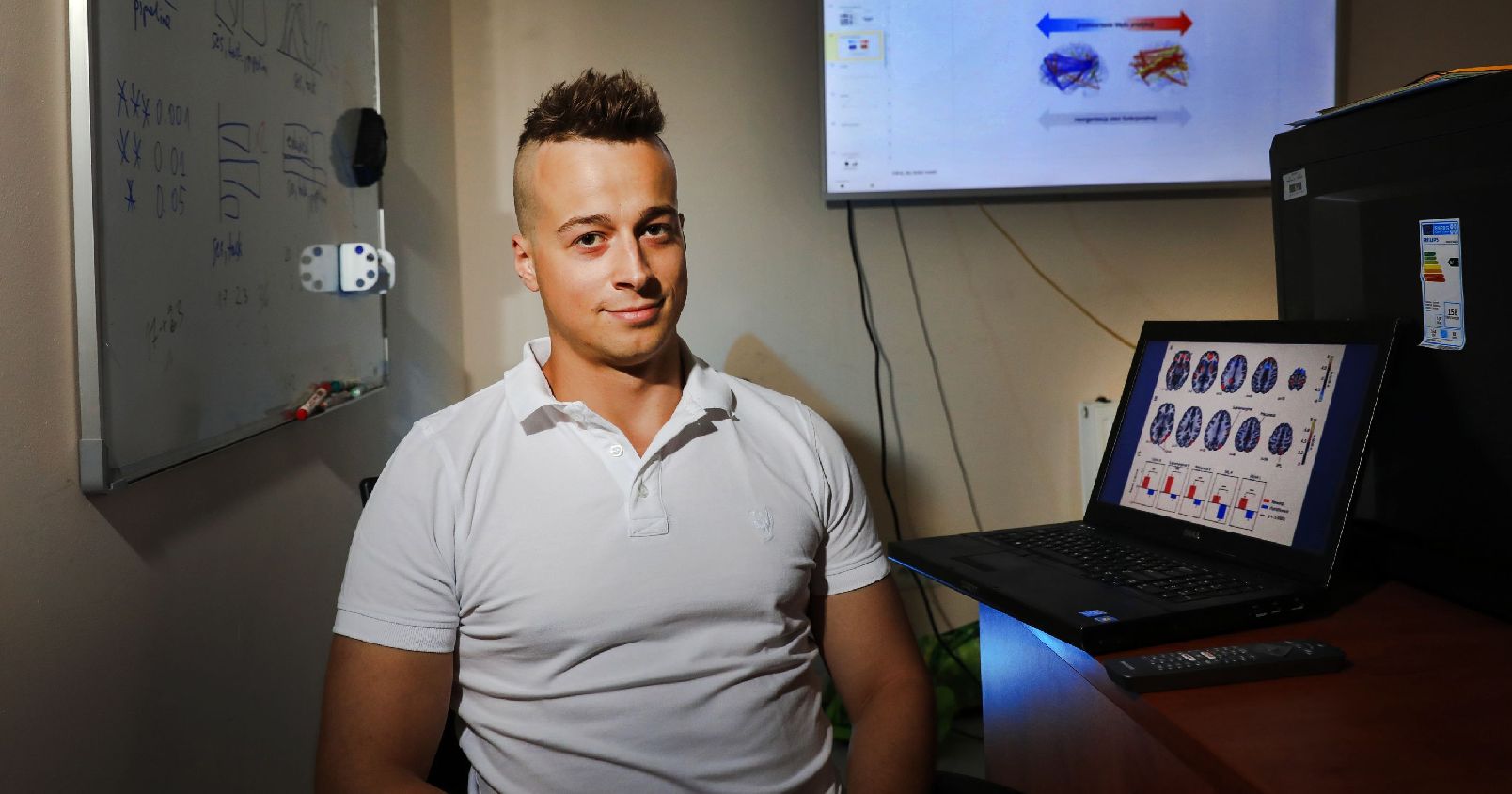
– We will focus on artificial intelligence – in our research, we intend to view robots, also referred to as artificial agents, as artificial social beings. The creation of artificial entities is a dynamically developing field. They find applications in education, the healthcare system, data analysis, neuroscience, and, of course, services – says Dr hab. Arkadiusz Gut, Prof. NCU, who coordinates the cooperation with IB IDEAS at our university. – Within the scope defined by the cooperation, we have set ourselves the task of conducting a thorough analysis of how people respond to such artificial agents. We intend to develop systemic psychological frameworks that will make it possible to study not only the emotional dimension of human–robot interaction – their analysis will also include the individual's goals, social roles, mechanisms of anticipation, and cultural aspects of communication.
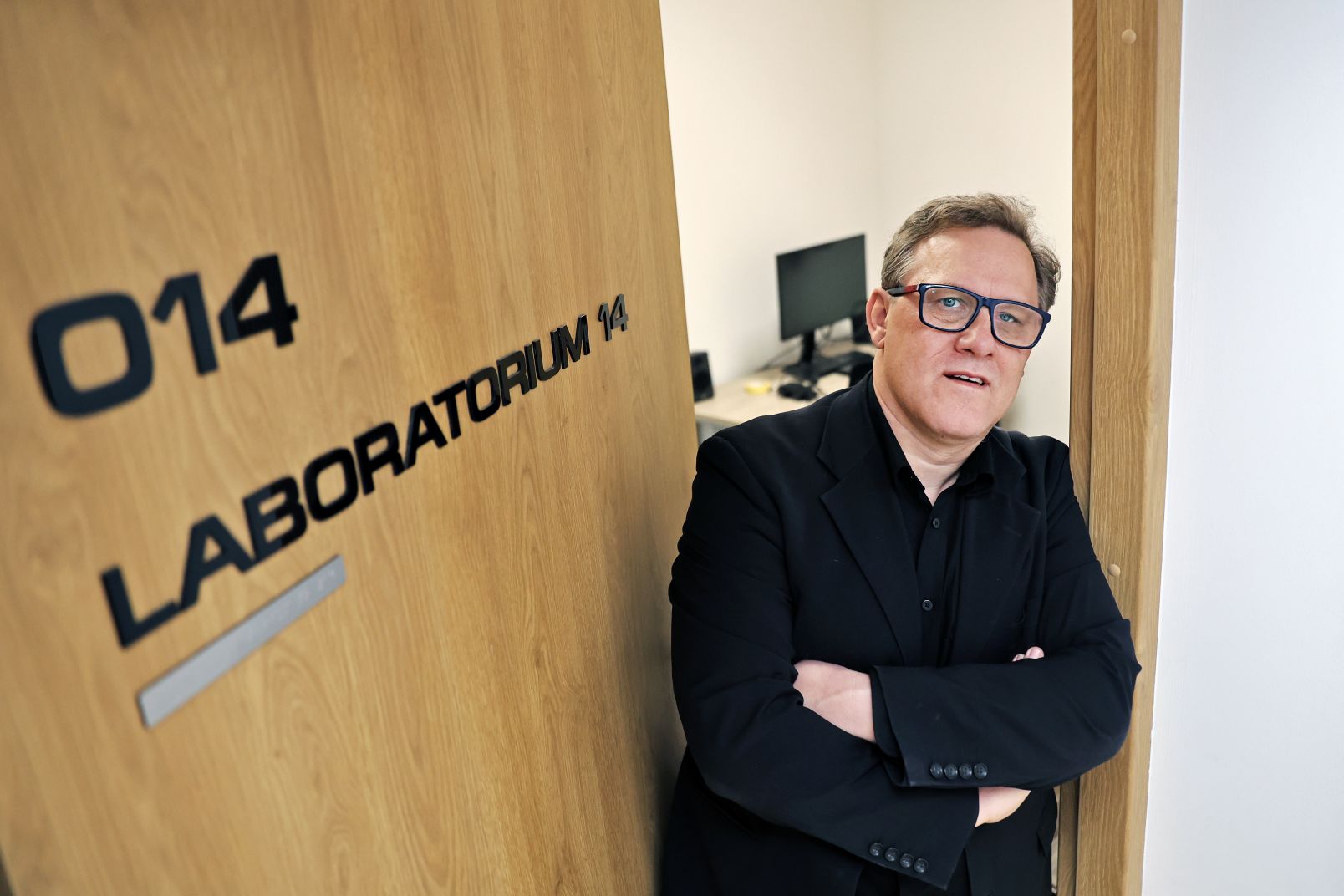
photo: Andrzej Romański
In the context of the initiated cooperation, Prof. Moskalewicz emphasises that a key objective of his research is the development of tools for synthetic clinical phenomenology, using AI language models to model experience, analyse narrative patterns, and identify implicit meaning structures. These tools would be applied in diagnostics, especially in the field of mental health. He also stresses that there are promising pathways for integrating phenomenology with new technologies that can be utilised.
– In short: artificial neural networks can be interpreted phenomenologically as structures reflecting the dynamic, processual character of consciousness, which opens up the possibility of computational phenomenology in silico. This enables work on phenomenological data and the use of AI models to analyse and represent lived experience in a way that allows potential phenomenal states to be specified with precision – explains Prof. Moskalewicz.
– We are therefore interested in holistic phenomena emerging in interaction, such as sustained engagement, trust, and even a sense of bonding – adds Prof. Gut. – Such undertakings require, on the one hand, close cooperation between cognitive scientists, psychologists, computer scientists, and robotics engineers, and, on the other, taking into account market needs and social expectations. Thanks to cooperation with IDEAS, we will be sensitive not only to interdisciplinarity, which is crucial for the development of academic research and is currently being realised at NCU, but also to the practical component: seeking answers that are relevant to society, health, and business alike.
The outcome of the research is therefore expected to include not only highly ranked articles in prestigious scientific journals, but also, among other things, diagnostic applications, human–computer interfaces, diagnostic tools, and trained language models.
Humano(AI)stic Dialogues
Prof. Gut announces that they intend to look at AI from a slightly different perspective.
We want to shift – speaking more generally – the focus from thinking about artificial intelligence solely as a technology to thinking about AI in terms of a dialogue partner. We are interested, among other things, in the extent to which artificial intelligence is able to accurately identify the interlocutor's intentions, emotions, and assumptions, and how it responds in situations requiring empathy, cognitive distance, or the correction of errors in thinking, such as excessive trust, anthropomorphisation, or the illusion of control – explains Prof. Gut.
The cognitive scientist explains that this approach will make it possible to significantly deepen research into the application of artificial intelligence in the areas of social sciences, mental health, senior care, and medicine. Combining the scientific expertise of NCU with the experience of IB IDEAS in advanced technologies will make it possible to develop intelligent support systems, ranging from digital psychoeducational tools and online therapy to solutions supporting the quality of life of older adults.
photo: Submitted
Work Underway
Prof. Gut emphasises that earlier initiatives have played a major role in building the potential that we now wish to further develop at NCU together with IB IDEAS in the field of artificial intelligence. Of great importance are, for example, the activities of Prof. dr hab. Włodzisław Duch, who combines cognitive research with neurophysiology and computer science. Also significant are the projects of Dr Tomasz Komendziński, which he coordinates within cognitive science together with other units, such as the Faculty of Physics, Astronomy and Applied Informatics and the Collegium Medicum, as well as with international partners such as RIKEN AIP, Tokyo, Japan, focusing on AI for social good and health awareness.
We are currently developing cooperation towards the application of AI at the intersection of multiple disciplines concerned with consciousness. We are just beginning a study on trust in artificial intelligence involving human participants in an experimental model, and in cooperation with researchers from NCU we are also planning a large-scale study on reactive psychoses – says Prof. Marcin Moskalewicz. – From the perspective of my team at the IDEAS Research Institute, access to NCU's infrastructure – let us call it “cognitive" – is essential, in the form of both academic staff and students familiar with contemporary research on consciousness, as well as laboratories in which experimental research involving humans and digital tools can be conducted, including VR and language models.
Researchers from NCU are already involved in the project “Navigating Value: Phenomenological Perspectives on Emotional Abilities in the Digital Age", developed by St Catherine's College, Oxford, and IB IDEAS.
We have already submitted the first joint grant applications, and further initiatives are in preparation. We plan to apply for funding not only at the national level, but also at the European level – says Prof. Gut. – We believe that this cooperation will open the way to new sources of funding and the development of further interdisciplinary teams that will conduct research of real significance for science and society.
Importantly, doctoral candidates and students will be involved in most of the research. A key element of the joint strategy of NCU and IB IDEAS is the idea of learning through research, which will soon be implemented in the Cognitive Science programme taught in English.
– Our goal is for young researchers to learn through real research, not only through theory. We want to introduce students at the University directly into the process of creating new technologies, analysing data, and designing solutions, so that they develop research, technical, and social competences in a natural, practical way – adds Prof. Gut.