 NCU News
 Exact sciences
Grant for a Quantum Laboratory


A team led by prof. Piotr Wcisło from the NCU Institute of Physics obtained the sum of nearly 4 million PLN from the Ministry of Science and Higher Education to build a laboratory for new quantum technologies. The infrastructure currently under construction is intended to support the development of ultra-precise metrology and research into the implementation of units of measurement in the new SI system.
Ultra-precise metrology is becoming increasingly important as an innovative economy based on knowledge and modern technologies continues to develop, particularly in the field of quantum technologies. The importance of this field is reflected in the activities of national metrology institutes around the world and numerous European research alliances.
Thanks to many years of investment in equipment and research programs, Polish institutions are gradually joining the ranks of centers developing advanced metrology technologies. The NCU Institute of Physics has been particularly active in this field, and its teams have been invited on numerous occasions to participate in major international metrology programs.
Laboratory of New Quantum Technologies
On September 10th, 2026, the Ministry of Science and Higher Education awarded a research grant of nearly 4 million PLN to the research group led by prof. dr habil. Piotr Wcisło from the NCU Institute of Physics for the construction of the "Laboratory of New Quantum Technologies for the Ultra-Precise Realization of Units of Measurement in the New SI System".
The purpose of the project is to create a technological infrastructure that will not only enable the Polish metrology centre to remain competitive on the international stage, but also allow it to become a leader in quantum technologies used in the metrology of pressure, temperature, and the amount of a substance - says prof. Piotr Wcisło.
The planned experimental setup will combine several key technologies necessary for ultra-precise measurements of molecular optical resonances. These will include, among others, laser and photonic technologies, high-vacuum techniques, and advanced cryogenic solutions.
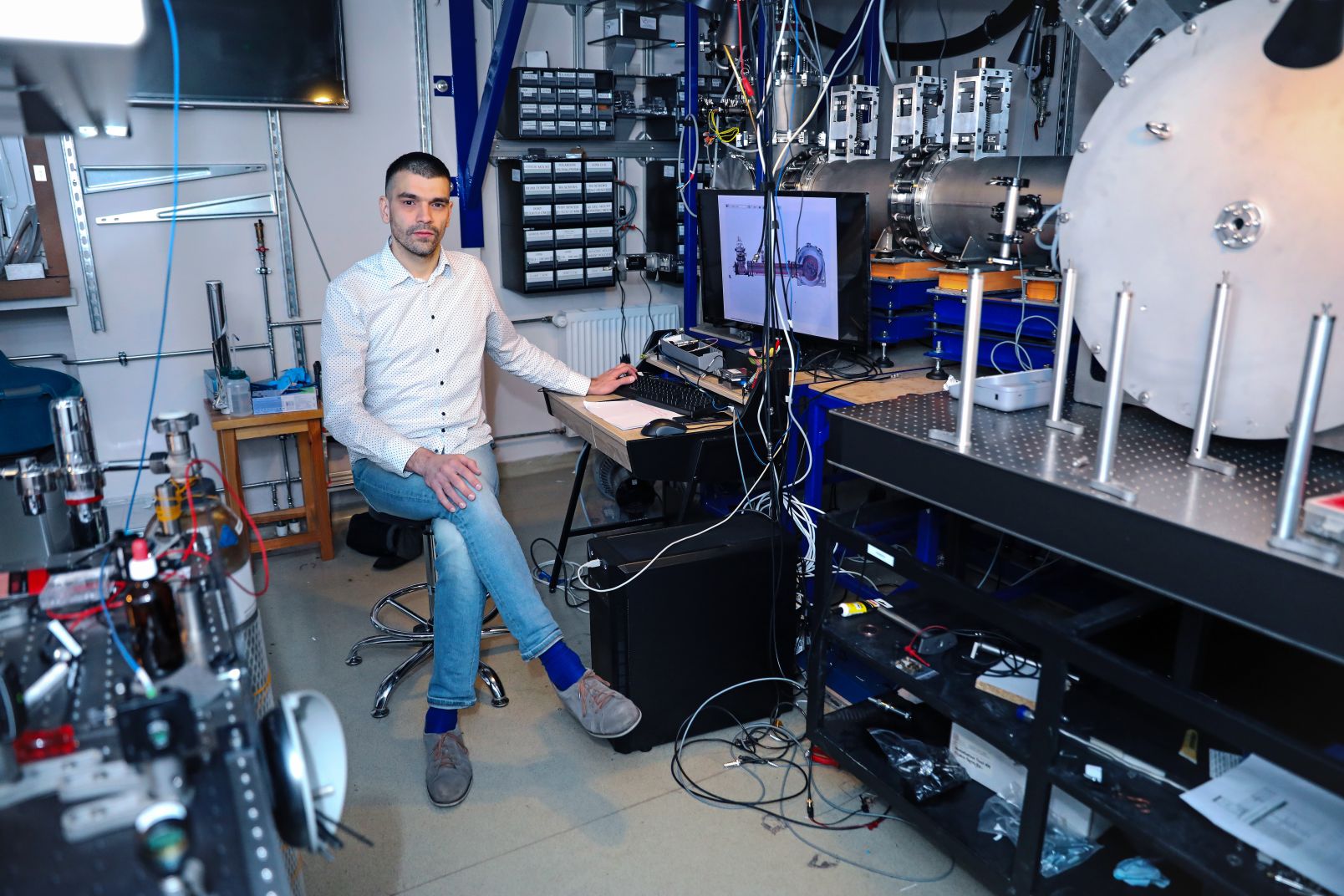
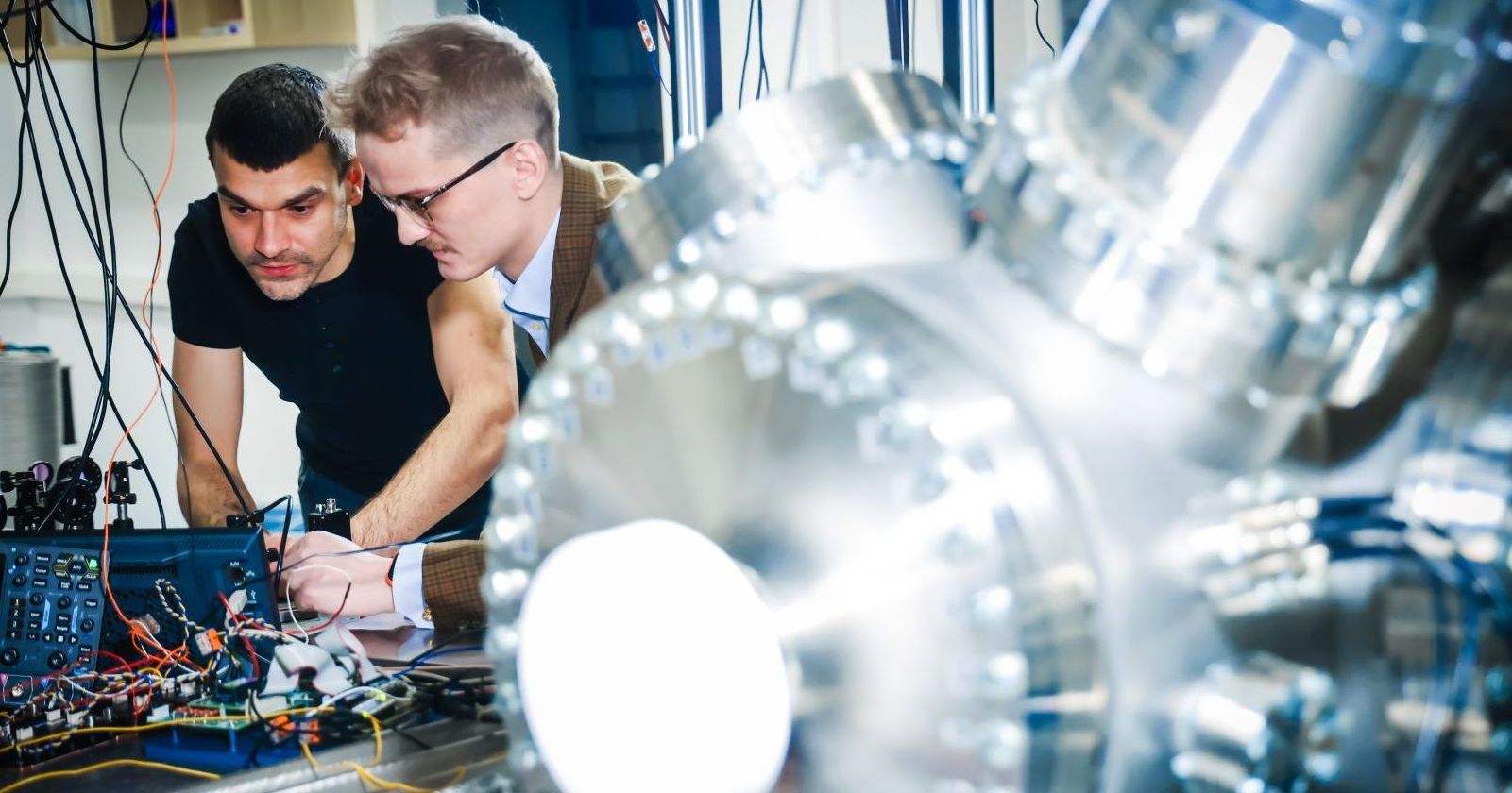
The investment will enable prof. Wcisło's team to develop methods for the ultra-precise realization of units of measurement in the new SI system, as well as technologies used in the metrology of pressure, temperature, and amount of substance. Photo: Andrzej Romański
- At the heart of the system there will be a cryogenic optical resonator with very high finesse, into which photons will be precisely injected. This precision will apply not only to their position but, above all, to their spectral properties. The frequency of the laser light will be actively and precisely stabilized relative to the frequencies of the resonator's longitudinal modes - explains. prof. Wcisło.
This solution is designed not only to ensure high efficiency in the acquisition of measurement data, but above all to enable the use of spectroscopic techniques based on dispersive measurements. This will allow for significantly better control of systematic measurement uncertainties, which are one of the main limitations of ultra-high-precision metrology.
More about the research conducted by the team led by prof. Piotra Wcisło