 NCU News
 Humanities and arts
Literary Nobel Prize: More Than Poetry


This year's Nobel Prize in Literature has been awarded to Canadian writer Anne Carson, known for her poetry and essays. The choice of the 123rd laureate of the Nobel Prize in Literature is commented on by Professor Mirosława Buchholtz from the Faculty of Humanities at Nicolaus Copernicus University in Toruń.
This year's Nobel Prize in Literature has been awarded to Anne Carson. The Swedish Academy recognised her "for her bold and inventive writing, which, through playful dialogue with the classical tradition, has created new forms of contemporary literature." It is worth adding that the name of this Canadian writer, born in 1950, has appeared on lists of favourites for the award for several years.
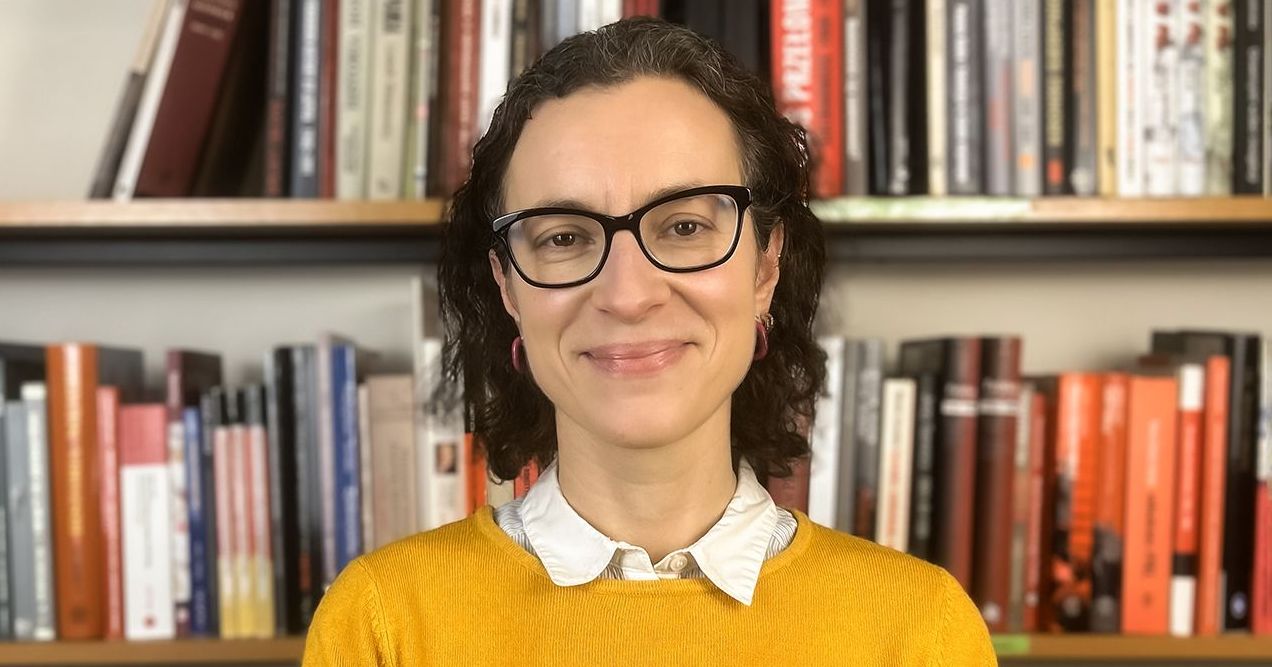
Professor Mirosława Buchholtz, Head of the Department of American Literature and Literary Translation at the Faculty of Humanities, Nicolaus Copernicus University in Toruń, talks about Anne Carson, whose work extends beyond poetry:
A Nobel Laureate Without a Label
We like labels, which is why introductions and afterwords to books by Nobel laureate Anne Carson usually begin by defining her educational background and profession: a classical philologist, a doctor of humanities, a university lecturer. Her example shows, however, just how misleading labelling can be, how labels peel away from the surface, curl up and become useless, illegible. So let us begin from a different angle, with a confession she made during a conversation with the critic and poet Stephanie Burt. Carson stated that, deep down, she is a visual artist. Until she was in her twenties, she hardly wrote at all, but drew instead, sometimes adding a few words to her drawings. She did not think of herself as a writer, even when she was already the author of highly acclaimed books. For her, books remained a space for creative expression, but they were never able to accommodate all the ideas that came into her mind.
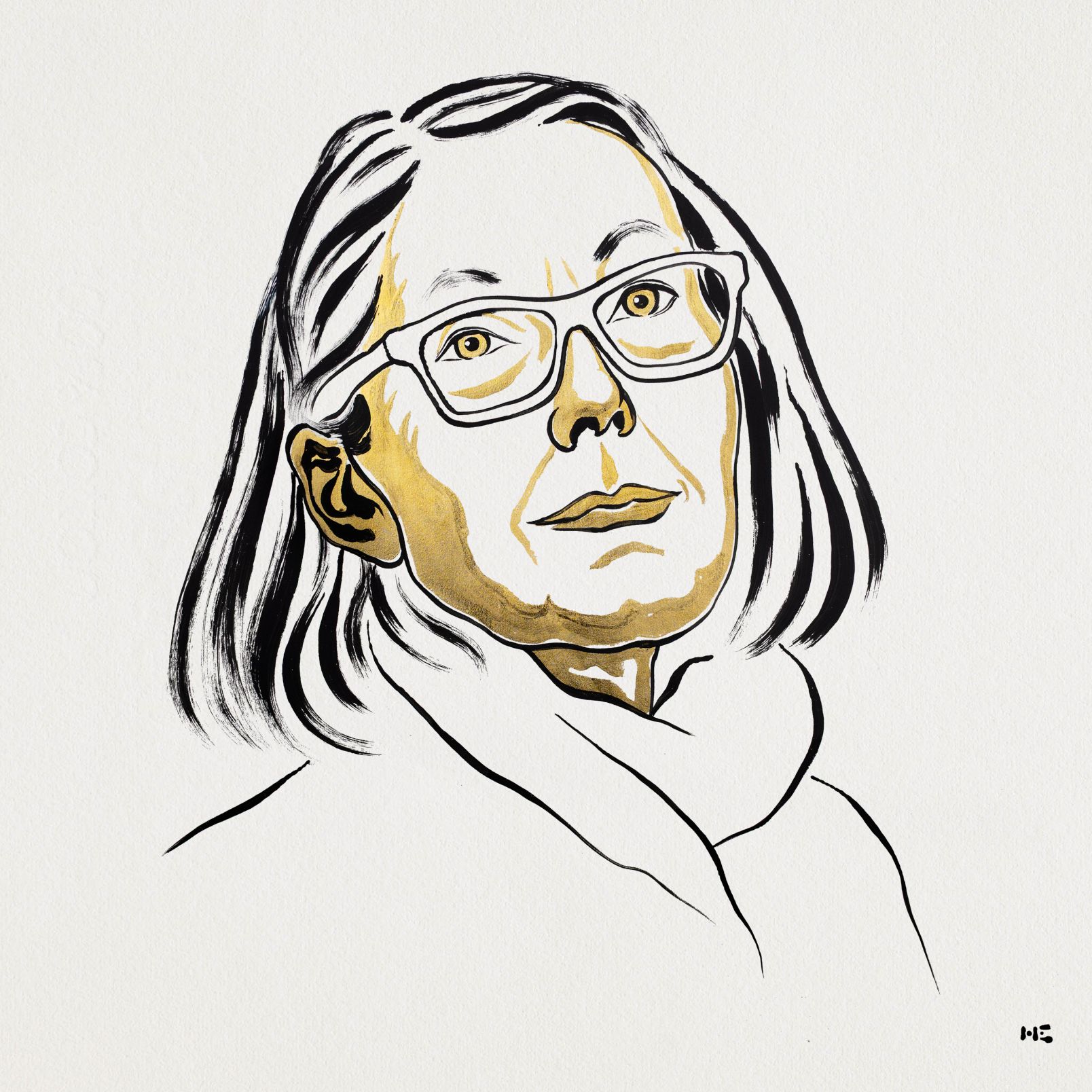
This way of thinking about her own work—as a by-product of a vivid imagination and unfettered creativity, yet at the same time rooted in solid philological expertise—gives the poet a freedom she clearly enjoys. All it takes is watching a few recordings on YouTube to see how audiences respond to her performances. These are, after all, genuine performances, intellectual games, such as "Short Talk on Reading" from the volume Red Doc> (2013). The recording lasts just one minute. Anne Carson asks the amused audience to remember the word "deciduous", marked with a question mark, and then, at the appropriate moment, signals for everyone to say it together, using the appropriate intonation. It all begins with a car journey across the North American continent, during which the landscape of the Rocky Mountains begins to merge, in the reader's mind, with Gustave Flaubert's story of Madame Bovary. There is something subversive, witty, profound and brilliant about it, all at once. The poet and her audience find common ground in shared laughter and reflection.
Carson Beyond Borders
This time, the decision of the Swedish Academy did not come as a surprise to the Polish publishing market. There will be no need to hastily translate and publish individual poems or excerpts from her works in the daily press. A veritable galaxy of names can be found among Carson's translators and commentators. Over the past few years, the Ossolineum publishing house has released the following books: Autobiography of Red: A Novel in Verse ([1998] 2023, 2026), Decreation: Poetry, Essays, Opera ([2005] 2024) and Eros the Bittersweet: An Essay ([1986] 2025). Even earlier, in 2022, a translation by Olga Kubińska of The Beauty of the Husband: A Fictional Essay in 29 Tangos ([2001]) was published by a Gdańsk-based publishing house. Carson is not particularly concerned with literary genres or with the boundaries between what is and is not permitted. A novel? A sequence of poems? A libretto? An essay? A screenplay? What difference does it make? It is worth recalling that Alice Munro, too, moved between the novel and the short-story cycle. The carefully produced Polish translations are the best evidence of the sensitivity of Poland's literary and publishing seismographs.
It has long been known, however, that Anne Carson is one of the brightest stars in the North American poetic firmament. At a time when Canadian studies were flourishing in Toruń, an essay by Douglas Barbour, a Canadian poet and literary scholar who was visiting the city at the time, was published by Adam Marszałek Publishing House. In it, he sketched a panorama of contemporary Canadian poetry. Barbour also mentions Anne Carson, emphasising both her popularity among readers and the recognition she enjoys among literary critics and scholars. Interestingly, as Barbour notes in his 2005 essay, most of Carson's books were published in the United States, and it was there, above all, that she achieved the fame she deserved.
Is she Canadian to the same extent as Alice Munro? Probably not. Her true home remains ancient Greece, although the characters she brings to life, such as Heracles and Geryon in Autobiography of Red, a reimagined and partly invented version of Stesichorus's poem, are contemporary people.
Today's Geryon, too, is a red "monster" who is rather reluctant to go to school. Does that sound familiar? If so, let us read some excerpts from Part V, "The Door":
Mother stood at the ironing board,
lighting a cigarette
and watching Geryon.
**
Outside, the deep pink air
was hot, filled with voices. "Time for school," she said
for the third time.
[…]
“It would be hard for you
if you were weak
but you are not weak," she said,
and, smoothing his little red wings, pushed him
out the door.
Anne Carson draws on the richness of ancient culture and modernist aesthetics, while also embracing inspiration from psychoanalysis and contemporary philosophical thought. At the same time, she retains the sensitivity and meticulousness of a translator, remaining above all literary "isms", both those currently in vogue and those that have already fallen out of fashion. She allows neither herself nor her readers to become bored. Her natural element is experimentation, the crossing of genre boundaries and the constant search for new forms of expression.
A Tribute to North American Literature
Anne Carson is the second Canadian Nobel laureate in Literature after Alice Munro, yet a writer who differs from her in many respects. While Munro's work is associated with the mastery of realist narrative and careful observation of provincial life, Carson's writing grows out of a fascination with antiquity, formal experimentation and the free crossing of boundaries between literary genres. The Swedish Academy's choice can be interpreted as a tribute to literature following years in which discussions surrounding Munro intensified after painful family stories came to light, along with controversies concerning the way the writer responded to them. Perhaps Carson's particular affinity with Northern culture also played a role. For several years, she has been living in Iceland with her husband, and Scandinavian imagination and landscape have become part of her field of interest. This award, however, is above all a triumph of the combination of poetic freedom and philological erudition. Carson is also the latest North American poet, after Louise Glück, to be honoured with the Nobel Prize in Literature.
This serves as a reminder that poetry remains one of the most vibrant forms of contemporary literature. At the same time, Carson's poetry, which embraces the essay, translation, theatre, visual arts and philosophy, confirms that experimentation and erudition need not confine literature to an ivory tower.
Anne Carson has become the 123rd Nobel laureate in Literature. Although the award has been presented on 119 occasions in total, on four occasions in its history it has been shared by two writers (1904: Frédéric Mistral and José Echegaray y Eizaguirre; 1917: Karl Adolph Gjellerup and Henrik Pontoppidan; 1966: Shmuel Yosef Agnon and Nelly Sachs; 1974: Eyvind Johnson and Harry Martinson). The youngest laureate in history was Rudyard Kipling, who received the award in 1907 at the age of 41 when the decision was announced. The oldest recipient was Doris Lessing, the 2007 Nobel laureate in Literature, who was 87 at the time. In the entire history of the Nobel Prize in Literature, two laureates have declined to accept the award. Boris Pasternak, who was awarded the prize in 1958, initially accepted it, but was later forced by the Soviet authorities to reject it. Jean-Paul Sartre also declined the award in 1964, as he consistently rejected all official honours.