 NCU News
 Campus life
On the Future of European Research in Brussels


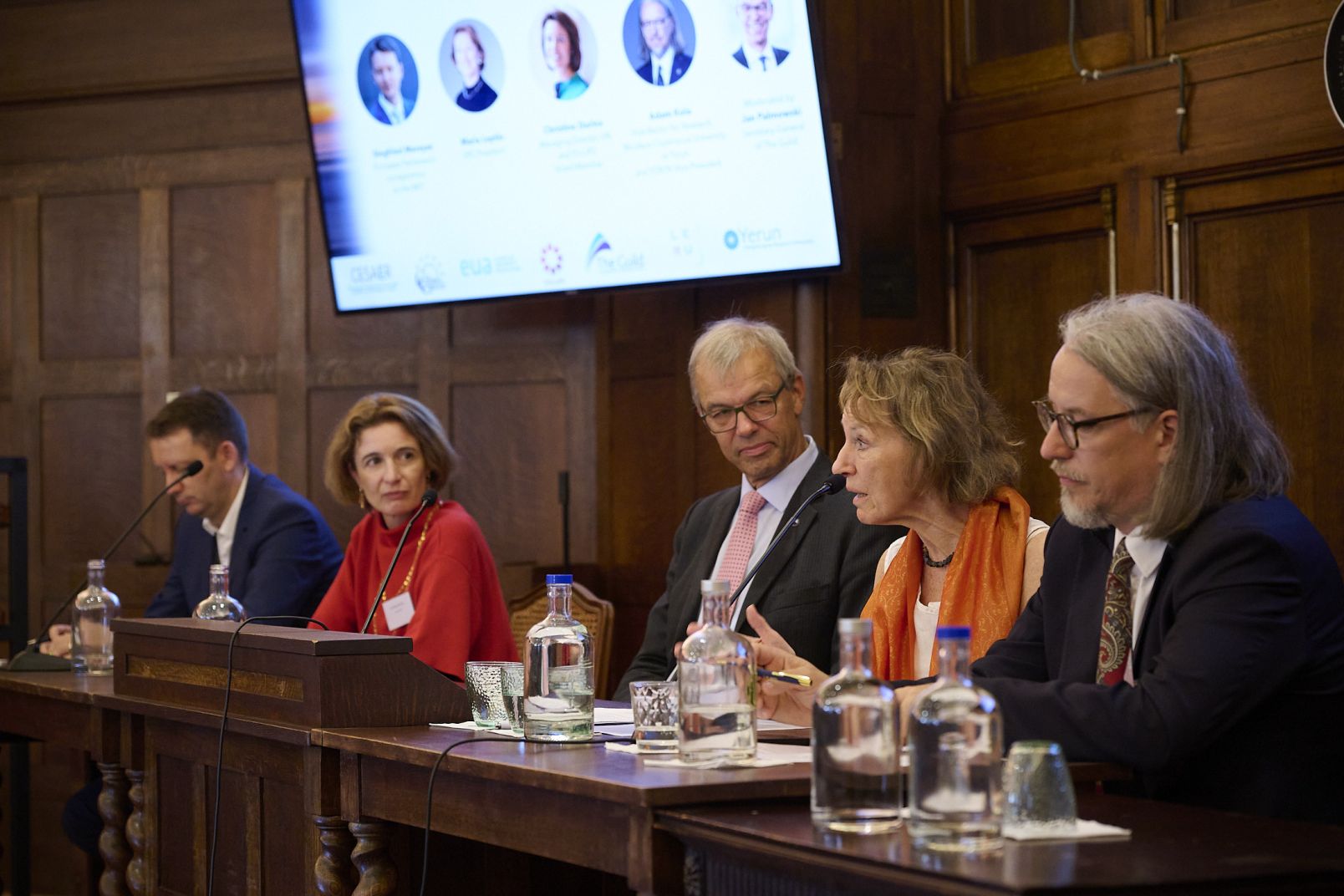
A high-level debate on the future of European science and the place of research and innovation in the European Union's next budget took place in Brussels on 9 September. The discussion brought together European policymakers, representatives of leading academic organisations and university leaders, including Prof. Adam Kola, Vice-Rector for Research at Nicolaus Copernicus University (NCU) and Vice-President of the YERUN Network.
The meeting took place at an important stage in the negotiations on the European Union's next multiannual budget. Representatives of European academic and research organisations – YERUN, CESAER, the Coimbra Group, the European University Association (EUA), EU-LIFE, The Guild and the League of European Research Universities (LERU) – discussed how to ensure that Europe has the conditions it needs to conduct research, develop new technologies and build a competitive economy.
The debate was attended, among others, by Rianne Letschert, Minister of Education, Culture and Science of the Netherlands; Prof. Maria Leptin, President of the European Research Council (ERC); and Siegfried Mureşan, Member of the European Parliament and co-rapporteur on the EU's multiannual financial framework. Leaders of leading European universities and academic organisations also took part, including Linda Doyle, Provost of Trinity College Dublin and Chair of LERU; Gregor Majdič, Rector of the University of Ljubljana and member of the EUA Board; Orla Feely, President of University College Dublin and President of CESAER; and Prof. Stephanie Wehner of Delft University of Technology.
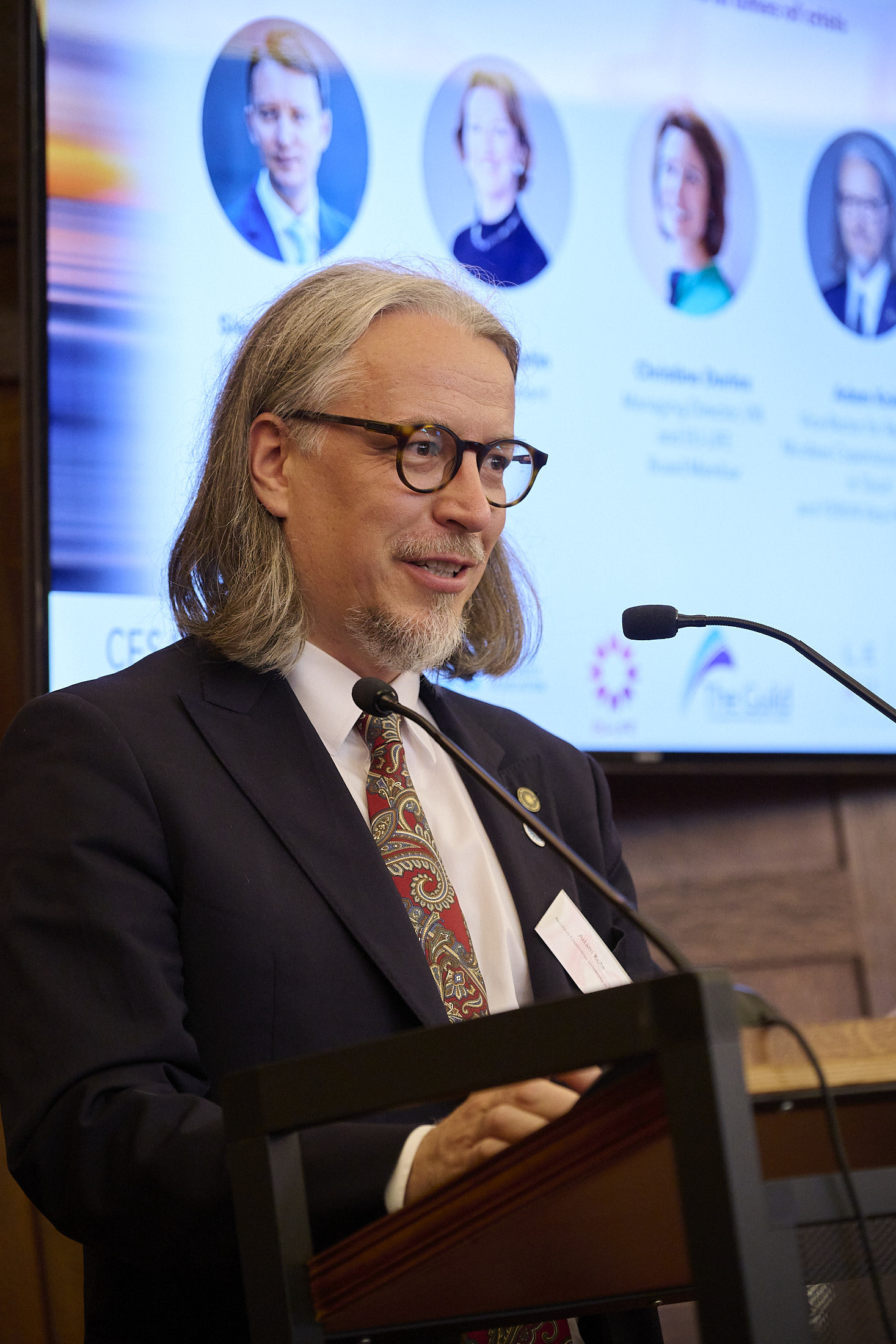
Prof. Adam Kola, Vice-Rector for Research at NCU and Vice-President of the YERUN Network, spoke on a panel devoted to the importance of investing in research and innovation in times of crisis. He subsequently joined Maria Leptin, Siegfried Mureşan and Christine Durinx for a discussion on the future of the Horizon Europe programme.
One of the key topics of the meeting was the future of Horizon Europe, the EU's main funding instrument for research and innovation. Prof. Adam Kola argued that Europe's capacity to generate knowledge is a prerequisite for strategic autonomy, and that investment in research and innovation is essential in the face of today's geopolitical, climate and demographic crises, as well as growing social polarisation.
Europe's strength depends not only on the innovations brought to market, but on the foundations that make them possible: excellent research, ambitious ideas, international cooperation, research infrastructure and attractive academic careers - said Prof. Adam Kola.
During his presentation, the NCU Vice-Rector for Research also highlighted the perspective of Europe's young universities, for which stable funding is particularly important in building research capacity.
- Young universities know very well how much depends on stable, predictable and long-term research funding. It is under such conditions that academic careers develop and new discoveries are made. An ambitious Horizon Europe programme should go hand in hand with strong national investment so that research capacity can grow across Europe, he added.
The participants of the meeting published a joint position calling for the programme's budget to be increased to at least €200 billion. They emphasised that the effectiveness of the programme depends not only on the amount of funding available, but also on its predictability. Universities, research institutes and businesses plan projects, recruit researchers and establish international collaborations years in advance. Horizon Europe's budget should therefore constitute a genuine, guaranteed commitment rather than merely an indicative figure.
The appropriate distribution of funding across the different stages of research and innovation development is also important. Particular support is needed for research at earlier technology readiness levels, where private investors are less likely to commit their resources. Further implementation and scaling of solutions that are already mature should, in turn, also rely on other EU instruments, such as the European Competitiveness Fund.
The meeting also highlighted the need to conclude negotiations on the future EU budget efficiently. The aim is to ensure that Horizon Europe can start as planned in January 2028 under the new financial framework. Any delays would create uncertainty for researchers and institutions regarding future calls for proposals and could make it more difficult to plan international research projects.
European funding does not replace national investment, the participants stressed, pointing to the need for Member States to increase their own spending on research and innovation in parallel. The goal is to reach, by 2030, a level of investment in research and innovation equivalent to 3% of GDP, including 1.25% of GDP in public expenditure in this area.