 NCU News
 Campus life
YUFE – possibilities without limits


The Young Universities for the Future of Europe (YUFE) alliance offers access to international courses, skills development programmes, mobility opportunities and practice-oriented initiatives. YUFE enables students to combine different disciplines, universities and forms of learning — free of charge, as part of a shared European educational offer.
Courses offered by 10 European universities span a broad range of academic disciplines. The catalogue features both online classes and opportunities for international mobility for students interested in studying abroad. In addition, language courses and conversation cafés support the development of communication skills, volunteering programmes help build soft skills and gain practical experience, while YUFE Help Desks enable students to apply academic knowledge in real-life contexts. All these opportunities are available to Nicolaus Copernicus University students at no additional cost, as YUFE activities are co-financed by the European Union.
Open YUFE – learning on your own terms
One of the pillars of the offer is the Open YUFE programme — a flexible learning pathway that can be tailored to individual interests and academic plans. The programme may last up to four semesters and is based on independently selecting courses from the wide range available on the YUFE Virtual Campus.
Selected courses can either complement a student's degree programme at NCU or explore completely different fields. If a course aligns with the study programme and is approved by the relevant dean's authorities, credits and ECTS points may be recognised. There is no limit to the number of activities students can take part in; the only formal requirement is English proficiency at B2 level.
– YUFE allowed me to study at different universities, build connections between cities, and ask questions that cannot always be clearly assigned to a single discipline or country – recalls an Open YUFE graduate. – At the University of Eastern Finland, I explored how environmental systems are governed and who makes decisions in this area. At Carlos III University of Madrid, I analysed how frameworks of knowledge are shaped. At Sorbonne Nouvelle in Paris, I saw how cities can be transformed from the bottom up.
This is an ideal opportunity to give your studies an interdisciplinary and international dimension without the need to relocate abroad. Many courses can be completed from home, but those who wish to spend a semester at a partner university also have that option.
YUFE Minor – a semester in Europe
YUFE also opens the door to physical mobility. A YUFE Minor is a semester-long module delivered at a partner university, focused on one selected theme. Each minor consists of courses worth a total of 30 ECTS credits. One example is the Energy Sustainability in the Cities minor offered at Carlos III University of Madrid. During the semester, participants explore topics such as energy poverty, fundamentals of power engineering, machine learning, energy in transport, life cycle assessment, and the design of nearly zero-energy buildings. A full list of available minors is published on the YUFE Virtual Campus.
Andrzej Romański
Mobility is organised under the Erasmus+ programme, and application deadlines depend on the faculty-level recruitment schedule. Questions regarding mobility for YUFE Minors can be sent to: admission_yufe@umk.pl.
Communication without barriers
Language skills play a key role in an international alliance. The YUFE Virtual Campus offers a wide range of language courses at different proficiency levels, many of which are delivered online.
Traditional language courses are complemented by language cafés — regular, informal conversation meetings led by native speakers. Recruitment is currently open for cafés in Spanish, German, French, English and Dutch at various levels. Meetings take place once a week and are based on free discussion of current topics. Registration is carried out via the YUFE Virtual Campus. To view all available café levels, simply type “café" into the search bar.
Knowledge in practice
YUFE also promotes forms of education that go beyond the traditional lecture hall. Volunteering programmes and YUFE Help Desks enable students to combine theory with practice, develop social competencies and gain experience valued on the labour market. These initiatives benefit all parties involved — Help Desks offer guidance in a wide range of fields. Enquiries submitted via an online form are forwarded to students who, under the supervision of experienced academics, develop the best possible solutions. As a result, students gain practical experience, academic staff provide substantive oversight, and individuals seeking advice receive support in addressing real-life problems.
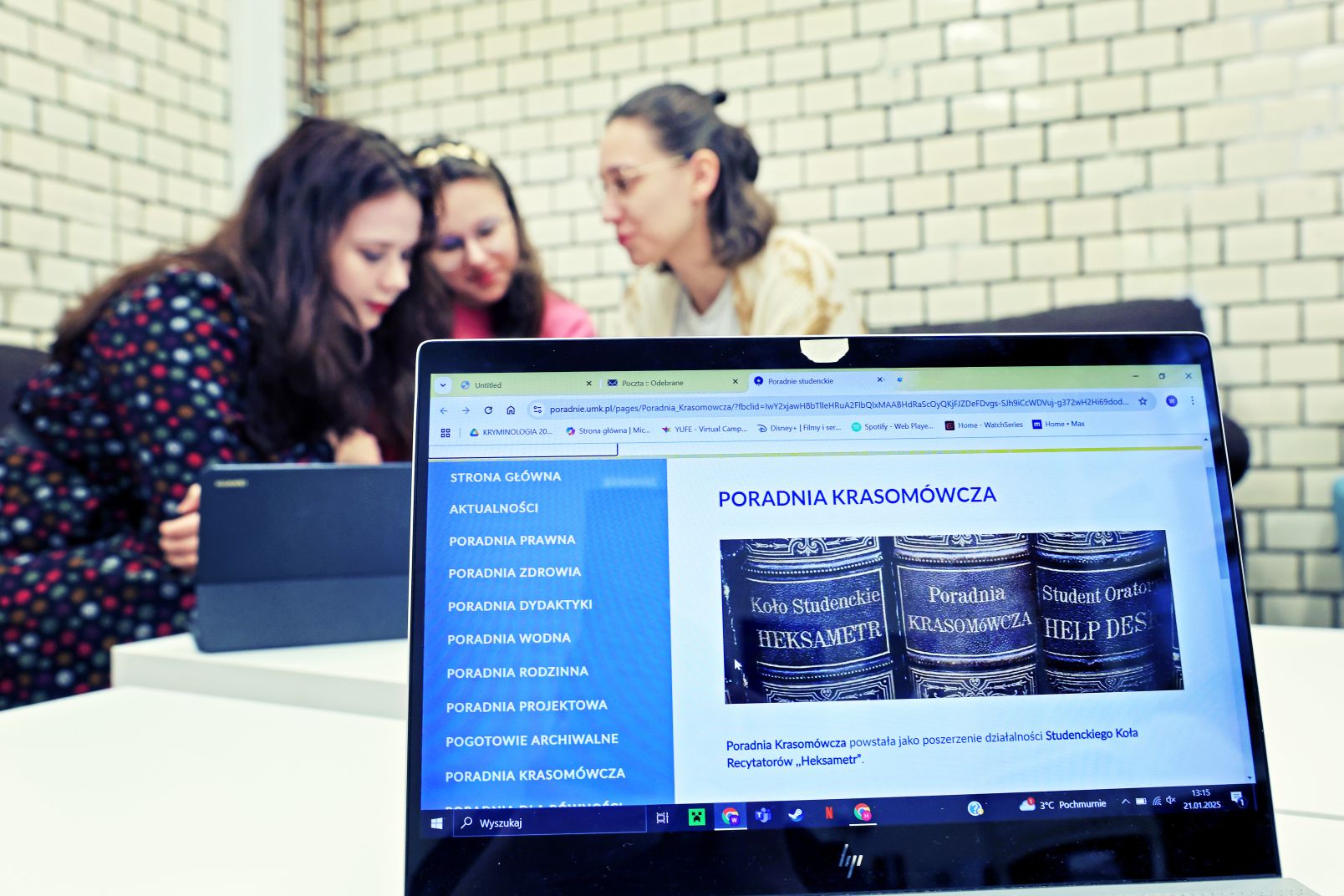
One participant involved in a Help Desk at NCU highlights their developmental value – Taking part in this civic engagement initiative was one of the most meaningful experiences during my studies. It allowed me to combine academic knowledge with real impact on my surroundings (…) Teamwork also helped me develop important soft skills such as active listening, giving and receiving feedback, and adapting my ideas to the needs of others. It was deeply satisfying to see how a collective effort turned into a practical solution that could benefit others.
There are 12 Help Desks currently operating at NCU. Enquiries are submitted via forms available on the websites of individual clinics, where contact details of coordinators can also be found. Joining a clinic or volunteering programme is also possible through the YUFE Virtual Campus.
Virtual Campus – your gateway to the offer
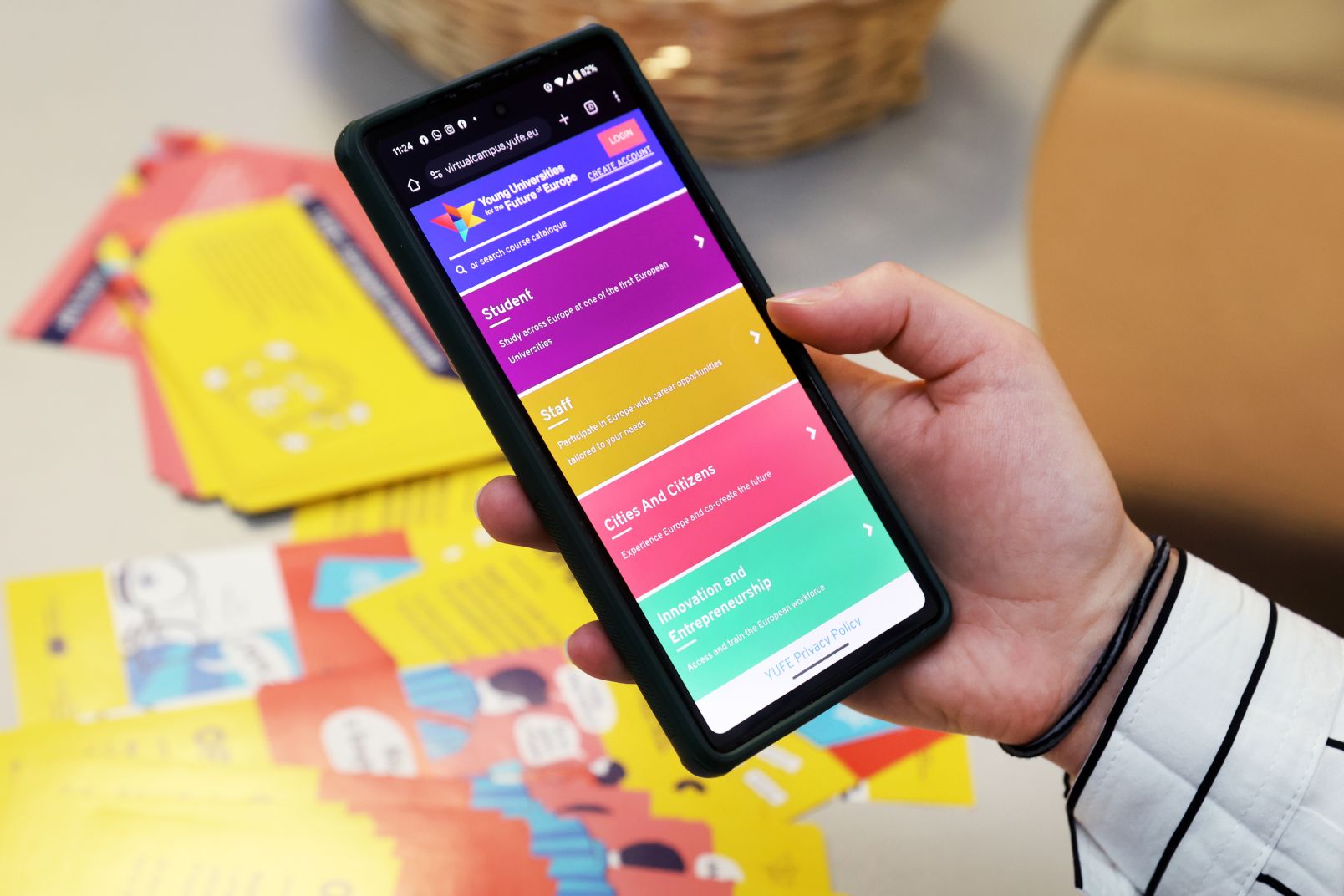
The YUFE Virtual Campus is the main platform for registering for courses, initiatives and events, as well as for tracking progress. Accounts are created using a university email address. Even at the basic registration stage, students can participate in selected open initiatives, while joining the Open YUFE programme unlocks the full range of opportunities.
Applications to the programme are submitted via the section dedicated to students on the Virtual Campus homepage. Recruitment is open year-round. Once enrolled, students can register for individual courses. Registration deadlines for the singular courses depend on the academic calendars of partner universities. It is worth paying attention to the mode of delivery – online, on-site or hybrid.
Virtual Open Day
Those interested in the practical dimension of the programme are invited to take part in a virtual Open Day, which will be held on 12 February at 11:30, in English. The event provides an opportunity to learn about the experiences of programme participants and to ask questions about the YUFE offer.