 NCU News
 Natural sciences
Nobel Prize in Chemistry: Small Asymmetry - Huge Effect


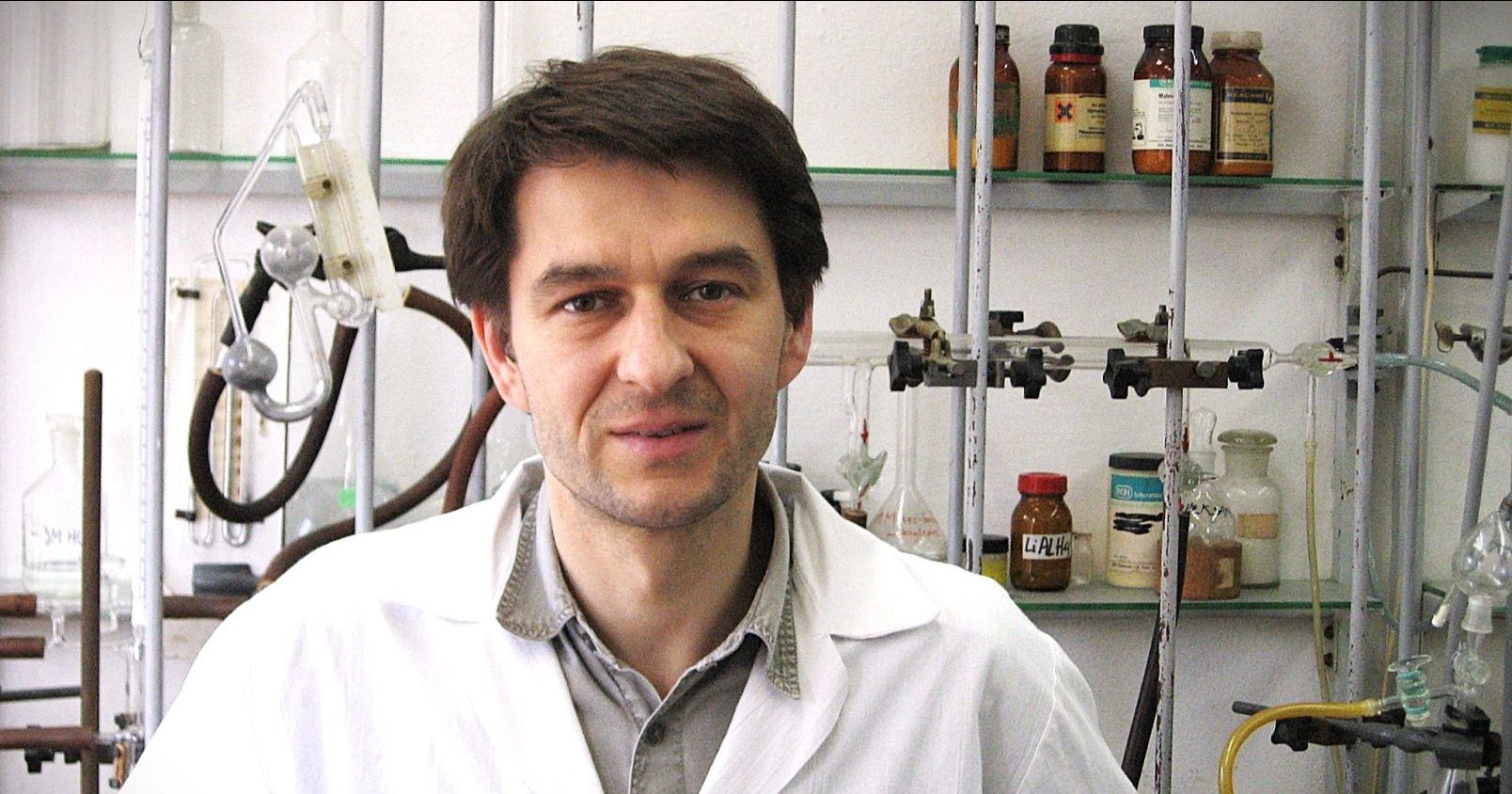
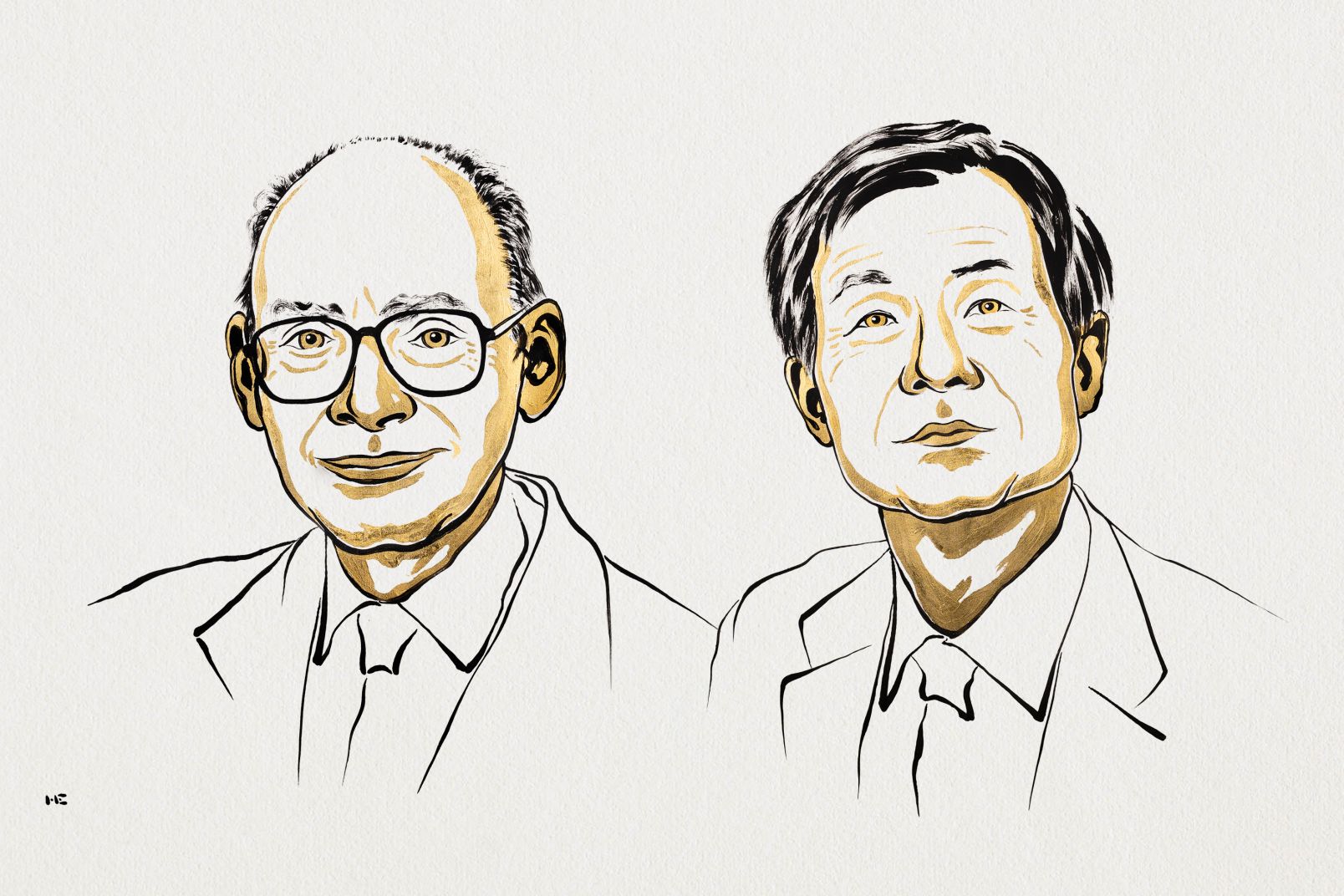
Henri B. Kagan and Kenso Soai have been awarded this year's Nobel Prize in Chemistry. They demonstrated how in asymmetric reactions one of the product stereoisomers may be formed in excess, which is applicable for the purposes of phamaceutical or agrochemical production, says Dr hab. Marek Krzemiński, Prof. NCU from the Department of Organic Chemistry.
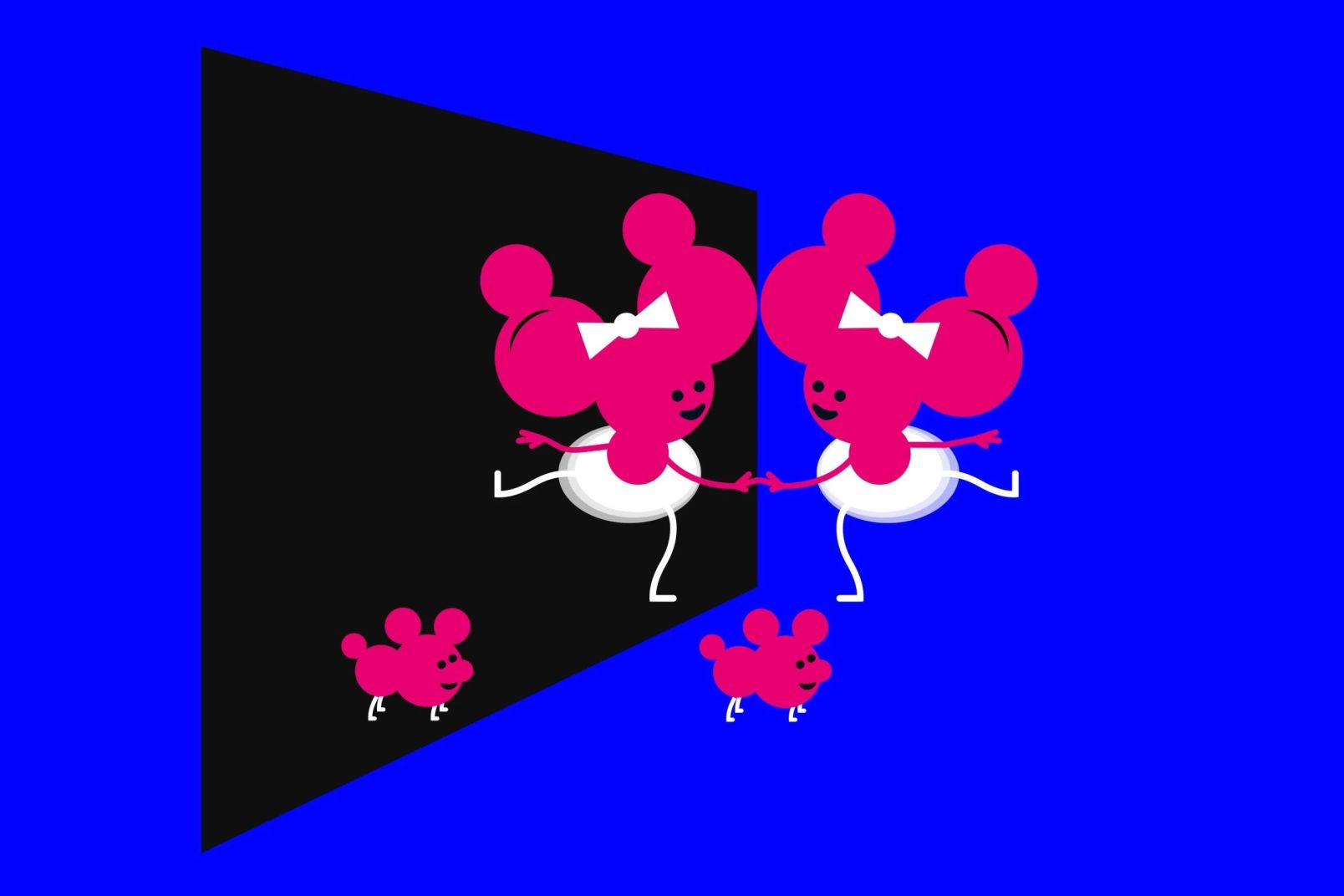
Before we discuss discoveries made by Kagan and Soai, it is essential to explain certain concepts related to the topic of asymmetric synthesis. Compounds with the same molecular formula but presenting a different structure are called isomers. If such compounds differ in the spatial arrangement of atoms, they are referred to as stereoisomers. Among stereoisomers, there exist pairs of molecules of a given compound which are called enantiomers. They are actually the mirror images of each other, which can be best illustrated by the comparison of someone's left and right hand. From the physicochemical point of view, enantiomers are identical; they only differ in the manner in which plane-polarized light is rotated. Therefore, they are also called optically active compounds, and they can be levorotatory (rotating plane-polarized light to the left) or dextrorotatory (rotating plane-polarized light to the right). Enantiomers commonly present diverse biological activity. For instance, (+)-limonene is associated with citrus scent (lemon and orange notes) while (–)-limonene yields resinous pine scent (turpentine).
Ill. Niklas Elmehed © Nobel Prize Outreach
Most natural compounds are optically active. As far as isomer structure is concerned, we observe homochirality among groups of compounds, which is particularly evident in the case of amino acids. All natural amino acids (except glycin which is achiral) forming proteins of living organisms are of the L- configuration, i.e. they are homochiral towards one another. In turn, saccharides such as glucose, fructose or ribose in DNA present the D- configuration. For decades, scientists have been trying to find the answer to the question concerning the origins and reasons lying behind the formation of L-amino acids, for example. The discoveries made by this year's laureates show probable mechanisms which led to the formation of chiral compounds that are additionally enantiomerically pure.
Non-Linear Effects by Kagan
If chiral catalysts (substances which by definition accelerate the rate of a reaction) are applied in asymmetric reactions, we can expect that chirality from a catalyst will be transferred to the product. For the majority of catalytic processes. the enantiomeric purity of a product is proportional to the enantiomeric purity of an applied catalyst. Hence, it is so essential to apply a catalyst made of only one enantiomer. Henri Kagan proved that the optical purity of a product is not always linearly dependent on the optical purity of the optical purity of a catalyst.
If a product is not a single enantiomer but an equimolar mixture of levorotatory and dextrorotatory enantiomers, the mixture is called a racemate and its rotation equals zero. If, in turn, one of enantiomers prevails, the so-called enantiomeric excess is determined for such a compound. If, for instance, a compound contains 80 per cent of the dextrorotatory enantiomer and 20 per cent of the levorotatory enantiomer, the enantiomeric excess of the dextrorotatory enantiomer equals 60 per cent because 20 per cent of the (–)-isomer forms a racemate with 20 per cent of the (+)-isomer. Kagan studied such catalysts in which metal formed bonds with a compound being a mixture of enantiomers. He assumed that metal forms bonds with two chiral molecules, and therefore, the formation of three kinds of complexes, namely((+)-M-(+); (–)-M-(–) i (+)-M-(–)), was possible. It turned out that complexes with the same enantiomers catalyze reactions faster than a metal attached to different enantiomers. Kagan performed reactions using various combinations of enantiomers with a catalyst and found a nonlinear relationship between the ratio of enantiomers in the product. It meant that he discovered a method of increasing the formation of one of enantiomers in the product. He published the results of his work in 1986 and since then numerous researchers have contributed to the development in this area. One of them was Kenso Soai.
The Soai Reaction
Kenso Soai studied the asymmetric reaction with a significant non-linear effect. He examined the structures of both the reaction catalyst as well as the resulting product, and he noticed essential similarities between them. His concept was based on designing a reaction in which a catalyst would form itself from a product in an autocatalytic process. In 1995, he published an article in Nature in which he described an experiment with an alcohol with an initial 2 per cent excess of one enantiomer. The product of the described reaction was characterized by a 87 per cent enantiomeric excess. Although the reaction was autocatalytically enhanced, the complete enantiomeric purity was not fully achieved. It was not until 2003 that Soai demonstrated an ideal autocatalytic process, by which he proved a possibility to prepare a chiral product from an almost racemic mixture of a compound extremely small enantiomeric excess. Soai showed that even a minimal excess of one configuration can be sufficient to take control of the entire reaction.
©Johan Jarnestad/The Royal Swedish Academy of Sciences
The meaning of the discoveries
Studies conducted by Kagan and Soai show how significant a change of symmetry is in asymmetric transformations: even a small change can be enhanced and provide one of enantiomers in a non-linear or autocatalytic process.
From the chemical point of view, the discoveries allow designing more selective reactions due to which products of higher enantiomeric purity can be synthesized. This is crucial in the production of pharmaceuticals, aromas, or agrochemicals. From a biological perspective, regarding the origin and development of life on Earth, Kagan i Soai provided plausible clues showing how homochiral compounds which are building materials in living organisms could have formed.
Henri B. Kagan was born in 1930 roku in France. In 1954, he graduated from the Sorbonne and Ecole Nationals Superleure de Chimie de Paris. Researching steroid chemistry and stereochemistry, he completed his PhD supervised by Jean Jacques at the Collège de France in 1960. Subsequently, he worked as a researcher in the College de France, in Alain Horeau's team. His scientific activity was related to stereochemistry and asymmetric synthesis. In 1965, as part of his scholarship, he carried out research in Tom Mabry's team at the University of Texas in Austin, USA. In1968, he was employed as an associate professor at the Université Paris-Sud, and since 1973, he was promoted to a full professor of chemistry at that university. In 1999, he became an emeritus professor. Henri Kagan was a pioneer in research on the synthesis and application of metal complexes with chiral phosphine ligands as catalysts for asymmetric hydrogenation reactions, and he advanced the use of lanthanides in organic synthesis. He is most famous for observing non-linear effects in asymmetric catalysis and describing the effects with the use of a mathematical model.
Kenso Soai was born in 1950 in Japan. He studied at the University of Tokyo where he completed his PhD in 1979 supervised by Teruaki Makaiyama. He completed his postdoctoral scholarship in Ernest L. Eliel's team at the University of North Carolina in Chapel Hill, USA. In 1981, he returned to Japan and worked as a lecturer at the Science University of Tokyo. In 1986, he became an associate professor at that University and in 1991, he was promoted to a full professor. Since 2016, he has been an emeritus professor. His research interests included enantioselective and diastereoselective synthesis, designing chiral catalysts, and chemoselective reductions. Soai's most important achievements involve research related to asymmetric autocatalysis, i.e. reactions in which the product formed acts as a catalyst for its own creation.