 NCU News
 Social sciences
The Fragile Power of the Piasts


What the first Piasts achieved in terms of Christian political ideology, the crown, an archbishopric, and their own saint should not be underestimated, but their state was doomed to failure from the outset, says Professor Adam Izdebski.
The beginnings of Poland were examined by an interdisciplinary team of researchers led by Professor Adam Izdebski of the Institute for Advanced Study at the Nicolaus Copernicus University in Toruń. The joint research conducted by archaeologists, ecologists, historians, and palynologists is described in the article entitled “Unbalanced social–ecological acceleration led to state formation failure in early medieval Poland", published by the prestigious journal Proceedings of the National Academy of Sciences (PNAS).
The State Grew Out of the Primeval Forest
The lands between the Bug and the Elbe rivers at the turn of the 9th and 10th centuries were covered by primeval forest, like the one that can still be admired today in the strictly protected reserve in the Białowieża area. It was a dense northern European jungle, in which small Slavic settlements existed here and there, usually consisting of from a dozen to several dozen inhabitants. They engaged in agriculture, but also made use of the forest: they practiced gathering and hunting. At the end of the 9th century, Vikings appeared there. Sailing along the rivers, they combed through the forests and captured young people and children, whom they sold into slavery in Islamic countries.
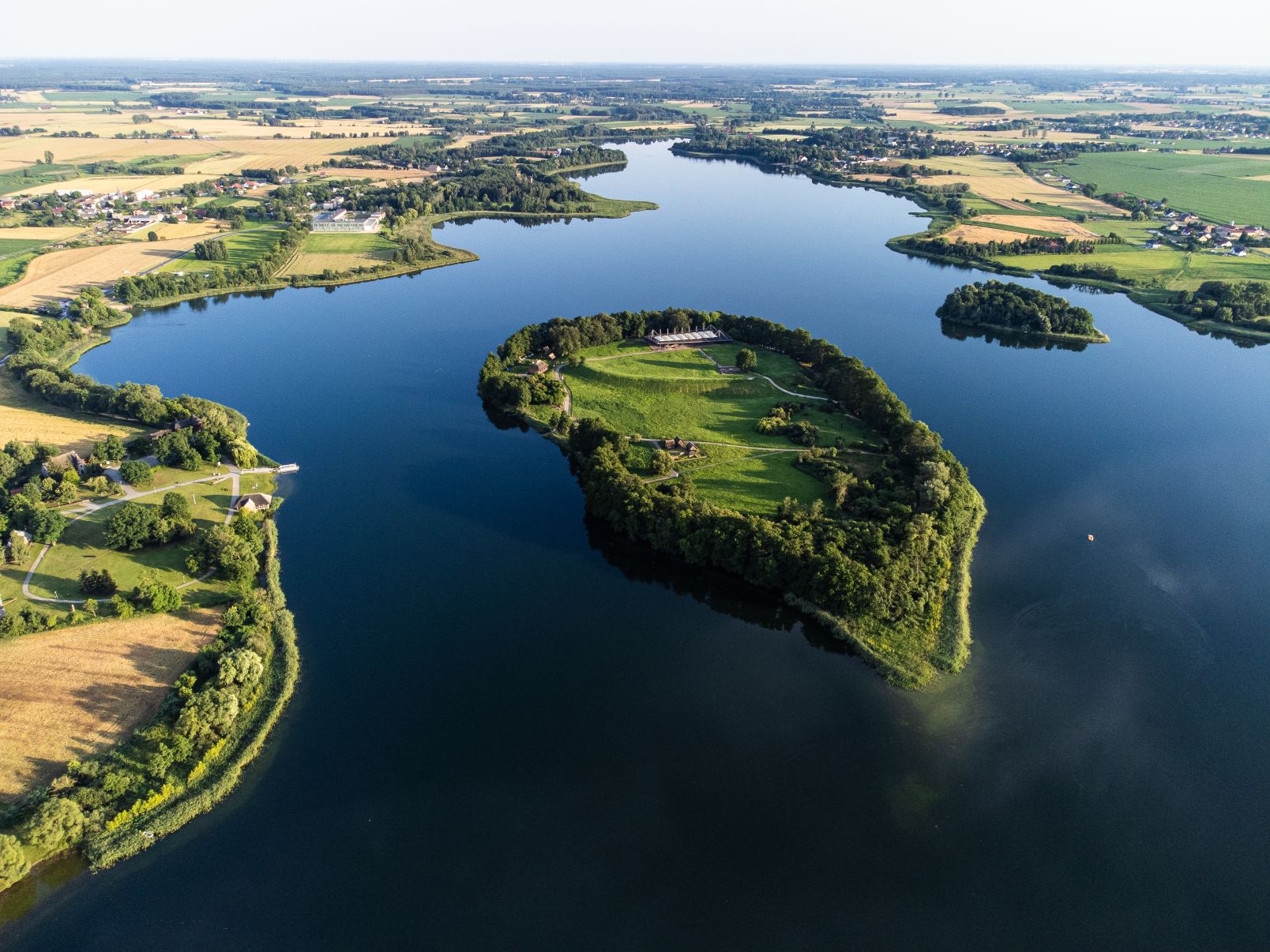
photo Mateusz Popek
This sparsely populated area began to become even less populated, because the Scandinavians abducted people of reproductive age, and the already very weak demographic situation became even more unstable. Professor Adam Izdebski describes the situation as follows:
“A rather anarchic and highly egalitarian cultural model prevailed. Small communities had no permanent leaders; they settled various matters mainly through assembly-based consensus. They lived simple lives. After the fall of the Roman Empire, they were not part of the global world; they lived on their own and were isolated. And suddenly, in this simple world, the possibility of wealth and organized violence appeared, setting new political processes in motion. People emerged who established what we today call Poland."
To this day, it is still not entirely clear whether these were outsiders—Vikings or people connected with them—or locals who became a local extension of the Scandinavian system. What is certain, however, is that at some point they began to realize that, in order to survive, the model according to which the Slavic communities functioned had to be changed.
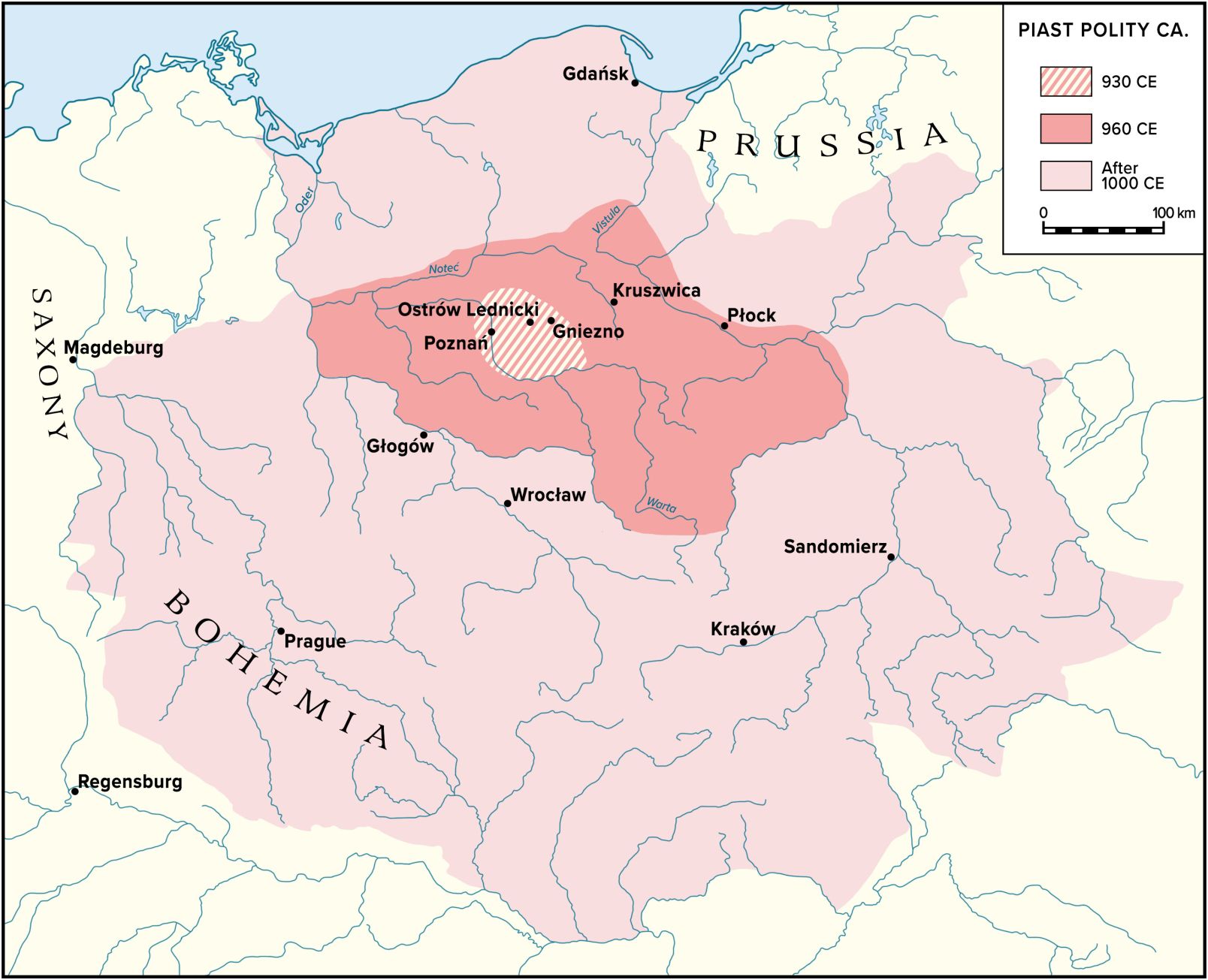
Those whom we call the Piasts were extraordinarily innovative, notes the scholar from the Nicolaus Copernicus University. They stopped merely sending people into slavery and instead began gathering them in the place where they themselves operated, that is, in the area around Gniezno and Poznań. Moreover, they persuaded or forced these people to work for them. This was a great revolution."
A Fundamental Change
As a result, a “grain engine" was set in motion very quickly within a relatively limited area—a completely different type of agricultural production that made it possible to create permanent administrative, military, and later ecclesiastical structures. At the turn of the 9th and 10th centuries, the construction of larger fortifications began and a new model of what could be done emerged. No one here had previously considered how to organize and persuade peaceful people, leading orderly lives, suddenly to begin raiding their neighbors.
“Anthropological and evolutionary research very clearly shows that we have a biologically ingrained tendency toward egalitarianism, a sense of justice, a conviction that things should be shared equally, that all members of our community must be treated the same way, and that we want to decide about our own lives," explains Professor Izdebski. “After all, the Slavs could forge swords—they had the skills. But what for? Why should they suddenly, instead of resting, producing food, pursuing spirituality, or doing anything else that gives satisfaction, spend their free time striking one another with swords and risking their lives? I think this is the fundamental change, when our isolated lands suddenly become part of the brutal Scandinavian-Islamic trading system."
The scholar explains that the Slavs were not a homogeneous group. The Byzantine Empire had great difficulty dealing with them. Whenever it tried to defeat them, they were able to rally together and organize something that today we would call guerrilla warfare, but afterwards they disappeared. They had no permanent leader; there was nothing to conquer and no one to negotiate with.
“Research in evolutionary and cultural anthropology shows that being a leader in such cultures is very dangerous," says the scientist from Nicolaus Copernicus University. “If a community begins to suspect that someone wants to take advantage of power, they simply kill him, because he becomes a threat to the freedom of others. From this perspective, the Polabian Slavs are an interesting case. In contact with the Saxon Germans, they were able to unite and resist attempts at conquest and colonization, but they did not create a state, because they defended themselves on their own and possessed a mechanism that prevented leaders from becoming permanent, coercive rulers."
PNAS
The situation of the Polan state was different, because here a group of forceful leaders appeared, later called the Piasts. They remained in power, conquered new territories, were highly brutal, and organized population relocations.
“We do not know exactly what their economic system looked like, but archaeological research shows that large landed estates based on slave labor most likely emerged," says Professor Izdebski. “I think that most people did not participate in the 'Poland project' of that time of their own free will. And when organized state violence weakened or disappeared in the 1030s, the entire administrative structure collapsed and people left."
Piast Poland needed calories and money. The ruler's retinue had to be fed and paid, but a problem emerged that would ultimately bring the entire project to collapse. This is the story of a success that contained the seeds of catastrophe.
“On the one hand, the Piasts created a 'grain engine,' meaning that they began to shape in Greater Poland an economic system oriented toward grain production," explains the scholar from the Institute for Advanced Study. “Grain can be easily stored, transported and—equally importantly—easily taken away from people. The rulers needed to feed an ever-growing number of people, but in Greater Poland they reached a ceiling. We are talking about an agricultural system based on 30,000–40,000 people. They were able to produce a food surplus sufficient for 3,000–5,000 people. The rest had to be obtained from other sources. The Piasts began to need Silesia, Lesser Poland, Bohemia—places where grain production was greater. But these regions were strongly separated from Greater Poland by dense primeval forests and often non-navigable rivers, which made transportation difficult."
Silver Brings Prestige
On the other hand, Piast Poland needed money. People who were expected to go to war and kill had to be motivated. That motivation was the desire to accumulate wealth and prestige—in simple terms, silver. To obtain it, slaves once again had to be sold. Raiding expeditions began in order to acquire food and money.
Instead of slowly developing their core territory in Greater Poland, the Piasts set out on conquests in every possible direction—from Kyiv to the Elbe," says Professor Izdebski. “This was a young state; this model had to continue expanding at a frantic pace. And the territories available for conquest quickly diminished. Hungary was too strong, as were the Saxon Germans, and gradually the ring began to close."
In the wilderness, amid the forests of Greater Poland, an empire was created that was difficult to integrate. It was geographically extensive and poorly connected. It also had another weak point: it depended on what Greater Poland produced. A blow against this region could destroy the entire system, as was demonstrated by the invasion of Poland by the Bohemian duke Bretislaus. The Piasts recognized this problem. The adoption of Christianity and the creation of a church hierarchy were attempts to integrate the new empire. However, the pace of integration did not keep up with the pace of expansion.
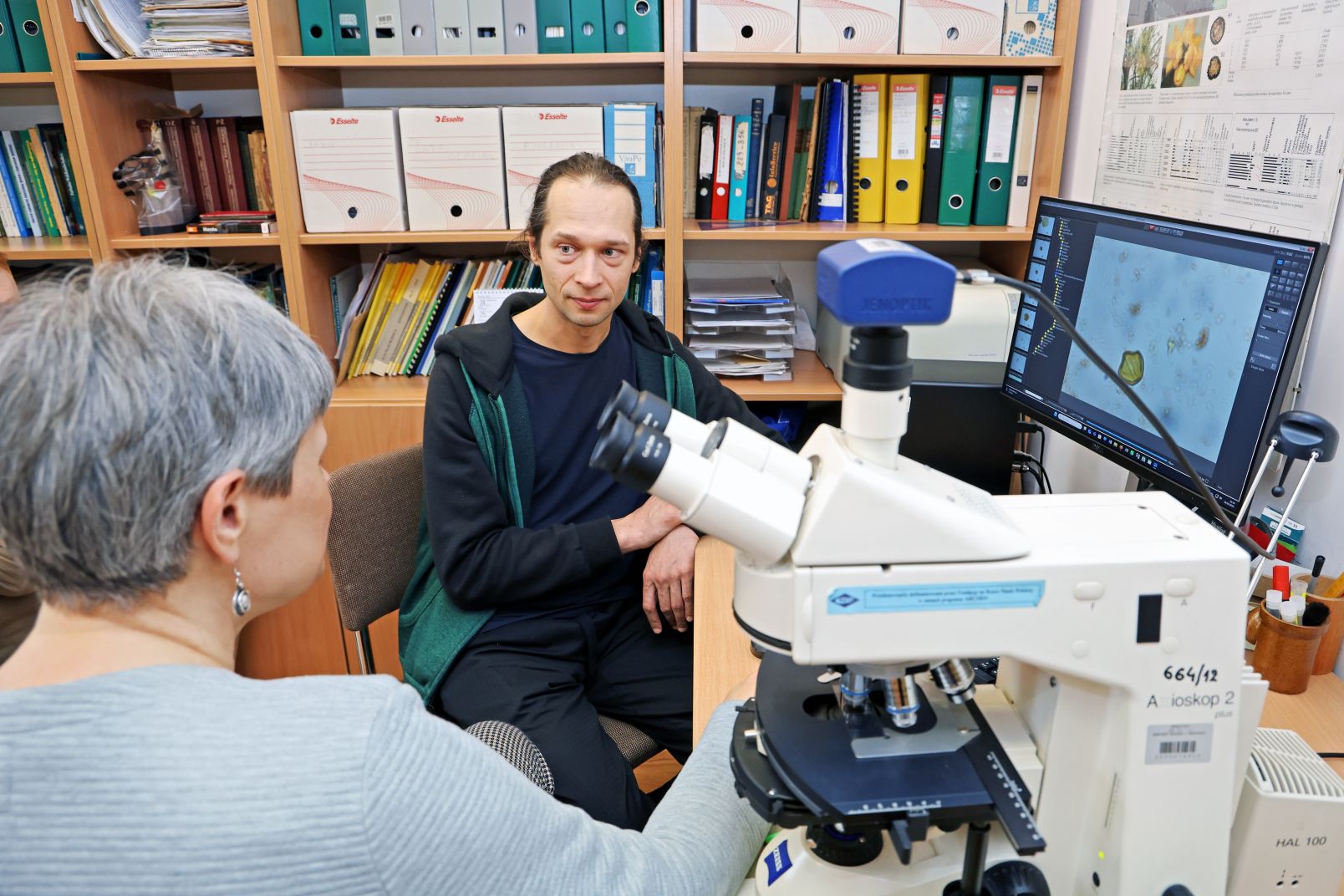
photo Andrzej Romański
The changes observed in Greater Poland are reflected in analyses of plant pollen from the sediments of Lake Lednica and the peat bog at Kazanie, which show that around the beginning of the 10th century the landscape underwent rapid transformations.
“From lake cores, we can collect sediment samples that document regular intervals of time," explains Professor Izdebski. “In our research, we try to observe the landscape every 15–20 years, and we see that it changes very quickly, almost from one sample to the next—that is, in less than a single generation. Between Poznań and Gniezno, forests were cleared on a large scale, and there was a substantial increase in grain cultivation, especially rye."
The researchers ask themselves why a state such as that of the Piasts emerged precisely in Greater Poland, whereas in many other regions connected to the Scandinavian-Islamic trading system—for example, the Cherven Towns, the territories on the border of present-day Poland and Ukraine—this did not occur.
This is particularly interesting because after the collapse of the first Piast state, the state was re-established in Lesser Poland.
“This indicates the instability of the Greater Poland structures," explains Professor Izdebski. “It is possible that in Lesser Poland the history of agricultural development was more linear and gradual. Perhaps the social structure was built over a longer period, was more stable, and kept pace with the development of the state—but we still need paleoecological research to confirm this. Moreover, this new state no longer had such imperial ambitions. It was more peaceful."
A New Poland
According to the scholar from Nicolaus Copernicus University, what happened in Greater Poland can be viewed as one of many short-lived imperial eruptions. The empire disappeared, whereas the new, durable Polish state—which existed until 1795—began in Kraków in the mid-11th century. This new political project eagerly drew upon the previous one, because claiming earlier successes and achievements as its own, particularly in matters such as ecclesiastical independence and the crown, was simply advantageous.
“The early Piast state achieved a level about which it is worth saying, 'this is ours,'" says Professor Izdebski. “But it is difficult to determine unequivocally to what extent this 'ours' is a creation and to what extent it is reality. It seems to me that, considering the distance between Poznań and Kraków alone, it would be more appropriate to view the situation as follows: something ended in Greater Poland, and something new began in Lesser Poland."
photp Archdiocese of Gdańsk
The “Kraków project" claimed to be a continuation of the “Lednica project," but it was unable to conceal the fact that the first undertaking ended in total catastrophe.
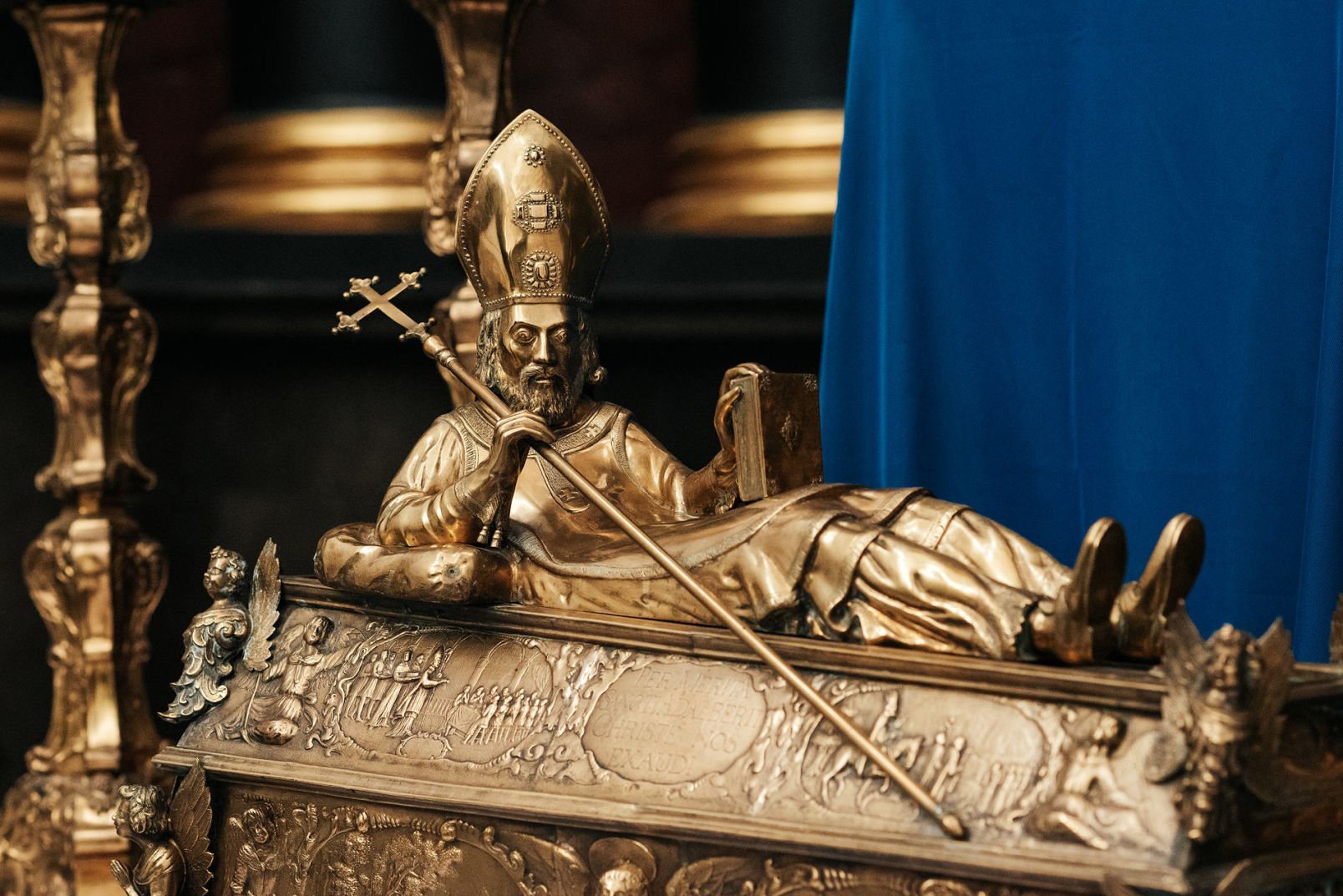
“It wants to say about itself: 'we are the heirs of Chrobry,'" explains Professor Izdebski. “Christian political ideology, the crown, the archbishopric, and its own martyr, Saint Adalbert, constitute a form of capital that no one can afford to disregard. The Czechs try to claim it as their own, so a kind of tug-of-war takes place between Poland and Bohemia over Saint Adalbert. And because Saint Adalbert means Gniezno, Kraków, despite being the capital, still has a kind of impostor syndrome (a psychological phenomenon in which a person, despite objective success and evidence of competence, does not believe in their own abilities and attributes achievements to luck, chance, or other people – editor's note), from which Saint Stanislaus emerges. In the 13th century, Lesser Poland tries to build its own legend, and Bishop Stanislaus—who for Gallus Anonymous was an opponent of the state—suddenly becomes a positive figure."
Archaeological research shows that after Bretislaus's invasion not all strongholds and villages in Greater Poland ceased to exist. “In landscape analyses, we can see destabilization; we can see that the grain engine is disappearing," explains Professor Izdebski. “The situation does not return to the state that existed before the first Piasts (the parents and grandparents of Mieszko I). To put it illustratively, we may say that by the time of Bolesław the Brave we had achieved economic growth of 100 percent, and afterwards we lost half of that growth. Greater Poland slowly recovered, but the process took about 200 years, until the time of Casimir the Great."