 NCU News
 Humanities and arts
Unrivalled archaeologists from the NCU


The most effectively promoted research, a unique artefact and the best archaeological photograph of last year – researchers from the NCU Centre for Underwater Archaeology dominated the sixth edition of the 'Archaeological Sensations 2025' public vote.
The competition, organised on the initiative of the magazine 'Archeologia Żywa' (Living Archaeology), is an opportunity to celebrate the most important discoveries, events and projects in Polish archaeology. The jury and readers select the finalists and winners in 10 categories. Last year, the exploration of Lake Lednica conducted by the Nicolaus Copernicus University in Toruń and the Museum of the First Piasts in Lednica was recognised as the 'Most Effectively Popularised Research'. In their justification, the organisers of the competition emphasised that the team led by dr. habil. Andrzej Pydyn, pNCU Prof., 'maintained high visibility thanks to a series of high-profile discoveries, including a gilded spear and a carved beam with a face, which were widely reported in national and specialist media'
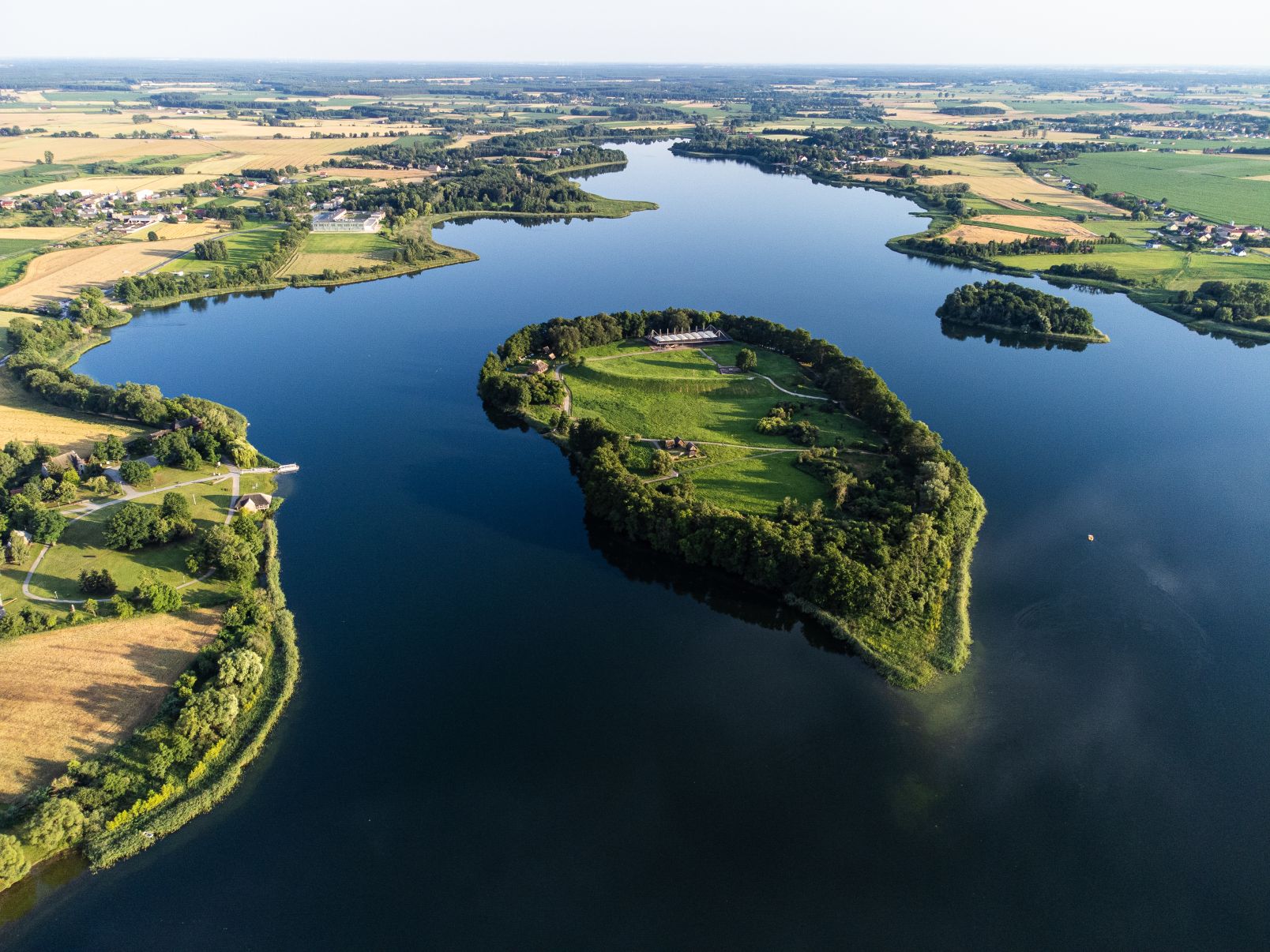
photo Mateusz Popek
The award was granted for "skilfully combining research of the highest scientific calibre with consistent and comprehensible communication aimed at a wide audience. The discoveries from Ostrów Lednicki were presented not as sensations taken out of context, but as the result of long-term, methodical research. Thanks to this, in 2025 Lednica became a model example of the responsible popularisation of key early Piast heritage.
In this category, archaeological research on the modern cemetery in Pień, led by dr. habil. Dariusz Poliński, NCU Prof., was also shortlisted for the main prize. The discoveries made by the interdisciplinary team in Pień were selected by the jury of the 'Archaeological Sensations' competition as the most effectively popularised research in 2023 and 2024.
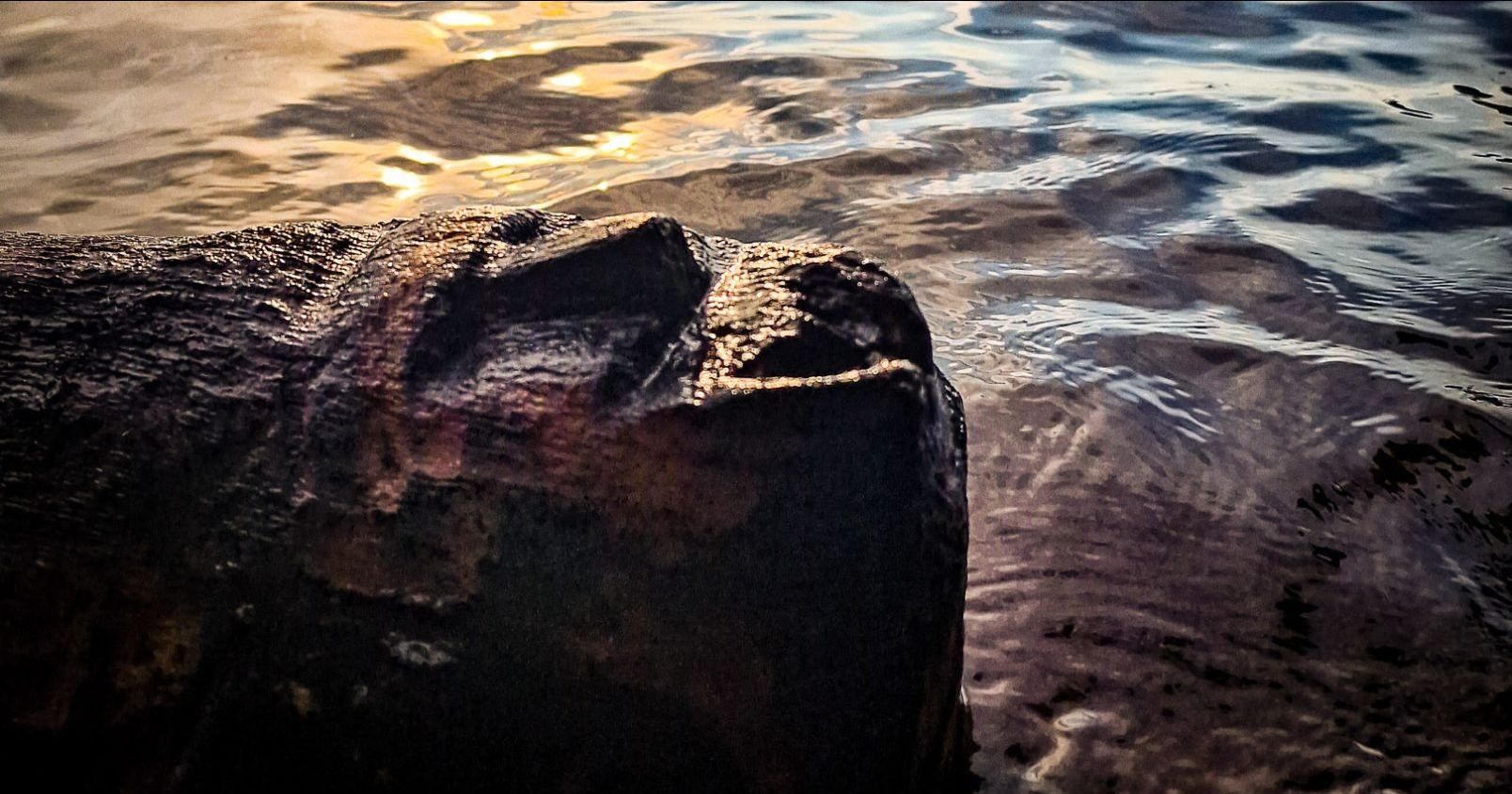
A beam bearing the image of a human face from the time of Poland's baptism was hailed as the 'Unique Artefact of 2025'. The face has very realistic features: the eyes, nose, mouth, characteristic chin and oval shape of the head are visible. The face is about 12 cm high and 9 cm wide. It is not a miniature figurine, but a full-size architectural element whose function went beyond purely structural purposes. The way the wood was worked and the expression on the face indicate that it was not just a simple ornament. It is possible that the representation had a symbolic meaning – as an image of a deity, a guardian spirit or a hero protecting the inhabitants of the stronghold.
Not only does this discovery inspire admiration for the craftsmanship of over a thousand years ago, but it also opens up a fascinating discussion about the spiritual life of the early medieval Slavs, says dr habil. Andrzej Pydyn, NCU Prof. and Director of the NCU Centre for Underwater Archaeology.
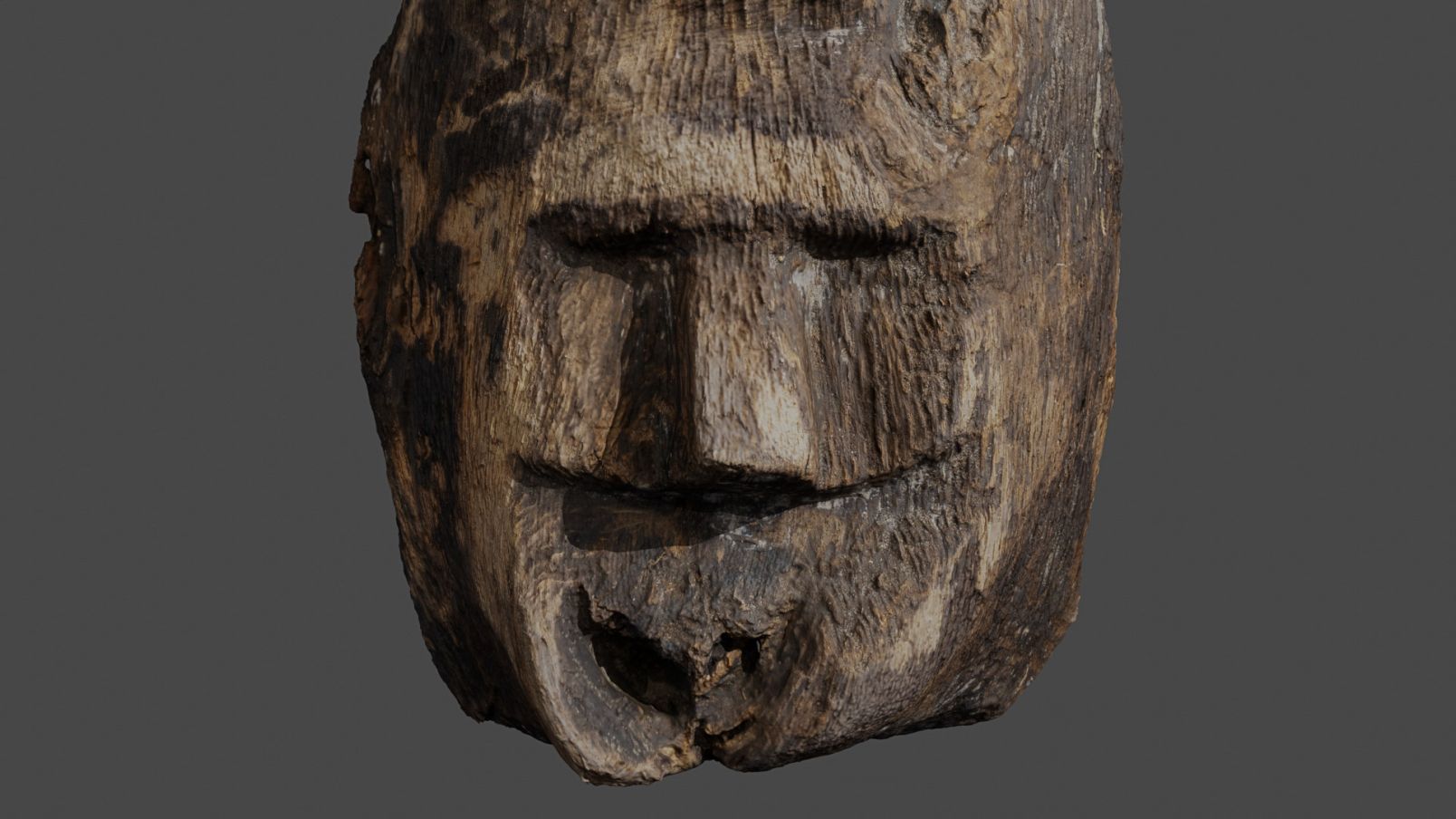
photo Mateusz Popek
The competition organisers emphasised that the victory of this historic object was determined by its "absolute uniqueness and precise placement at a key moment in early Piast history. It is not a single “interesting object", but an element of the infrastructure of the stronghold, which brings new data to the discussion about ideology and symbolic communication in the centres of power in the 10th century. Its significance stems from the fact that it forces us to revise our existing ideas about the scope and forms of early Piast visuality, and not only from the fact that there has never been anything like it before."
A gilded spear from the early Piast period was also nominated for the main prize in the same category. Craftsmen placed its steel tip on an intricately decorated shaft. A significant part of the spear is covered with gold, silver, bronze and other metals, and its surface is decorated with intricate ornamentation featuring spiral and triskelion motifs. The spear may have served as a symbol of power, an insignia of a warrior of high birth, or an object of a ritual nature. 'The discovery significantly expands our knowledge of the elite material culture of the early Piast state and confirms the unique status of Lednica as a residential and symbolic centre,' wrote the members of the competition jury.
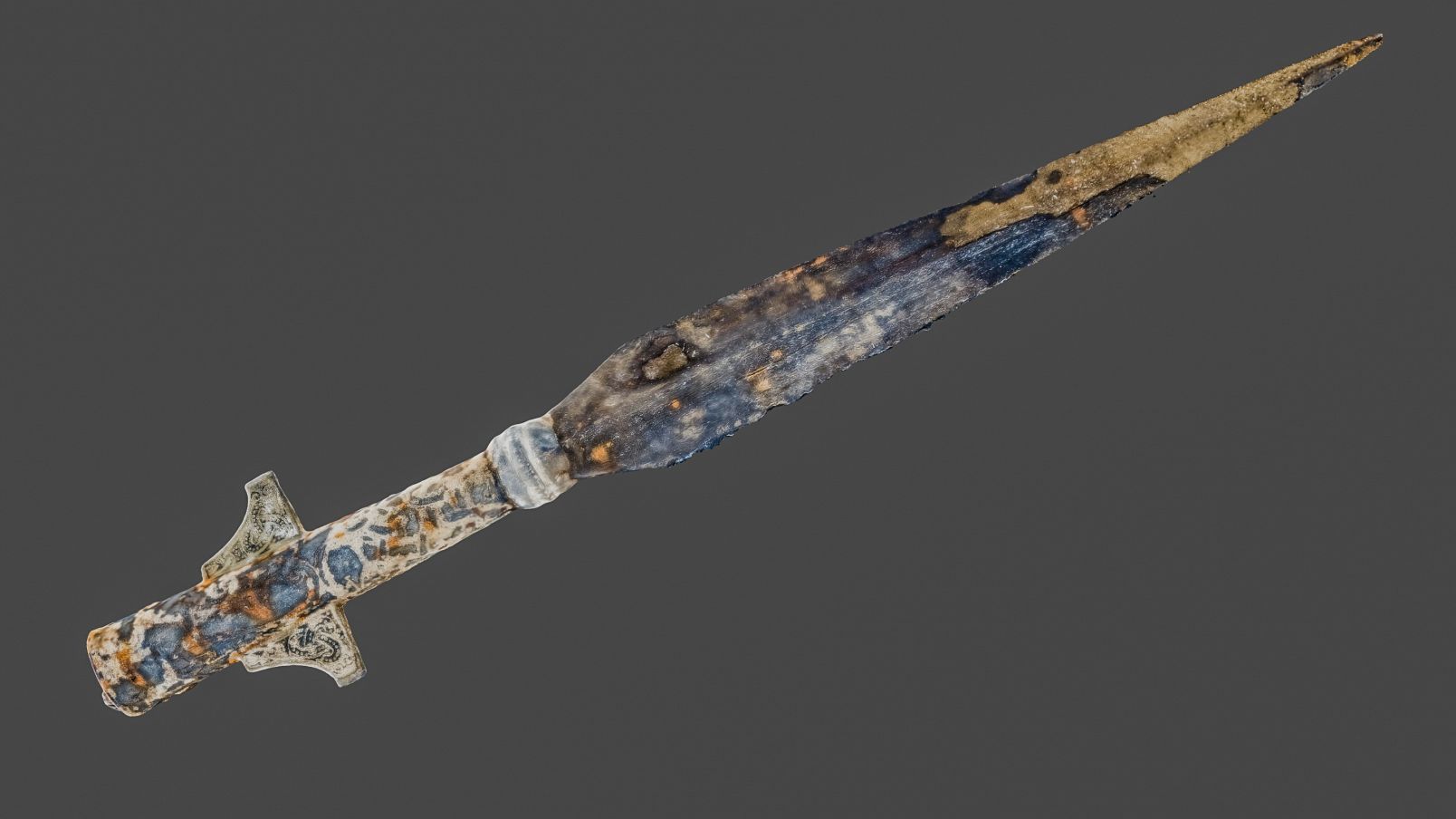
photo Mateusz Popek
The photograph by dr Mateusz Popek from the NCU Centre for Underwater Archaeology, depicting a face from the depths of Lake Lednickie, was named 'Best Archaeological Photo of 2025'. 'The close-up of the carved face emerging from the twilight of the lake creates an evocative, almost portrait-like frame, balancing between documentation and symbolic image,' noted the competition jury. The photograph was appreciated for its rare combination of archaeological documentation with a strong, almost narrative image. Not only does the frame show a unique artifact, but it also captures the atmosphere of underwater archaeology and the emotional dimension of contact with the past.